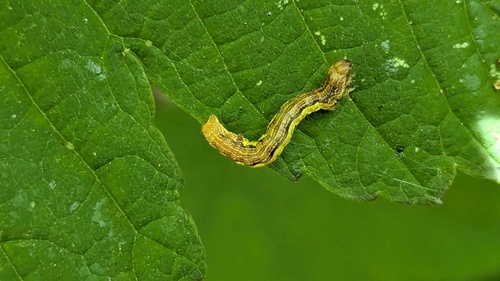
Small Dusty Wave

Small Dusty Wave

Idaea seriata

Daily sighting probability ~10% · With luck
at Milan

In 3 days ~20% in a week ~40%

21 Verified sightings at Milan
76 In all 4 parks From 2019 to 2026
May Best month
☀️🌙 Day & Night When it's spotted

About the Small Dusty Wave

The small dusty wave (Idaea seriata) is a moth of the family Geometridae first described by Franz von Paula Schrank in 1802. It is found throughout Western, Central and Northern Europe. In the north, its range extends as far as Denmark and southern Scandinavia. In the east its range extends as far as Russia (Moscow or Veliky Novgorod). Idaea seriata is replaced by the subspecies Idaea seriata canteneraria, from the north-east of Spain and the central and eastern Mediterranean (including the islands, except Crete) to the Crimean peninsula, while the western Mediterranean and the Balearic Islands are inhabited by the sister species Idaea minuscularia. Outside Europe it is found in eastern Algeria, Tunisia, Turkey, Cyprus, the Caucasus and the northwest of Transcaucasia. In Morocco and western Algeria, it is replaced by the sister species Idaea minuscularia. In the British Isles it is common in England and Wales but is only found in the eastern half of Scotland and it is rare in Ireland.

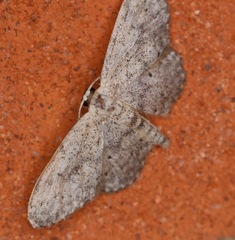
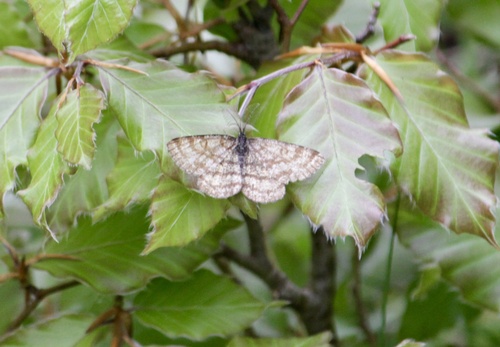
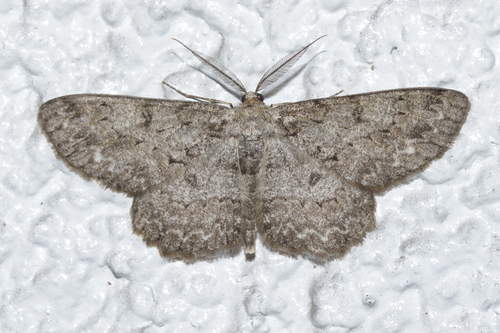
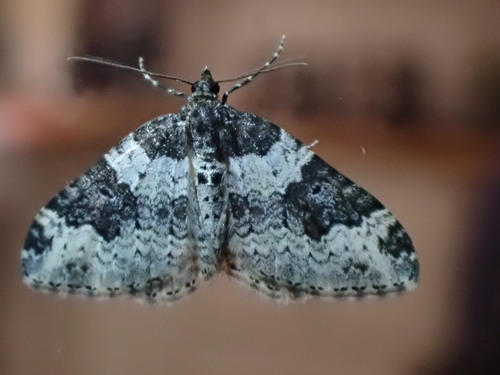
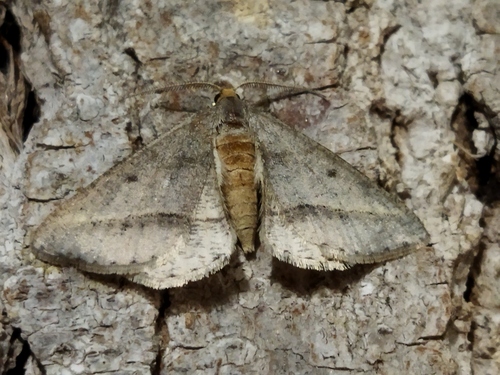
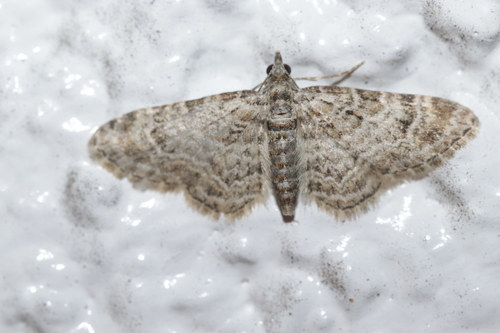
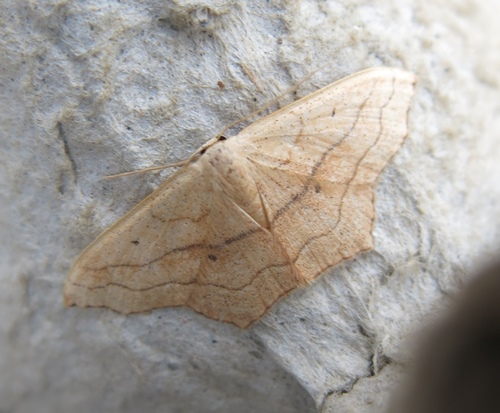
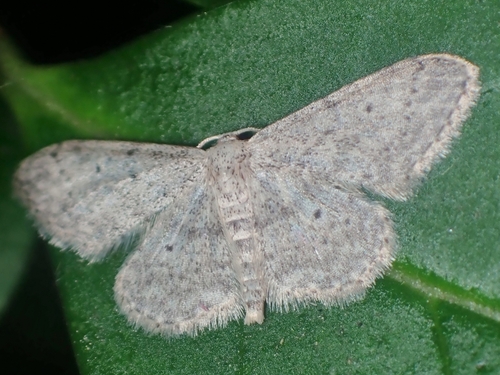
The species is very small (wingspan 19–21 mm) and is probably one of the least striking members of the whole family, being basically grey with all markings indistinct apart from the black discal spot typical of the genus. Wikipedia →

Global Distribution

Parks Where Found

# Park Country Daily sighting probability
1 Cévennes National Park 🇫🇷 France
~10%
2 Bavarian Forest National Park 🇩🇪 Germany
~10%
3 Wadden Sea National Park 🇩🇪 Germany
~10%
4 Pyrénées National Park 🇫🇷 France
~10%

Cities Where Found

# City Country Daily sighting probability
1 London 🇬🇧 United Kingdom
~20%
2 Liverpool 🇬🇧 United Kingdom
~20%
3 Rome 🇮🇹 Italy
~20%
4 Vienna 🇦🇹 Austria
~10%
5 Copenhagen 🇩🇰 Denmark
~10%
6 Rotterdam [The Hague] 🇳🇱 Netherlands
~10%
7 Berlin 🇩🇪 Germany
~10%
8 Turin 🇮🇹 Italy
~10%
9 Dublin 🇮🇪 Ireland
~10%
10 Birmingham 🇬🇧 United Kingdom
~10%

Before you go

What are the chances of seeing a Small Dusty Wave in Milan?

With luck

About 10% of wildlife watchers report a Small Dusty Wave sighting in Milan on a given day, based on 21 verified sightings from GBIF citizen-science data. It is the 123rd most-seen of the 351 insects we can rate there. Over three days the chance rises to about 20%, and over a week to about 40%, if each day is a fresh chance.

When is the best time to see a Small Dusty Wave in Milan?

January, March–May and July–September

In those months about 10% of wildlife watchers report a Small Dusty Wave in Milan on a given day, against under 5% in February, June and October–December, the lowest months.

What time of day is best to see a Small Dusty Wave?

Between 9 pm and midnight

Across all the parks we cover, that three-hour window holds the most Small Dusty Wave sightings with a recorded time, and about half of them come between 6 am and 6 pm: it is seen both by day and at night.

Is Milan the best place to see a Small Dusty Wave?

31st of 37

Of the 37 cities where we can rate Small Dusty Wave sightings, Milan ranks 31st at about 10%. The best odds are in London (United Kingdom, about 20%), Liverpool (United Kingdom, about 20%) and Rome (Italy, about 20%).

Which relatives of the Small Dusty Wave live in Milan?

Same family: Geometridae

The closest relatives of the Small Dusty Wave that you can see in Milan (family Geometridae, Geometer Moths) are Vestal (about 10%), Willow Beauty (about 10%) and Common Heath (about 10%), with each one's daily chance of a sighting.

Where does the Small Dusty Wave sighting chance come from?

GBIF citizen-science records

It is estimated from how often the Small Dusty Wave is recorded against all the insects logged in Milan (21 verified sightings), calibrated against known sighting rates. Figures are rounded to the nearest 10% because citizen-science data supports honest approximations, not decimals, and months with records from fewer than five people show "—". How it works.
← Back to Milan