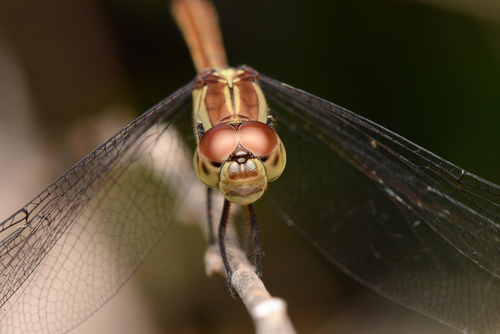
Crimson Marsh Glider

Crimson Marsh Glider

Trithemis aurora

Daily sighting probability ~10% · With luck
at Mumbai

In 3 days ~20% in a week ~40%

20 Verified sightings at Mumbai
326 In all 17 parks From 2019 to 2026
November Best month
☀️ Diurnal When it's spotted

About the Crimson Marsh Glider

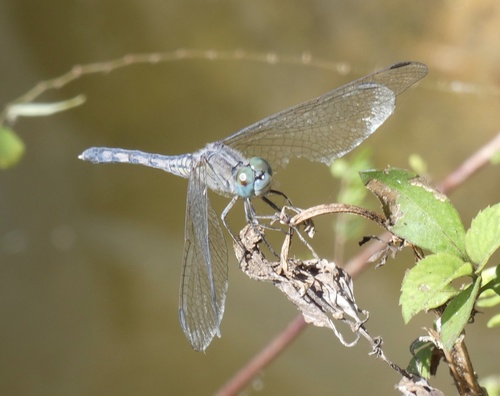
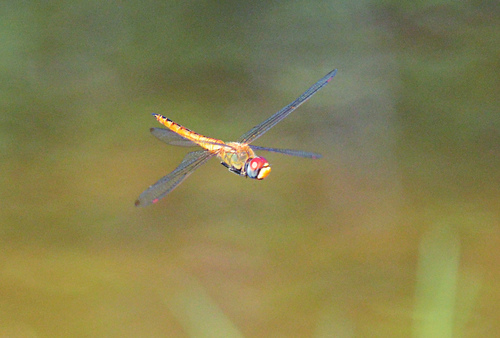
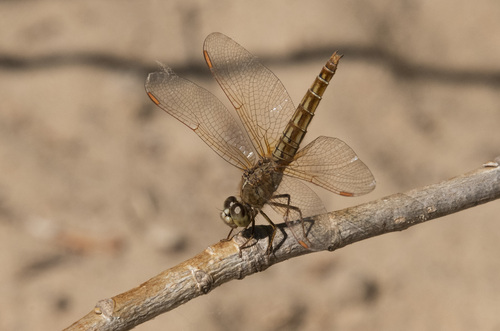
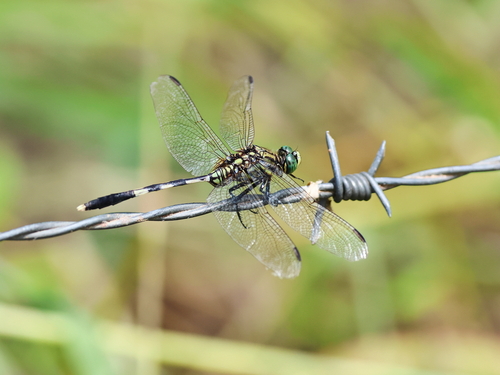
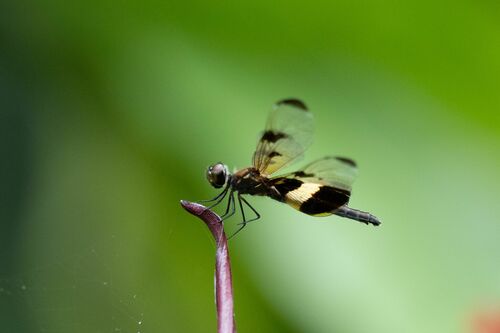
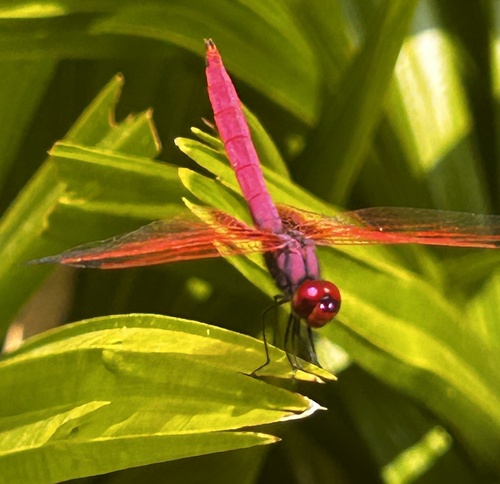
Trithemis aurora, the crimson marsh glider, is a species of dragonfly in the family Libellulidae. It is a common and widely distributed species found throughout the year across the Indian subcontinent and Southeast Asia.

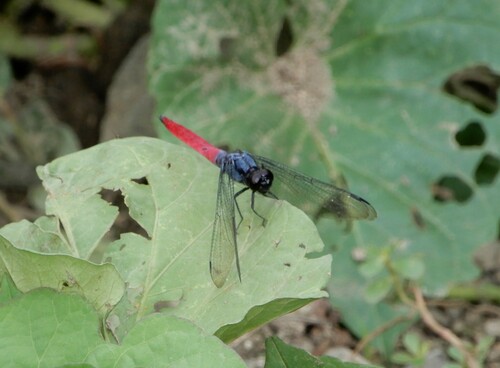
The male of this small species is distinctly different from the female. The male has a reddish-brown face, with eyes that are crimson above and brown on the sides. The thorax is red with a fine, purple pruinescence. The abdomen, the base of which is swollen, is crimson with a violet tinge. The wings are transparent with crimson venation and the base has a broad amber patch. The wing spots are a dark reddish-brown and the legs are black.

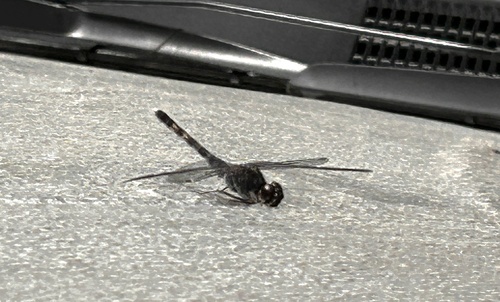
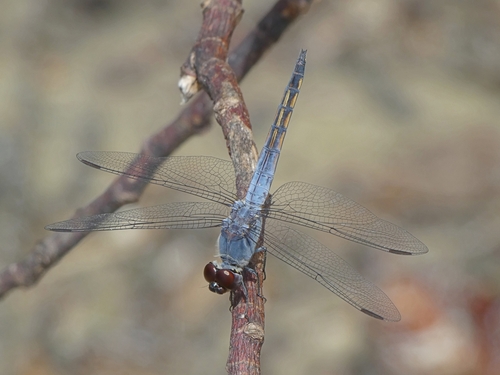
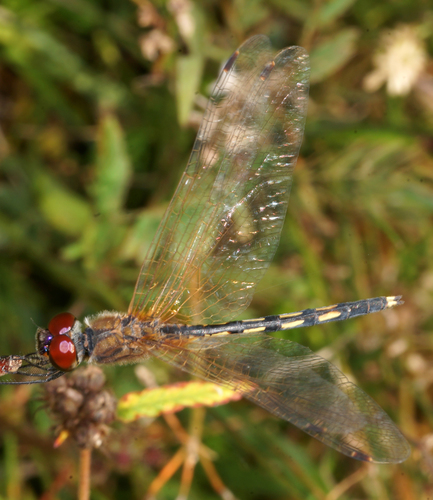
The female has an olivaceous or bright reddish-brown face with eyes that are purplish-brown above and grey below. The thorax is olivaceous with brown median and black lateral stripes. The abdomen is reddish-brown with median and lateral black markings. The black markings are confluent at the end of each segment and enclose a reddish-brown spot. The wings are transparent with brown tips. The venation is bright yellow to brown and basal amber markings are pale. The wing spots are a dark brown and the lags are dark grey... Wikipedia →
Global Distribution

Parks Where Found

# Park Country Daily sighting probability
1 Khao Yai National Park 🇹🇭 Thailand
~40%
2 Royal Bardia National Park 🇳🇵 Nepal
~40%
3 Khao Sok National Park 🇹🇭 Thailand
~40%
4 Periyar National Park 🇮🇳 India
~30%
5 Nagarhole National Park 🇮🇳 India
~30%
6 Kanha National Park 🇮🇳 India
~30%
7 Minneriya National Park 🇱🇰 Sri Lanka
~20%
8 Cuc Phuong National Park 🇻🇳 Vietnam
~20%
9 Satpura National Park 🇮🇳 India
~20%
10 Gunung Leuser National Park 🇮🇩 Indonesia
~20%
11 Ranthambore National Park 🇮🇳 India
~20%
12 Yala National Park 🇱🇰 Sri Lanka
~20%
13 Taman Negara National Park 🇲🇾 Malaysia
~20%
14 Doi Inthanon National Park 🇹🇭 Thailand
~10%
15 Kaeng Krachan National Park 🇹🇭 Thailand
~10%
16 Danum Valley Conservation Area 🇲🇾 Malaysia
~10%
17 Cat Tien National Park 🇻🇳 Vietnam
~10%

Cities Where Found

# City Country Daily sighting probability
1 Kota 🇮🇳 India
~40%
2 Naha 🇯🇵 Japan
~30%
3 Singapore 🇸🇬 Singapore
~30%
4 Kuala Lumpur 🇲🇾 Malaysia
~30%
5 Johor Bahru 🇲🇾 Malaysia
~30%
6 Thiruvananthapuram 🇮🇳 India
~20%
7 Davao City 🇵🇭 Philippines
~20%
8 Taichung 🇹🇼 Taiwan
~20%
9 Nashik 🇮🇳 India
~20%
10 Vadodara 🇮🇳 India
~20%

Before you go

What are the chances of seeing a Crimson Marsh Glider in Mumbai?

With luck

About 10% of wildlife watchers report a Crimson Marsh Glider sighting in Mumbai on a given day, based on 20 verified sightings from GBIF citizen-science data. It is the 152nd most-seen of the 362 insects we can rate there. Over three days the chance rises to about 20%, and over a week to about 40%, if each day is a fresh chance.

When is the best time to see a Crimson Marsh Glider in Mumbai?

June and October–April

In those months about 10% of wildlife watchers report a Crimson Marsh Glider in Mumbai on a given day, against under 5% in May and July–September, the lowest months.

What time of day is best to see a Crimson Marsh Glider?

Between 11 am and 2 pm

Across all the parks we cover, that three-hour window holds the most Crimson Marsh Glider sightings with a recorded time, and about 9 in 10 of them come between 6 am and 6 pm: it is a daytime animal.

Is Mumbai the best place to see a Crimson Marsh Glider?

30th of 35

Of the 35 cities where we can rate Crimson Marsh Glider sightings, Mumbai ranks 30th at about 10%. The best odds are in Kota (India, about 40%), Naha (Japan, about 30%) and Singapore (Singapore, about 30%).

Where does the Crimson Marsh Glider sighting chance come from?

GBIF citizen-science records

It is estimated from how often the Crimson Marsh Glider is recorded against all the insects logged in Mumbai (20 verified sightings), calibrated against known sighting rates. Figures are rounded to the nearest 10% because citizen-science data supports honest approximations, not decimals, and months with records from fewer than five people show "—". How it works.

← Back to Mumbai