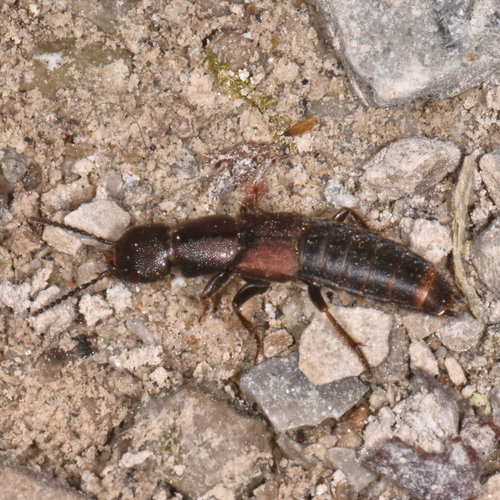

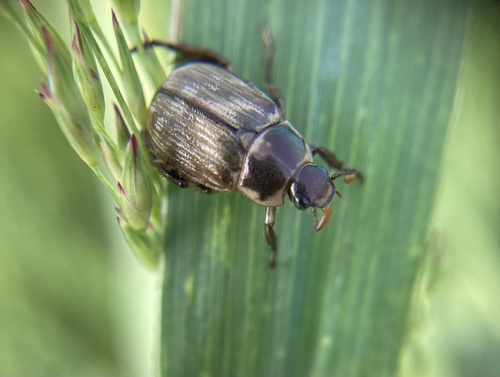
American Carrion Beetle

American Carrion Beetle

Necrophila americana

Daily sighting probability <5% · Rare
at New York City

In 3 days ~10% in a week ~20%

18 Verified sightings at New York City
171 In all 7 parks From 2019 to 2026
October Best month
☀️ Diurnal When it's spotted

About the American Carrion Beetle

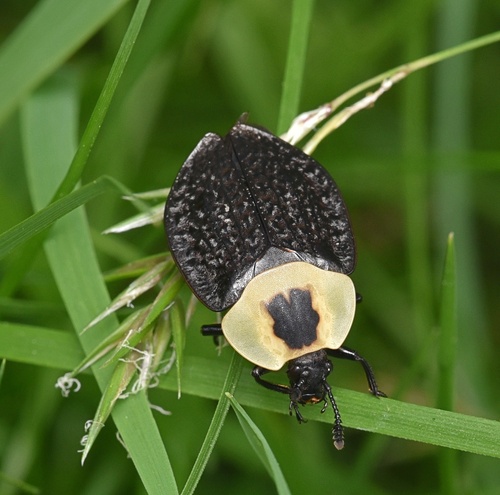
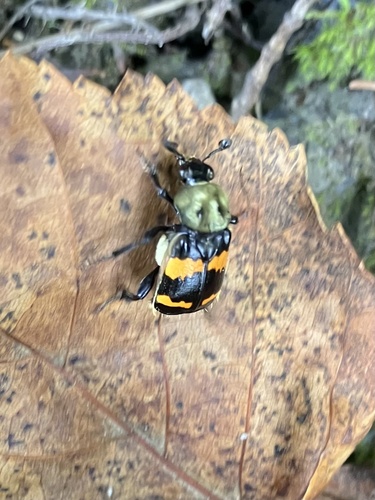
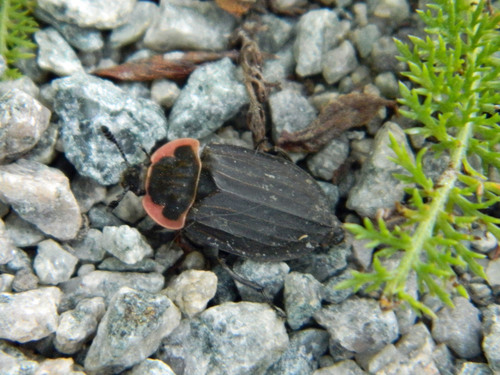
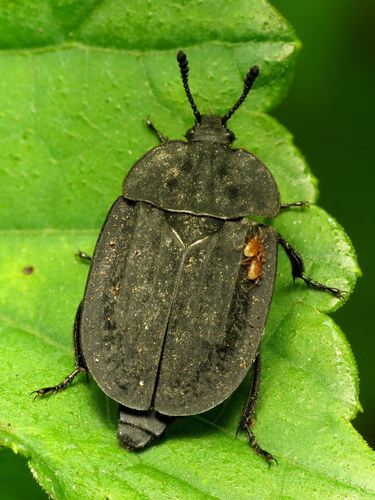
The American carrion beetle (Necrophila americana, formerly Silpha americana) is a North American beetle of the family Silphidae. It lays its eggs in, and its larvae consume, raw flesh (particularly that of dead animals) and fungi. The larvae and adults also consume fly larvae and the larvae of other carrion beetles that compete for the same food sources as their larvae. They prefer to live in marshy and woody habitats. Necrophila americana emerge from their larval state in the early summer. A cuckoo bumble bee, Bombus ashtoni, displays close mimicry with the American carrion beetle. They are important in forensic studies because of their tendency to thrive on large carcasses.

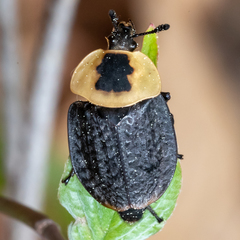
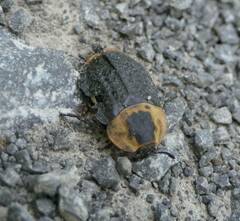
Necrophila americana are distinctive in that they have a relatively large, broadly rounded, and flattened body with a yellow pronotum. It is the only North American silphid with a mostly yellow pronotum, and it is the only species of Necrophila found in North America, as all other species are found in Asia. There is sexual dimorphism, with the males having rounded elytral apices and females having their apices more prolonged. They typically range from 12 to 22 millimeters long. The larvae can... Wikipedia →

Global Distribution

Parks Where Found

# Park Country Daily sighting probability
1 Voyageurs National Park 🇺🇸 United States
~30%
2 Shenandoah National Park 🇺🇸 United States
~20%
3 Cape Breton Highlands National Park 🇨🇦 Canada
~20%
4 Congaree National Park 🇺🇸 United States
~10%
5 Acadia National Park 🇺🇸 United States
~10%
6 Great Smoky Mountains National Park 🇺🇸 United States
~10%
7 Point Pelee National Park 🇨🇦 Canada
~10%

Cities Where Found

# City Country Daily sighting probability
1 Washington 🇺🇸 United States
~10%
2 Baltimore 🇺🇸 United States
~10%
3 Montreal 🇨🇦 Canada
~10%
4 Philadelphia 🇺🇸 United States
<5%
5 Minneapolis [Saint Paul] 🇺🇸 United States
<5%
6 Chicago 🇺🇸 United States
<5%
7 Toronto 🇨🇦 Canada
<5%
8 Boston 🇺🇸 United States
<5%
9 New York City 🇺🇸 United States
<5%

Before you go

What are the chances of seeing an American Carrion Beetle in New York City?

Rare

Under 5% of wildlife watchers report an American Carrion Beetle sighting in New York City on a given day, based on 18 verified sightings from GBIF citizen-science data. It is the 710th most-seen of the 1623 insects we can rate there. Over three days the chance rises to about 10%, and over a week to about 20%, if each day is a fresh chance.

When is the best time to see an American Carrion Beetle in New York City?

Any time of year

In every month with enough records, under 5% of wildlife watchers report an American Carrion Beetle in New York City on a given day, so our monthly data shows no clear season.

What time of day is best to see an American Carrion Beetle?

Between 11 am and 2 pm

Across all the parks we cover, that three-hour window holds the most American Carrion Beetle sightings with a recorded time, and about 9 in 10 of them come between 6 am and 6 pm: it is a daytime animal.

Is New York City the best place to see an American Carrion Beetle?

9th of 9

Of the 9 cities where we can rate American Carrion Beetle sightings, New York City ranks 9th at under 5%. The best odds are in Washington (United States, about 10%), Baltimore (United States, about 10%) and Montreal (Canada, about 10%).

Where does the American Carrion Beetle sighting chance come from?

GBIF citizen-science records

It is estimated from how often the American Carrion Beetle is recorded against all the insects logged in New York City (18 verified sightings), calibrated against known sighting rates. Figures are rounded to the nearest 10% because citizen-science data supports honest approximations, not decimals, and months with records from fewer than five people show "—". How it works.

← Back to New York City