Eastern Towhee

Eastern Towhee

Pipilo erythrophthalmus

Silhouette: Andy Wilson · PhyloPic

LCLeast ConcernNTVUENCR
Daily sighting probability ~10% · With luck
at New York City

In 3 days ~40% in a week ~70%

18,896 Verified sightings at New York City
11,996 In all 9 parks From 2019 to 2026
April Best month
☀️ Diurnal When it's spotted

About the Eastern Towhee

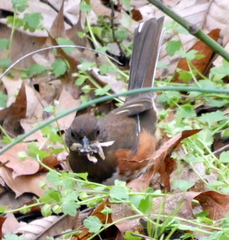
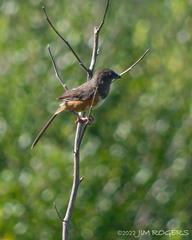
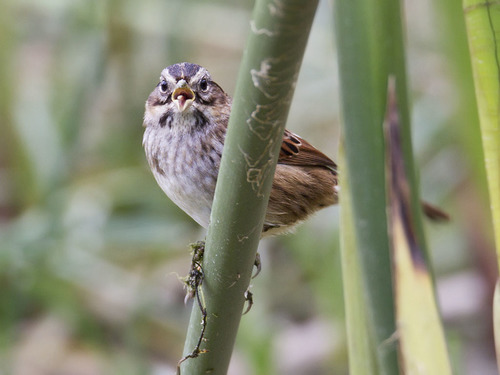
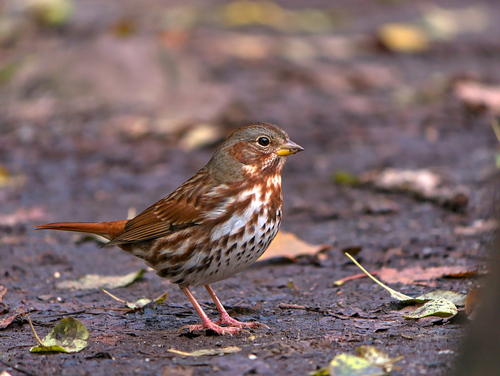
The eastern towhee (Pipilo erythrophthalmus), also known as chewink, joree, or joree bird, is a large New World sparrow. The taxonomy of the towhees has been under debate in recent decades, and formerly this bird and the spotted towhee were considered a single species, the rufous-sided towhee.

Their breeding habitat is brushy areas across eastern North America. They nest either low in bushes or on the ground under shrubs. Northern birds migrate to the southern United States. One of this species was recorded as a vagrant to western Europe, a single bird in Great Britain in 1966.

The song is a short drink your teeeeea lasting around one second, starting with a sharp call ("drink!") and ending with a short trill "teeeeea". The name "towhee" is onomatopoeic description of one of the towhee's most common calls, a short, two-part call rising in pitch and sometimes also called a "chewink" call.

The eastern towhee was described by Swedish naturalist Carl Linnaeus in 1758 in the 10th edition of his Systema Naturae and given the binomial name Fringilla erythrophthalma. This species is now placed in the genus Pipilo that was introduced by the French ornithologist Louis Pierre Vieillot... Wikipedia →

Sounds

Call0:35

United States · 2026

© Rory Nefdt · XC1133852 · CC BY-NC-SA 4.0

Song0:15

United States · 2025

© Bobby Wilcox · XC1038305 · CC BY-NC-SA 4.0

Dawn song0:09

United States · 2022

© Jim Berry · XC722360 · CC BY-NC-SA 4.0

Global Distribution

Parks Where Found

# Park Country Daily sighting probability
1 Shenandoah National Park 🇺🇸 United States
~50%
2 Great Smoky Mountains National Park 🇺🇸 United States
~30%
3 Congaree National Park 🇺🇸 United States
~20%
4 Point Pelee National Park 🇨🇦 Canada
~20%
5 Everglades National Park 🇺🇸 United States
~10%
6 Merritt Island National Wildlife Refuge 🇺🇸 United States
~10%
7 Riding Mountain National Park 🇨🇦 Canada
~10%
8 Acadia National Park 🇺🇸 United States
<5%
9 Big Cypress National Preserve 🇺🇸 United States
<5%

Cities Where Found

# City Country Daily sighting probability
1 Washington 🇺🇸 United States
~20%
2 New York City 🇺🇸 United States
~10%
3 Baltimore 🇺🇸 United States
~10%
4 Philadelphia 🇺🇸 United States
~10%
5 Chicago 🇺🇸 United States
~10%
6 Toronto 🇨🇦 Canada
<5%
7 Boston 🇺🇸 United States
<5%
8 Detroit 🇺🇸 United States
<5%
9 Dallas 🇺🇸 United States
<5%
10 Minneapolis [Saint Paul] 🇺🇸 United States
<5%

Before you go

What are the chances of seeing an Eastern Towhee in New York City?

With luck

About 10% of wildlife watchers report an Eastern Towhee sighting in New York City on a given day, based on 18,896 verified sightings from GBIF citizen-science data. It is the 52nd most-seen of the 359 birds we can rate there. Over three days the chance rises to about 40%, and over a week to about 70%, if each day is a fresh chance.

When is the best time to see an Eastern Towhee in New York City?

April and October

In those months about 30% of wildlife watchers report an Eastern Towhee in New York City on a given day, against under 5% in September and December–March, the lowest months.

What time of day is best to see an Eastern Towhee?

Between 8 and 11 am

Across all the parks we cover, that three-hour window holds the most Eastern Towhee sightings with a recorded time, and about 8 in 10 of them come between 6 am and 6 pm: it is a daytime animal.

Is New York City the best place to see an Eastern Towhee?

2nd of 15

Of the 15 cities where we can rate Eastern Towhee sightings, New York City ranks 2nd at about 10%. The best odds are in Washington (United States, about 20%).

Which relatives of the Eastern Towhee live in New York City?

Same family: Passerellidae

The closest relatives of the Eastern Towhee that you can see in New York City (family Passerellidae, New World Sparrows) are White-throated Sparrow (about 60%), Song Sparrow (about 50%) and Dark-eyed Junco (about 20%), with each one's daily chance of a sighting.

Where does the Eastern Towhee sighting chance come from?

GBIF citizen-science records

It is estimated from how often the Eastern Towhee is recorded against all the birds logged in New York City (18,896 verified sightings), calibrated against known sighting rates. Figures are rounded to the nearest 10% because citizen-science data supports honest approximations, not decimals, and months with records from fewer than five people show "—". How it works.

← Back to New York City