


Completed

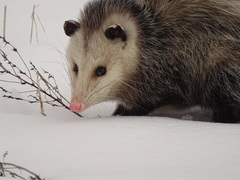

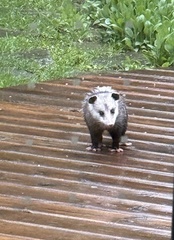
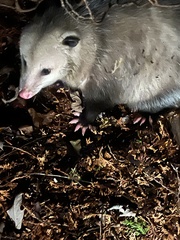
Virginia Opossum
Didelphis virginiana
Silhouette: Sarah Werning · PhyloPic
- KingdomAnimalia (Animals)
- PhylumChordata (Chordates)
- ClassMammalia (Mammals)
- OrderDidelphimorphia (Opossums)
- FamilyDidelphidae (Opossums)
- GenusDidelphis (Large American Opossums)
- SpeciesDidelphis virginiana (Virginia Opossum)
In 3 days ~30% in a week ~50%
397 Verified sightings at New York City
321 In all 9 parks From 2019 to 2026
November Best month
☀️🌙 Day & Night When it's spotted
About the Virginia Opossum
The Virginia opossum (Didelphis virginiana), also known as the North American opossum, is a member of the opossum family found from southern Canada to northern Costa Rica, making it the northernmost marsupial in the world. Commonly referred to simply as the possum, it is a solitary nocturnal animal about the size of a domestic cat, and a successful opportunist.
Opossums are familiar to many North Americans as they frequently inhabit settled areas near food sources like trash cans, pet food, compost piles, gardens or housemice. Their slow, nocturnal nature and their attraction to roadside carrion make opossums more likely to become roadkill than other animals in their range.
The Virginia opossum is the original animal named "opossum", a word that comes from Algonquian wapathemwa, meaning "white animal". Colloquially, the Virginia opossum is frequently just called a "possum". The term is applied more generally to any of the other marsupials of the families Didelphidae and Caenolestidae. The generic name (Didelphis) is derived from Ancient Greek di, "two", and delphus, "womb".
The possums of Australia, whose name derives from their similarity to the American species, are also... Wikipedia →
Sounds
Recording0:03
Mexico · 2020
© gmam04 · iNaturalist · CC BY-NC 4.0
Recording0:10
United States · 2023
© pondcypressstudio · iNaturalist · CC BY-NC 4.0
Recording0:34
United States · 2018
© Hugh A. Rand · iNaturalist · CC BY-NC 4.0
Recent sightings of Virginia Opossum in New York City
LIVEiNaturalistGlobal Distribution
Parks Where Found
| # | Park | Country | Daily sighting probability |
|---|---|---|---|
| 1 | Big Cypress National Preserve | 🇺🇸 United States | |
| 2 | Point Pelee National Park | 🇨🇦 Canada | |
| 3 | Congaree National Park | 🇺🇸 United States | |
| 4 | Everglades National Park | 🇺🇸 United States | |
| 5 | Merritt Island National Wildlife Refuge | 🇺🇸 United States | |
| 6 | Cumbres de Monterrey National Park | 🇲🇽 Mexico | |
| 7 | Shenandoah National Park | 🇺🇸 United States | |
| 8 | Channel Islands National Park | 🇺🇸 United States | |
| 9 | Great Smoky Mountains National Park | 🇺🇸 United States |
Cities Where Found
| # | City | Country | Daily sighting probability |
|---|---|---|---|
| 1 | San Antonio | 🇺🇸 United States | |
| 2 | Austin | 🇺🇸 United States | |
| 3 | Mexico City | 🇲🇽 México | |
| 4 | Monterrey | 🇲🇽 México | |
| 5 | Houston | 🇺🇸 United States | |
| 6 | Dallas | 🇺🇸 United States | |
| 7 | Miami | 🇺🇸 United States | |
| 8 | Los Angeles | 🇺🇸 United States | |
| 9 | Guatemala City | 🇬🇹 Guatemala | |
| 10 | Detroit | 🇺🇸 United States |
Zoos & Centres Where Found
Closest Relatives at New York City
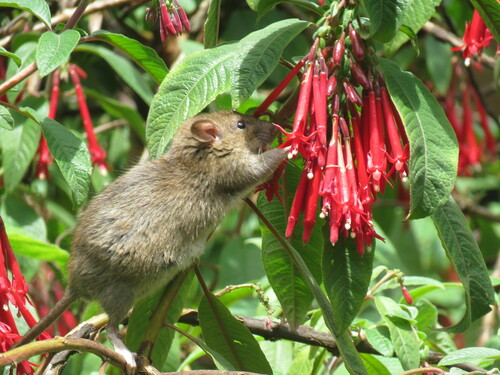
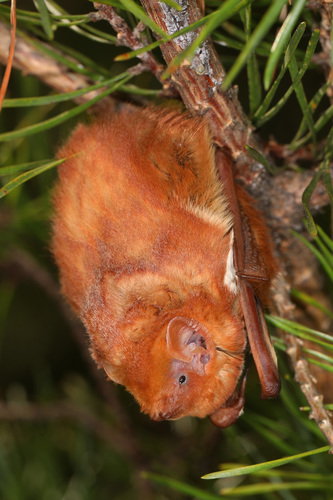
No species of the same family or order lives in New York City, so these are its closest relatives here: other mammals.





Before you go
What are the chances of seeing a Virginia Opossum in New York City?
With luck
About 10% of wildlife watchers report a Virginia Opossum sighting in New York City on a given day, based on 397 verified sightings from GBIF citizen-science data. It is the 8th most-seen of the 27 mammals we can rate there. Over three days the chance rises to about 30%, and over a week to about 50%, if each day is a fresh chance.
When is the best time to see a Virginia Opossum in New York City?
Any time of year
In every month with enough records, about 10% of wildlife watchers report a Virginia Opossum in New York City on a given day, so our monthly data shows no clear season.
What time of day is best to see a Virginia Opossum?
Between 8 and 11 am
Across all the parks we cover, that three-hour window holds the most Virginia Opossum sightings with a recorded time, and about 6 in 10 of them come between 6 am and 6 pm: it is seen both by day and at night.
Is New York City the best place to see a Virginia Opossum?
24th of 29
Of the 29 cities where we can rate Virginia Opossum sightings, New York City ranks 24th at about 10%. The best odds are in San Antonio (United States, about 30%), Austin (United States, about 30%) and Mexico City (México, about 30%).
Where does the Virginia Opossum sighting chance come from?
GBIF citizen-science records
It is estimated from how often the Virginia Opossum is recorded against all the mammals logged in New York City (397 verified sightings), calibrated against known sighting rates. Figures are rounded to the nearest 10% because citizen-science data supports honest approximations, not decimals, and months with records from fewer than five people show "—". How it works.
