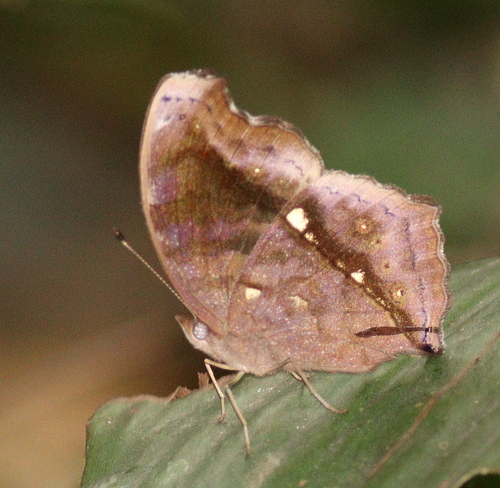
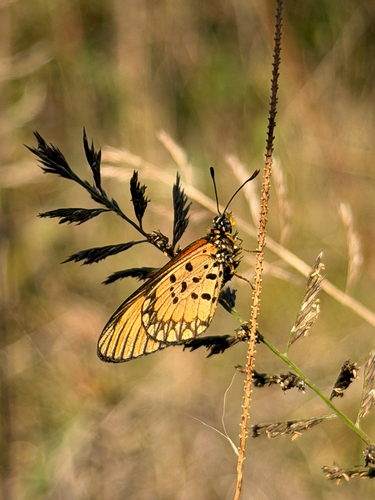
African Caper

African Caper

Belenois creona

Daily sighting probability ~30% · Possible
at Ouagadougou

In 3 days ~70% in a week ~90%

10 Verified sightings at Ouagadougou
651 In all 22 parks From 2019 to 2026
September Best month
☀️ Diurnal When it's spotted

About the African Caper

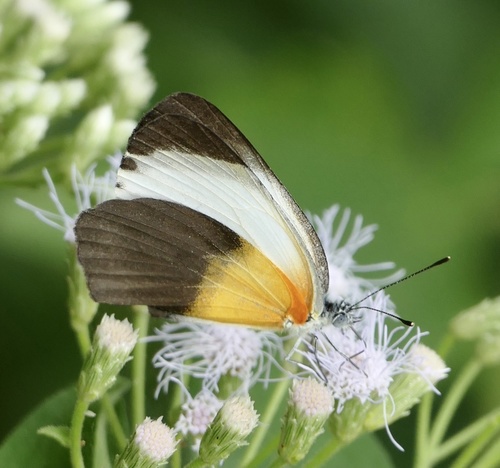
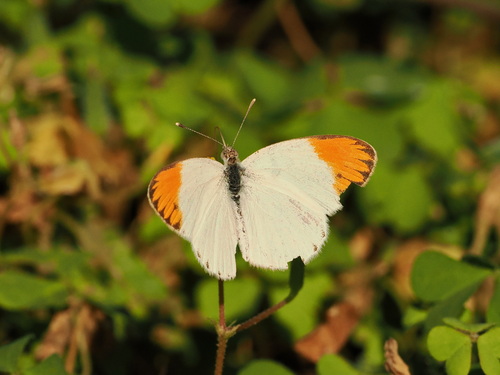
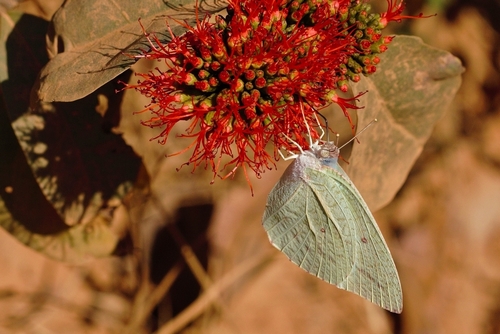
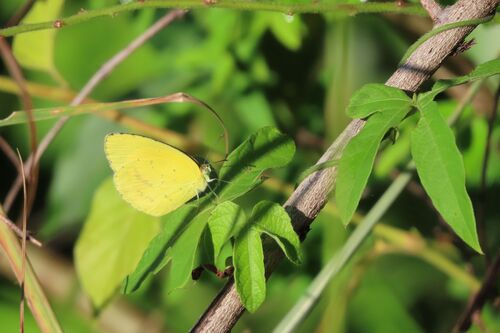
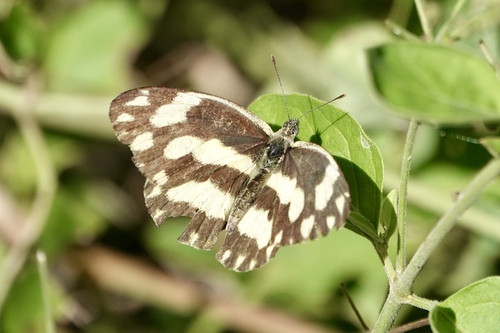
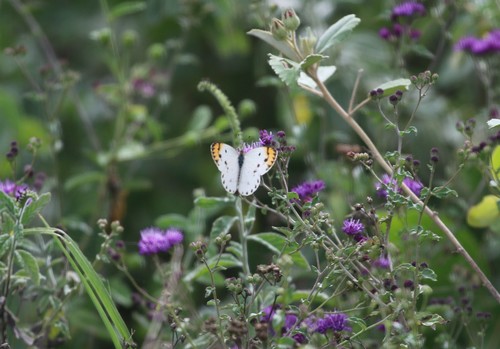
Belenois creona, the African common white or African caper, is a butterfly in the family Pieridae. It is found in the Afrotropical realm. The wingspan is 40–45 mm. The sexes are dimorphic. Uppersides are white with black or brown marginal borders and veins in forewing apex. There is a black spot in the upperside cell, instead of a bar as in the brown-veined white (B. aurota).

Females have broader dark upperside borders on both wings. Underwings are yellow during the wet season. The larvae feed on Capparis and Maerua species. Seitz, A. Die Gross-Schmetterlinge der Erde 13: Die Afrikanischen Tagfalter. Plate XIII 13 Seitz, A. Die Gross-Schmetterlinge der Erde 13: Die Afrikanischen Tagfalter. Plate XIII 12 Wikipedia →

Global Distribution

Parks Where Found

# Park Country Daily sighting probability
1 Gonarezhou National Park 🇿🇼 Zimbabwe
~40%
2 uMkhuze Game Reserve 🇿🇦 South Africa
~40%
3 Lower Zambezi National Park 🇿🇲 Zambia
~40%
4 Akagera National Park 🇷🇼 Rwanda
~30%
5 Liwonde National Park 🇲🇼 Malawi
~30%
6 Hluhluwe-Imfolozi Park 🇿🇦 South Africa
~30%
7 Mana Pools National Park 🇿🇼 Zimbabwe
~30%
8 Lake Mburo National Park 🇺🇬 Uganda
~30%
9 Mikumi National Park 🇹🇿 Tanzania
~30%
10 Queen Elizabeth National Park 🇺🇬 Uganda
~30%
11 Lake Manyara National Park 🇹🇿 Tanzania
~30%
12 Murchison Falls National Park 🇺🇬 Uganda
~20%
13 iSimangaliso Wetland Park 🇿🇦 South Africa
~20%
14 Tsavo West National Park 🇰🇪 Kenya
~20%
15 Kruger National Park 🇿🇦 South Africa
~20%
16 Tarangire National Park 🇹🇿 Tanzania
~20%
17 Addo Elephant National Park 🇿🇦 South Africa
~20%
18 Amboseli National Park 🇰🇪 Kenya
~20%
19 Bwindi Impenetrable National Park 🇺🇬 Uganda
~10%
20 Nairobi National Park 🇰🇪 Kenya
~10%
21 Chobe National Park 🇧🇼 Botswana
~10%
22 Garden Route National Park 🇿🇦 South Africa
<5%

Cities Where Found

# City Country Daily sighting probability
1 Lusaka 🇿🇲 Zambia
~50%
2 Ouagadougou 🇧🇫 Burkina Faso
~30%
3 Dar es-Salaam 🇹🇿 Tanzania
~20%
4 Durban 🇿🇦 South Africa
~20%
5 Nairobi 🇰🇪 Kenya
~10%
6 Harare 🇿🇼 Zimbabwe
~10%
7 Pretoria 🇿🇦 South Africa
~10%
8 Johannesburg 🇿🇦 South Africa
~10%

Before you go

What are the chances of seeing an African Caper in Ouagadougou?

Possible

About 30% of wildlife watchers report an African Caper sighting in Ouagadougou on a given day, based on 10 verified sightings from GBIF citizen-science data. It is the 5th most-seen of the 28 insects we can rate there. Over three days the chance rises to about 70%, and over a week to about 90%, if each day is a fresh chance.

When is the best time to see an African Caper in Ouagadougou?

September

In that month about 50% of wildlife watchers report an African Caper in Ouagadougou on a given day, against about 10% in January–April, July–August and November, the lowest months. That is one of Ouagadougou's wettest months, with about 150 mm of rain against almost none in December.

What time of day is best to see an African Caper?

Between 9 am and noon

Across all the parks we cover, that three-hour window holds the most African Caper sightings with a recorded time, and about 9 in 10 of them come between 6 am and 6 pm: it is a daytime animal.

Is Ouagadougou the best place to see an African Caper?

2nd of 8

Of the 8 cities where we can rate African Caper sightings, Ouagadougou ranks 2nd at about 30%. The best odds are in Lusaka (Zambia, about 50%).

Which relatives of the African Caper live in Ouagadougou?

Same family: Pieridae

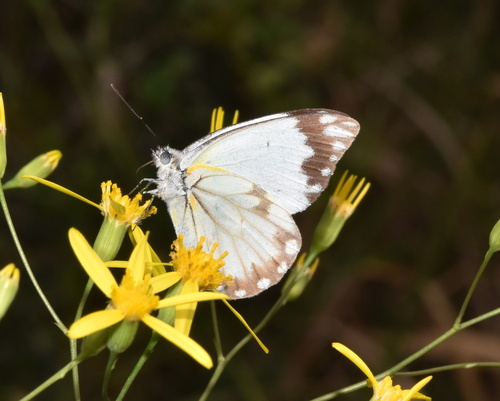
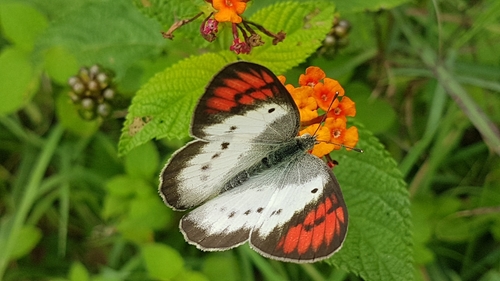
The closest relatives of the African Caper that you can see in Ouagadougou (family Pieridae, Whites, Yellows, and Sulphurs) are Banded Scarlet Tip (about 30%), Western Dotted Border (about 30%) and Desert Orange Tip (about 20%), with each one's daily chance of a sighting.

Where does the African Caper sighting chance come from?

GBIF citizen-science records

It is estimated from how often the African Caper is recorded against all the insects logged in Ouagadougou (10 verified sightings), calibrated against known sighting rates. Figures are rounded to the nearest 10% because citizen-science data supports honest approximations, not decimals, and months with records from fewer than five people show "—". How it works.
← Back to Ouagadougou