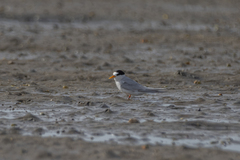
Fairy Tern

Fairy Tern

Sternula nereis

Silhouette: Sheatherius · PhyloPic

LCNTVUVulnerableENCR
Daily sighting probability <5% · Rare
at Perth

In 3 days ~10% in a week ~20%

231 Verified sightings at Perth
314 In all 4 parks From 2019 to 2026
November Best month
☀️ Diurnal When it's spotted

About the Fairy Tern

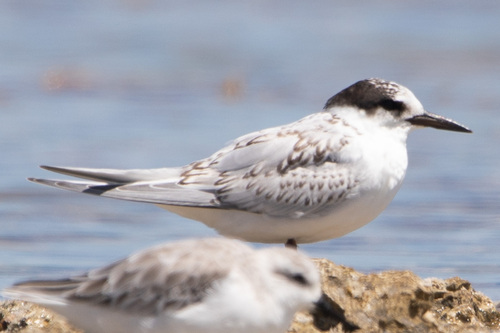
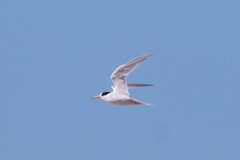
The fairy tern (Sternula nereis) is a small tern which is native to the southwestern Pacific. It is listed as vulnerable by the IUCN and the New Zealand subspecies is critically endangered. Fairy terns live in colonies along the coastlines and estuaries of Australia, New Zealand, and New Caledonia, feeding largely on small, epipelagic schooling fishes, breeding in areas close to their feeding sites. They have a monogamous mating system, forming breeding pairs in which they mate, nest, and care for offspring.

There are three subspecies: Australian fairy tern, Sternula nereis nereis (Gould, 1843) – breeds in Australia New Caledonian fairy tern, Sternula nereis exsul (Mathews, 1912) – breeds in New Caledonia New Zealand fairy tern / Tara iti, Sternula nereis davisae (Mathews & Iredale, 1913) – breeds in northern New Zealand

The three subspecies are distinguished by geographical range, and slight morphological differences. Gene flow between subspecies is little to none. The fairy tern is a small tern with a white body and light bluish-grey wings. A small black patch extends no further than the eye and not as far as the bill. In the breeding plumage both the beak and the... Wikipedia →
Sounds

Recording0:16

Australia · 2020

© Drew Davison · XC609299 · CC BY-NC-SA 4.0

Call0:22

Australia · 2024

© nick talbot · XC881672 · CC BY-NC-SA 4.0

Flight call0:14

Australia · 2020

© Marc Anderson · XC606201 · CC BY-NC-ND 4.0

Global Distribution

Parks Where Found

# Park Country Daily sighting probability
1 Rottnest Island 🇦🇺 Australia
~50%
2 Ningaloo Marine Park 🇦🇺 Australia
~10%
3 Cape Range 🇦🇺 Australia
~10%
4 Wilsons Promontory National Park 🇦🇺 Australia
<5%

Cities Where Found

# City Country Daily sighting probability
1 Perth 🇦🇺 Australia
<5%
2 Melbourne 🇦🇺 Australia
<5%

Before you go

What are the chances of seeing a Fairy Tern in Perth?

Rare

Under 5% of wildlife watchers report a Fairy Tern sighting in Perth on a given day, based on 231 verified sightings from GBIF citizen-science data. It is the 92nd most-seen of the 162 birds we can rate there. Over three days the chance rises to about 10%, and over a week to about 20%, if each day is a fresh chance.

When is the best time to see a Fairy Tern in Perth?

January and November

In those months about 10% of wildlife watchers report a Fairy Tern in Perth on a given day, against under 5% in February–October and December, the lowest months. Those are among Perth's driest months, with about 20 mm of rain a month against 130 mm in July.

What time of day is best to see a Fairy Tern?

Between 1 and 4 pm

Across all the parks we cover, that three-hour window holds the most Fairy Tern sightings with a recorded time, and about 9 in 10 of them come between 6 am and 6 pm: it is a daytime animal.

Is Perth the best place to see a Fairy Tern?

Yes

Of the 2 cities where we can rate Fairy Tern sightings, Perth has the highest daily chance: under 5%. Next come Melbourne (Australia, under 5%).

Which relatives of the Fairy Tern live in Perth?

Same family: Laridae

The closest relatives of the Fairy Tern that you can see in Perth (family Laridae, Gulls, Terns, and Skimmers) are Silver Gull (about 30%), Crested Tern (about 10%) and Caspian Tern (about 10%), with each one's daily chance of a sighting.

Where does the Fairy Tern sighting chance come from?

GBIF citizen-science records

It is estimated from how often the Fairy Tern is recorded against all the birds logged in Perth (231 verified sightings), calibrated against known sighting rates. Figures are rounded to the nearest 10% because citizen-science data supports honest approximations, not decimals, and months with records from fewer than five people show "—". How it works.

← Back to Perth