Colorado Potato Beetle

Colorado Potato Beetle

Leptinotarsa decemlineata

Daily sighting probability <5% · Rare
at Porto

In 3 days ~10% in a week ~30%

14 Verified sightings at Porto
151 In all 9 parks From 2019 to 2026
July Best month
☀️ Diurnal When it's spotted

About the Colorado Potato Beetle

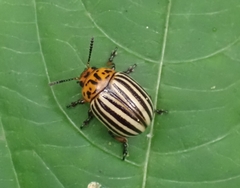
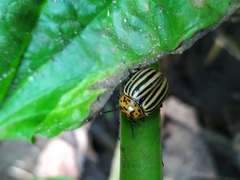
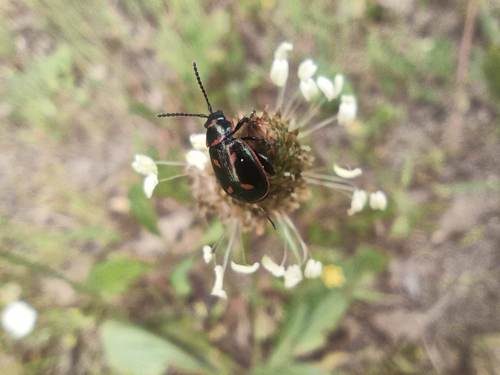
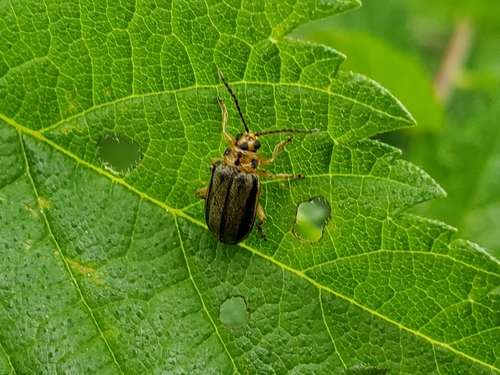
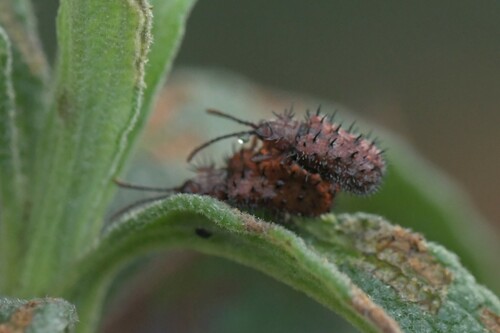
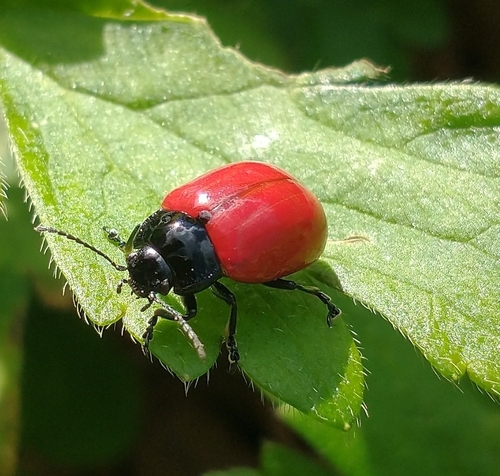
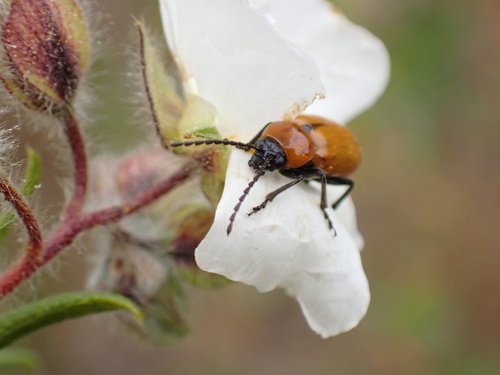
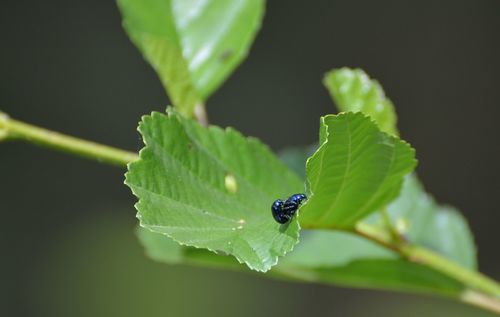
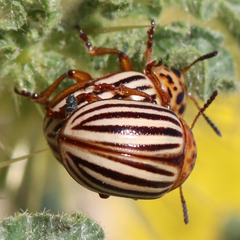
The Colorado potato beetle (Leptinotarsa decemlineata; also known as the Colorado beetle, the ten-striped spearman, the ten-lined potato beetle, and the potato bug) is a beetle known for being a major pest of potato crops. It is about 10 mm (3⁄8 in) long, with a bright yellow/orange body and five bold brown stripes along the length of each of its wings. Native to the Rocky Mountains, it spread rapidly in potato crops across the United States and then Europe from 1859 onwards.

The Colorado potato beetle was first observed in 1811 by Thomas Nuttall and was formally described in 1824 by American entomologist Thomas Say. The beetles were collected in the Rocky Mountains, where they were feeding on the buffalo bur, Solanum rostratum.

Adult beetles typically are 6–11 mm (0.24–0.43 in) in length and 3 mm (0.12 in) in width. They weigh 50–170 mg. The beetles are orange-yellow in color with 10 characteristic black stripes on their front wings or elytra. The specific name decemlineata, meaning "ten-lined", derives from this feature.

Adult beetles may be visually confused with L. juncta, which is the false potato beetle. Unlike the Colorado potato beetle, it is not an agricultural... Wikipedia →

Global Distribution

Parks Where Found

# Park Country Daily sighting probability
1 Badlands National Park 🇺🇸 United States
~20%
2 Tatra National Park 🇸🇰 Slovakia
~10%
3 Białowieża National Park 🇵🇱 Poland
~10%
4 Bavarian Forest National Park 🇩🇪 Germany
~10%
5 Wadden Sea National Park 🇩🇪 Germany
~10%
6 Fertő-Hanság National Park 🇭🇺 Hungary
~10%
7 Cévennes National Park 🇫🇷 France
~10%
8 Acadia National Park 🇺🇸 United States
~10%
9 Pyrénées National Park 🇫🇷 France
<5%

Cities Where Found

# City Country Daily sighting probability
1 Vienna 🇦🇹 Austria
~10%
2 Hamburg 🇩🇪 Germany
~10%
3 Essen 🇩🇪 Germany
~10%
4 Berlin 🇩🇪 Germany
~10%
5 Kyiv 🇺🇦 Ukraine
~10%
6 Nizhny Novgorod 🇷🇺 Russia
~10%
7 Prague 🇨🇿 Czechia
~10%
8 Warsaw 🇵🇱 Poland
~10%
9 Novosibirsk 🇷🇺 Russia
~10%
10 Lyon 🇫🇷 France
~10%

Before you go

What are the chances of seeing a Colorado Potato Beetle in Porto?

Rare

Under 5% of wildlife watchers report a Colorado Potato Beetle sighting in Porto on a given day, based on 14 verified sightings from GBIF citizen-science data. It is the 283rd most-seen of the 498 insects we can rate there. Over three days the chance rises to about 10%, and over a week to about 30%, if each day is a fresh chance.

When is the best time to see a Colorado Potato Beetle in Porto?

June and July

In those months about 10% of wildlife watchers report a Colorado Potato Beetle in Porto on a given day, against under 5% in August to May, the lowest months. Those are among Porto's driest months, with about 25 mm of rain a month against 140 mm in January.

What time of day is best to see a Colorado Potato Beetle?

Between 1 and 4 pm

Across all the parks we cover, that three-hour window holds the most Colorado Potato Beetle sightings with a recorded time, and about 8 in 10 of them come between 6 am and 6 pm: it is a daytime animal.

Is Porto the best place to see a Colorado Potato Beetle?

12th of 25

Of the 25 cities where we can rate Colorado Potato Beetle sightings, Porto ranks 12th at under 5%. The best odds are in Vienna (Austria, about 10%), Hamburg (Germany, about 10%) and Essen (Germany, about 10%).

Which relatives of the Colorado Potato Beetle live in Porto?

Same family: Chrysomelidae

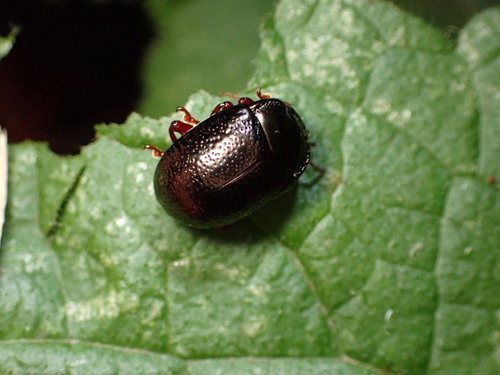
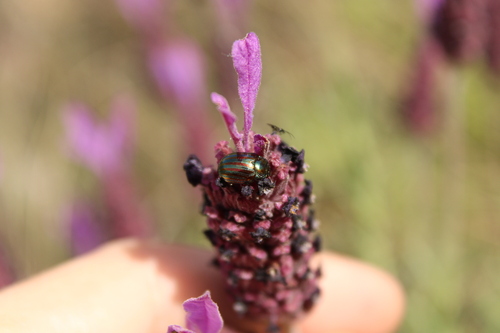
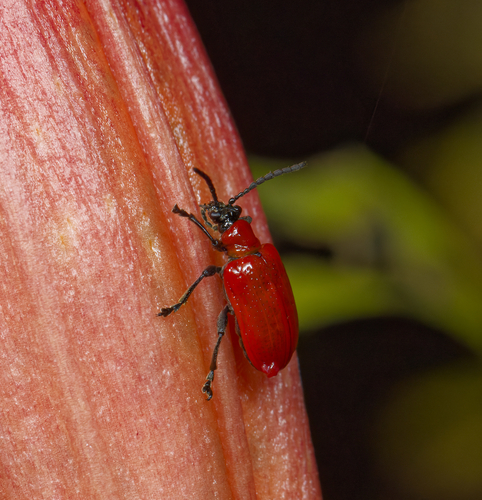
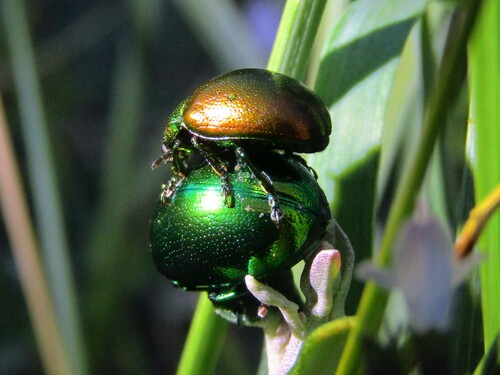
The closest relatives of the Colorado Potato Beetle that you can see in Porto (family Chrysomelidae, Leaf Beetles) are Bronze Beetle (about 10%) and Rosemary Beetle (about 10%), with each one's daily chance of a sighting.

Where does the Colorado Potato Beetle sighting chance come from?

GBIF citizen-science records

It is estimated from how often the Colorado Potato Beetle is recorded against all the insects logged in Porto (14 verified sightings), calibrated against known sighting rates. Figures are rounded to the nearest 10% because citizen-science data supports honest approximations, not decimals, and months with records from fewer than five people show "—". How it works.

← Back to Porto