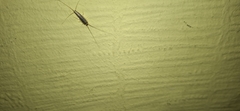
Long-Tailed Silverfish

Long-Tailed Silverfish

Ctenolepisma longicaudatum

Daily sighting probability ~20% · Possible
at Quito

In 3 days ~60% in a week ~90%

46 Verified sightings at Quito
17 In all 2 parks From 2019 to 2026
February Best month
☀️ Diurnal When it's spotted

About the Long-Tailed Silverfish

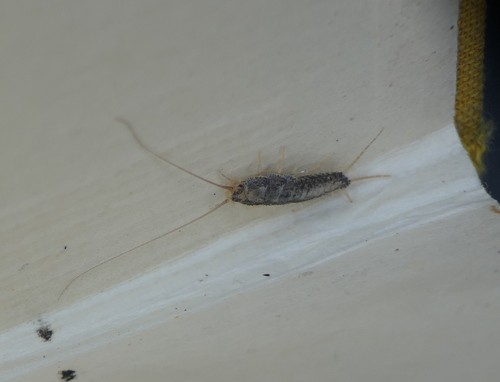
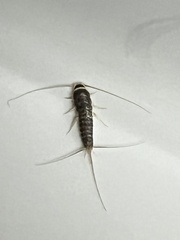
Ctenolepisma longicaudatum, generally known as the gray silverfish, long-tailed silverfish or paper silverfish, is a species of Zygentoma in the family Lepismatidae. It was described by the German entomologist Karl Leopold Escherich in 1905 based on specimens collected in South Africa, but is found worldwide as synanthrope in human housings.

In recent years, gray silverfish have increasingly become an issue in indoor environments in Europe, especially in newly built houses with a stable climate beneficial for the growth and reproduction of this species. As a food generalist with the ability to digest the cellulose contained in paper and cellulose-based textiles like rayon, Ctenolepisma longicaudatum is considered a pest species in cultural heritage institutions like libraries and archives.

Most authors have historically treated the nomenclatural gender of Ctenolepisma as feminine, but in 2018 the International Commission on Zoological Nomenclature issued a formal ruling (ICZN Opinion 2427) stating the gender of Lepisma (and all genera with that ending) is neuter, following ICZN Article 30, which resulted in changes to the spelling of several well-known species, including... Wikipedia →
Global Distribution

Parks Where Found

# Park Country Daily sighting probability
1 Bavarian Forest National Park 🇩🇪 Germany
~10%
2 Wadden Sea National Park 🇩🇪 Germany
<5%

Cities Where Found

# City Country Daily sighting probability
1 Quito 🇪🇨 Ecuador
~20%
2 Essen 🇩🇪 Germany
~10%
3 Tijuana 🇲🇽 México
~10%
4 Montevideo 🇺🇾 Uruguay
~10%
5 Jerusalem 🇮🇱 Israel
~10%
6 Copenhagen 🇩🇰 Denmark
~10%
7 Helsinki 🇫🇮 Finland
~10%
8 Barcelona 🇪🇸 Spain
~10%
9 Monterrey 🇲🇽 México
~10%
10 Valencia 🇪🇸 Spain
~10%

Before you go

What are the chances of seeing a Long-Tailed Silverfish in Quito?

Possible

About 20% of wildlife watchers report a Long-Tailed Silverfish sighting in Quito on a given day, based on 46 verified sightings from GBIF citizen-science data. It is the 16th most-seen of the 83 insects we can rate there. Over three days the chance rises to about 60%, and over a week to about 90%, if each day is a fresh chance.

When is the best time to see a Long-Tailed Silverfish in Quito?

February

In that month about 40% of wildlife watchers report a Long-Tailed Silverfish in Quito on a given day, against under 5% in January, the lowest month. That is one of Quito's wettest months, with about 140 mm of rain against 25 mm in August.

What time of day is best to see a Long-Tailed Silverfish?

Between 6 and 9 am

Across all the parks we cover, that three-hour window holds the most Long-Tailed Silverfish sightings with a recorded time, and about 7 in 10 of them come between 6 am and 6 pm: it is a daytime animal.

Is Quito the best place to see a Long-Tailed Silverfish?

Yes

Of the 48 cities where we can rate Long-Tailed Silverfish sightings, Quito has the highest daily chance: about 20%. Next come Essen (Germany, about 10%) and Tijuana (México, about 10%).

Where does the Long-Tailed Silverfish sighting chance come from?

GBIF citizen-science records

It is estimated from how often the Long-Tailed Silverfish is recorded against all the insects logged in Quito (46 verified sightings), calibrated against known sighting rates. Figures are rounded to the nearest 10% because citizen-science data supports honest approximations, not decimals, and months with records from fewer than five people show "—". How it works.

← Back to Quito