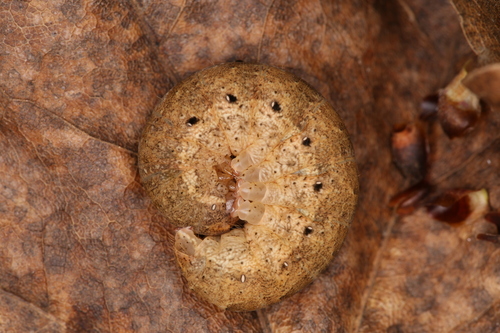
Common Quaker

Common Quaker

Orthosia cerasi

Daily sighting probability <5% · Rare
at Rotterdam [The Hague]

In 3 days ~10% in a week ~30%

5 Verified sightings at Rotterdam [The Hague]
253 In all 7 parks From 2019 to 2026
March Best month
☀️🌙 Day & Night When it's spotted

About the Common Quaker

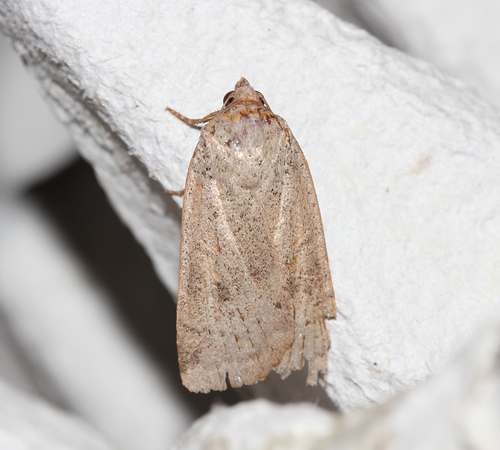
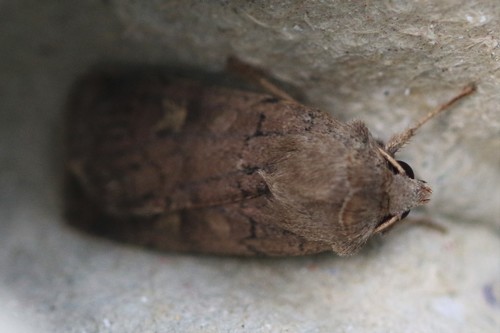
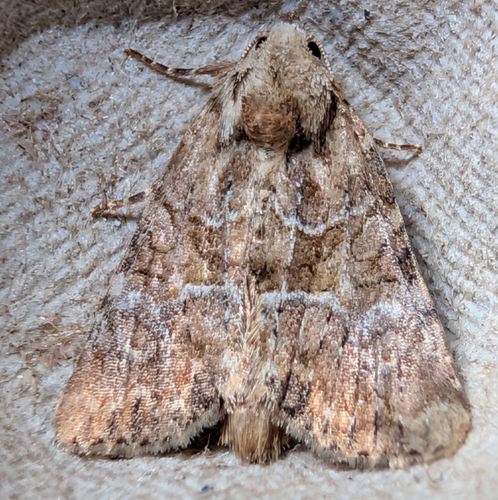
The common Quaker (Orthosia cerasi) is a moth of the family Noctuidae first described by Johan Christian Fabricius in 1775. Some authors prefer the synonym Orthosia stabilis (Denis & Schiffermüller, 1775). It is distributed throughout Europe and is also found in Turkey, Palestine (region), Transcaucasia, Russia and eastern Siberia.

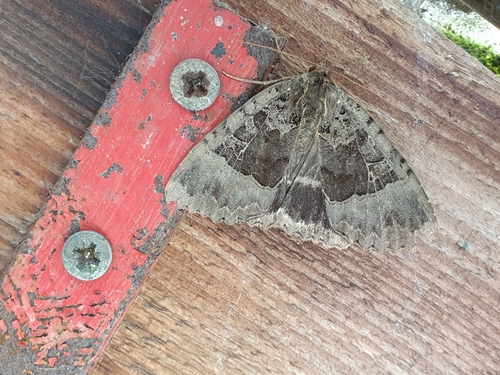
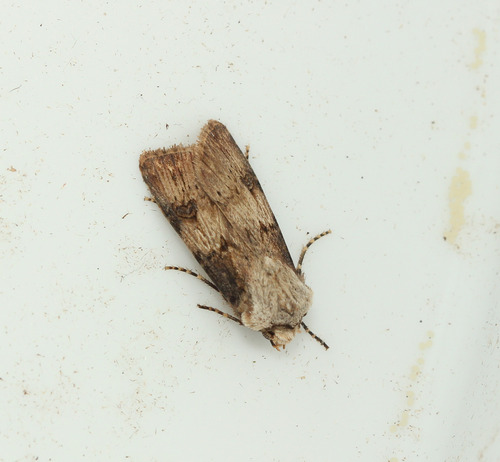
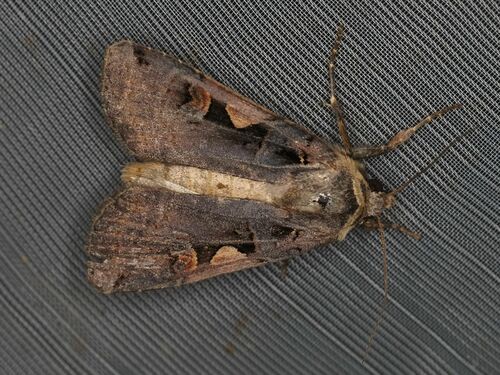
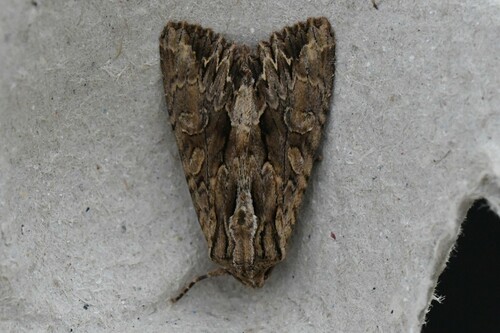
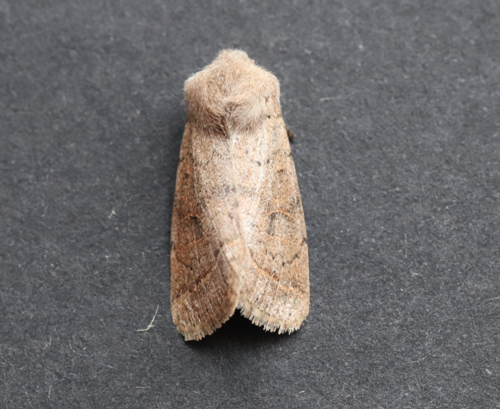
This is a variable species, the ground colour of the forewings ranging from greyish to orangey brown, sometimes with a broad dark band. The most distinctive features are two large stigmata, each edged by a narrow pale line, with a similarly coloured subterminal line. The hindwings are drab grey or brown.

The wingspan is 34–40 mm. Forewing reddish grey, more or less dusted with dark: inner and outer lines blackish, indistinct; orbicular and reniform stigmata ringed with ochreous; submarginal line ochreous preceded by a fuscous or rufous shade; claviform mostly unmarked; veins towards termen pale: hindwing grey, the fringe paler. The species varies according to the amount of red present; — ab. pallida Tutt is pale grey, sometimes with an ochreous flush; — obliqua Vill. is darker grey with markings clearer; — suffusa... Wikipedia →

Global Distribution

Parks Where Found

# Park Country Daily sighting probability
1 Snowdonia National Park 🇬🇧 United Kingdom
~20%
2 Cairngorms National Park 🇬🇧 United Kingdom
~10%
3 Bavarian Forest National Park 🇩🇪 Germany
~10%
4 Sierra de Guadarrama National Park 🇪🇸 Spain
~10%
5 Wadden Sea National Park 🇩🇪 Germany
~10%
6 Cévennes National Park 🇫🇷 France
~10%
7 Pyrénées National Park 🇫🇷 France
~10%

Cities Where Found

# City Country Daily sighting probability
1 Liverpool 🇬🇧 United Kingdom
~20%
2 Birmingham 🇬🇧 United Kingdom
~10%
3 London 🇬🇧 United Kingdom
~10%
4 Porto 🇵🇹 Portugal
~10%
5 Manchester 🇬🇧 United Kingdom
~10%
6 Essen 🇩🇪 Germany
~10%
7 Budapest 🇭🇺 Hungary
~10%
8 Vienna 🇦🇹 Austria
~10%
9 Prague 🇨🇿 Czechia
~10%
10 Paris 🇫🇷 France
~10%

Before you go

What are the chances of seeing a Common Quaker in Rotterdam [The Hague]?

Rare

Under 5% of wildlife watchers report a Common Quaker sighting in Rotterdam [The Hague] on a given day, based on 5 verified sightings from GBIF citizen-science data. It is the 301st most-seen of the 355 insects we can rate there. Over three days the chance rises to about 10%, and over a week to about 30%, if each day is a fresh chance.

When is the best time to see a Common Quaker in Rotterdam [The Hague]?

March

In that month about 20% of wildlife watchers report a Common Quaker in Rotterdam [The Hague] on a given day, against under 5% in May to February, the lowest months.

What time of day is best to see a Common Quaker?

Between 10 pm and 1 am

Across all the parks we cover, that three-hour window holds the most Common Quaker sightings with a recorded time, and about half of them come between 6 pm and 6 am: it is seen both by day and at night.

Is Rotterdam [The Hague] the best place to see a Common Quaker?

13th of 18

Of the 18 cities where we can rate Common Quaker sightings, Rotterdam [The Hague] ranks 13th at under 5%. The best odds are in Liverpool (United Kingdom, about 20%), Birmingham (United Kingdom, about 10%) and London (United Kingdom, about 10%).

Which relatives of the Common Quaker live in Rotterdam [The Hague]?

Same family: Noctuidae

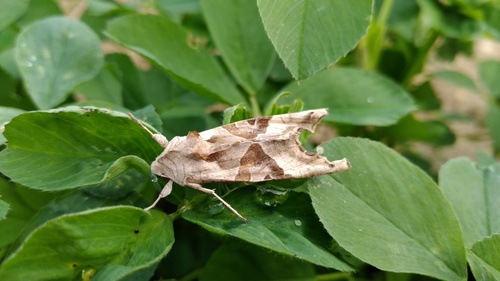
The closest relatives of the Common Quaker that you can see in Rotterdam [The Hague] (family Noctuidae, Cutworm Moths and Allies) are Large Yellow Underwing (about 20%), Silver Υ (about 10%) and Lesser Yellow Underwing (about 10%), with each one's daily chance of a sighting.

Where does the Common Quaker sighting chance come from?

GBIF citizen-science records

It is estimated from how often the Common Quaker is recorded against all the insects logged in Rotterdam [The Hague] (5 verified sightings), calibrated against known sighting rates. Figures are rounded to the nearest 10% because citizen-science data supports honest approximations, not decimals, and months with records from fewer than five people show "—". How it works.

← Back to Rotterdam [The Hague]