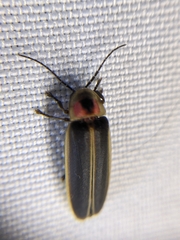
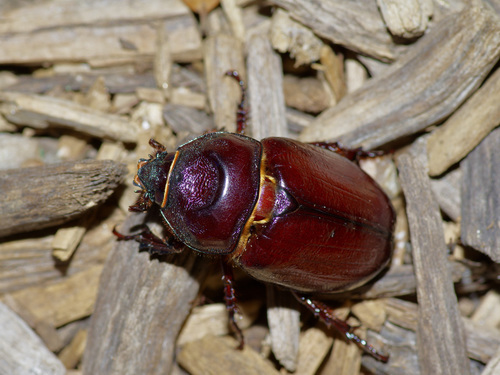
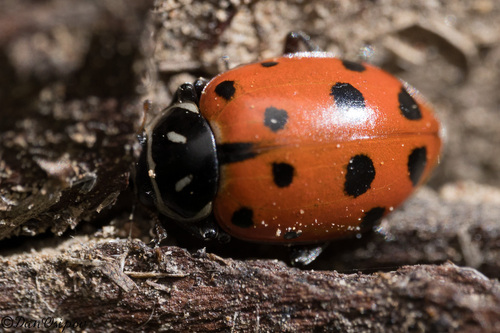
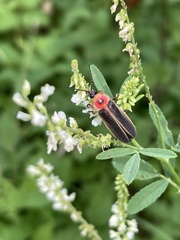
Common Eastern Firefly

Common Eastern Firefly

Photinus pyralis

Daily sighting probability <5% · Rare
at San Antonio

In 3 days ~10% in a week ~20%

11 Verified sightings at San Antonio
52 In all 2 parks From 2019 to 2026
September Best month
☀️🌙 Day & Night When it's spotted

About the Common Eastern Firefly

Photinus pyralis, also known by the common names the common eastern firefly or big dipper firefly, and sometimes called a "lightning bug", is a species of flying beetle. An organ on its abdomen is responsible for its light production. It is the most common species of firefly in North America and is typically found east of the Rocky Mountains. Photinus fireflies are often confused with fireflies of the similar-sounding genus, Photuris, which are also found in North America.

These fireflies are most noticeable around twilight in the spring and summer months. The common name, big dipper firefly, is due to the characteristic flight of the males, whose trajectory appears to follow a J-shape, lighting on the upswing. During flight, this J-pattern is used alongside light flashing to attract females, who rest on vegetation and signal back to males if interested. The firefly flashes are stimulated by light-activated proteins, not rhythmic impulses as originally thought.

Common Eastern fireflies are small soft-bodied beetles that are 9–19 mm (0.4–0.7 in) long. They have flat black or brown bodies with wing coverings, or elytra, that extend the length of their entire thorax... Wikipedia →

Global Distribution

Parks Where Found

# Park Country Daily sighting probability
1 Great Smoky Mountains National Park 🇺🇸 United States
~10%
2 Shenandoah National Park 🇺🇸 United States
~10%

Cities Where Found

# City Country Daily sighting probability
1 Detroit 🇺🇸 United States
~10%
2 New York City 🇺🇸 United States
~10%
3 Baltimore 🇺🇸 United States
~10%
4 Philadelphia 🇺🇸 United States
~10%
5 Washington 🇺🇸 United States
~10%
6 Chicago 🇺🇸 United States
~10%
7 Dallas 🇺🇸 United States
~10%
8 Austin 🇺🇸 United States
<5%
9 San Antonio 🇺🇸 United States
<5%
10 Minneapolis [Saint Paul] 🇺🇸 United States
<5%

Before you go

What are the chances of seeing a Common Eastern Firefly in San Antonio?

Rare

Under 5% of wildlife watchers report a Common Eastern Firefly sighting in San Antonio on a given day, based on 11 verified sightings from GBIF citizen-science data. It is the 459th most-seen of the 697 insects we can rate there. Over three days the chance rises to about 10%, and over a week to about 20%, if each day is a fresh chance.

When is the best time to see a Common Eastern Firefly in San Antonio?

September

In that month about 10% of wildlife watchers report a Common Eastern Firefly in San Antonio on a given day, against under 5% in October to August, the lowest months. That is one of San Antonio's wettest months, with about 95 mm of rain against 35 mm in February.

What time of day is best to see a Common Eastern Firefly?

Between 6 and 9 pm

Across all the parks we cover, that three-hour window holds the most Common Eastern Firefly sightings with a recorded time, and about half of them come between 6 pm and 6 am: it is seen both by day and at night.

Is San Antonio the best place to see a Common Eastern Firefly?

9th of 11

Of the 11 cities where we can rate Common Eastern Firefly sightings, San Antonio ranks 9th at under 5%. The best odds are in Detroit (United States, about 10%), New York City (United States, about 10%) and Baltimore (United States, about 10%).

Which relatives of the Common Eastern Firefly live in San Antonio?

Same order: Coleoptera

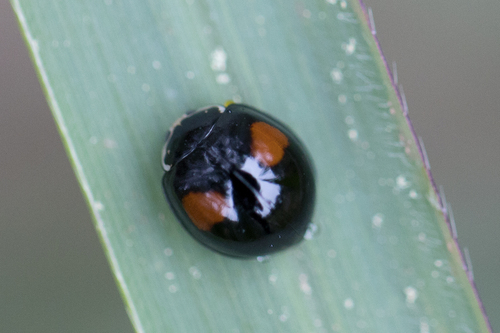
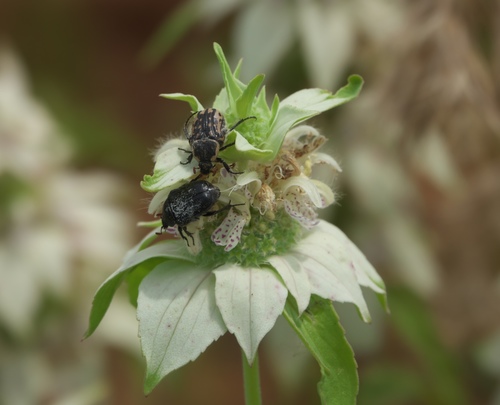
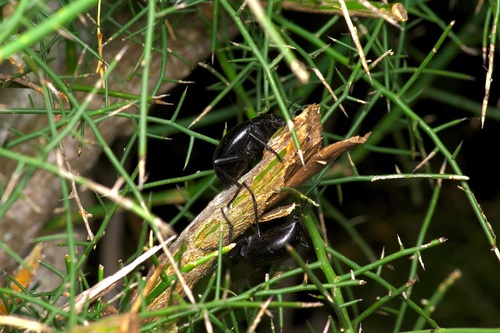
The closest relatives of the Common Eastern Firefly that you can see in San Antonio (order Coleoptera, Beetles) are Asian Lady Beetle (about 30%), Seven-Spotted Lady Beetle (about 10%) and Dark Flower Scarab (about 10%), with each one's daily chance of a sighting.

Where does the Common Eastern Firefly sighting chance come from?

GBIF citizen-science records

It is estimated from how often the Common Eastern Firefly is recorded against all the insects logged in San Antonio (11 verified sightings), calibrated against known sighting rates. Figures are rounded to the nearest 10% because citizen-science data supports honest approximations, not decimals, and months with records from fewer than five people show "—". How it works.

← Back to San Antonio