Halloween Pennant

Halloween Pennant

Celithemis eponina

Daily sighting probability <5% · Rare
at San Antonio

In 3 days ~10% in a week ~20%

16 Verified sightings at San Antonio
1,281 In all 5 parks From 2019 to 2026
June Best month
☀️ Diurnal When it's spotted

About the Halloween Pennant

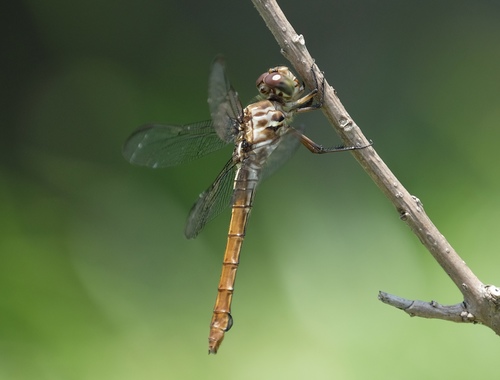
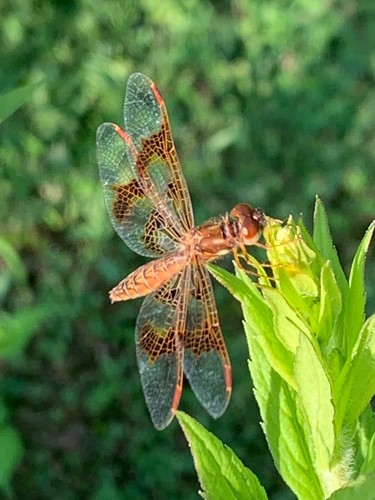
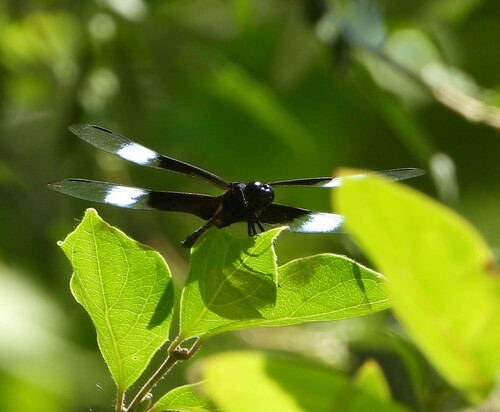
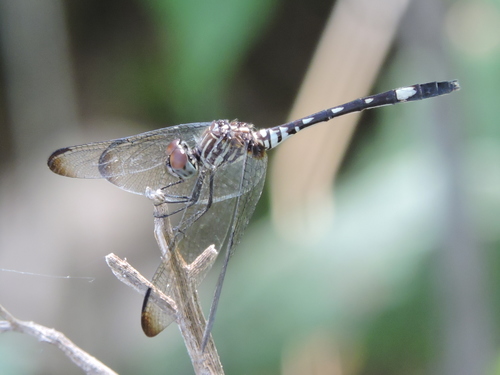
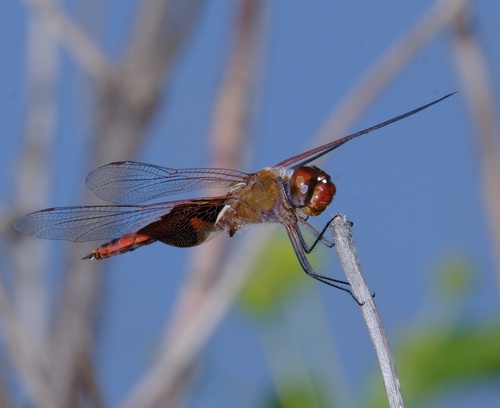
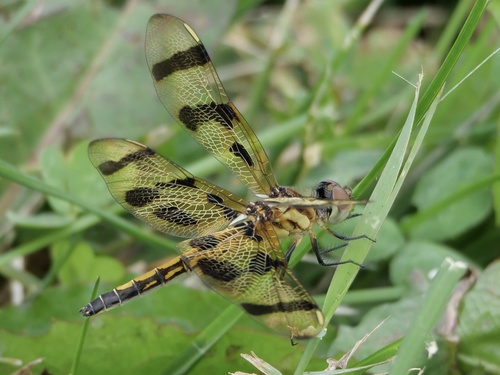
The Halloween pennant (Celithemis eponina) is a species of dragonfly in the family Libellulidae. It is native to eastern North America, as well as the West Indies. The Halloween pennant's wings are entirely orange-yellow in color with dark brown bands, the Halloween inspiration for its common name. Dragonflies of its genus perch at the tips of plants, waving in the breeze like pennants. The young has yellow markings, including a stripe on its back. The adult male and female may develop pale red markings, especially on the face. This species is about 38 to 42 millimetres (1.5 to 1.7 in) long.

This species occurs in eastern North America. In the southern part of its range of The Bahamas and Cuba, it is in season all year round. In northern latitudes it can be seen from mid-June to mid-August. It ranges as far north as southern Canada and as far west as the United States east of the Rocky Mountains, in New Mexico and Colorado. It lives in wet habitat types such as ponds, marshes and lakes, where it perches sometimes on vegetation.

The female lays eggs in the morning on open water with the male still attached at the head. This... Wikipedia →

Global Distribution

Parks Where Found

# Park Country Daily sighting probability
1 Everglades National Park 🇺🇸 United States
~50%
2 Big Cypress National Preserve 🇺🇸 United States
~50%
3 Merritt Island National Wildlife Refuge 🇺🇸 United States
~10%
4 Point Pelee National Park 🇨🇦 Canada
~10%
5 Shenandoah National Park 🇺🇸 United States
~10%

Cities Where Found

# City Country Daily sighting probability
1 Miami 🇺🇸 United States
~20%
2 Orlando 🇺🇸 United States
~10%
3 Austin 🇺🇸 United States
~10%
4 Houston 🇺🇸 United States
~10%
5 Washington 🇺🇸 United States
~10%
6 Dallas 🇺🇸 United States
~10%
7 Minneapolis [Saint Paul] 🇺🇸 United States
~10%
8 Denver 🇺🇸 United States
<5%
9 Chicago 🇺🇸 United States
<5%
10 Boston 🇺🇸 United States
<5%

Before you go

What are the chances of seeing a Halloween Pennant in San Antonio?

Rare

Under 5% of wildlife watchers report a Halloween Pennant sighting in San Antonio on a given day, based on 16 verified sightings from GBIF citizen-science data. It is the 441st most-seen of the 697 insects we can rate there. Over three days the chance rises to about 10%, and over a week to about 20%, if each day is a fresh chance.

When is the best time to see a Halloween Pennant in San Antonio?

June to August

In those months about 10% of wildlife watchers report a Halloween Pennant in San Antonio on a given day, against under 5% in September to May, the lowest months.

What time of day is best to see a Halloween Pennant?

Between 11 am and 2 pm

Across all the parks we cover, that three-hour window holds the most Halloween Pennant sightings with a recorded time, and about 9 in 10 of them come between 6 am and 6 pm: it is a daytime animal.

Is San Antonio the best place to see a Halloween Pennant?

14th of 15

Of the 15 cities where we can rate Halloween Pennant sightings, San Antonio ranks 14th at under 5%. The best odds are in Miami (United States, about 20%), Orlando (United States, about 10%) and Austin (United States, about 10%).

Which relatives of the Halloween Pennant live in San Antonio?

Same family: Libellulidae

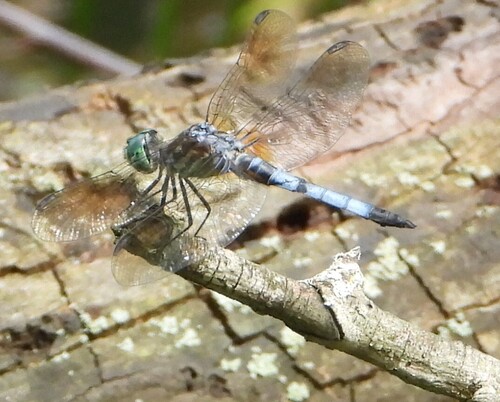
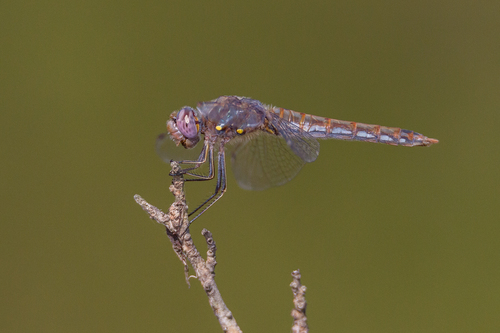
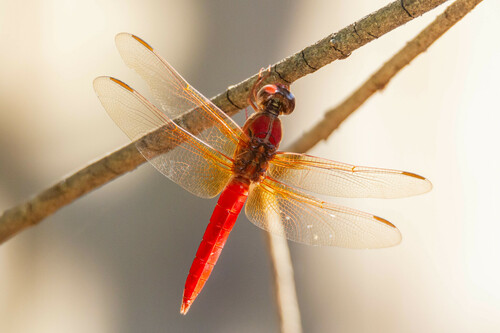
The closest relatives of the Halloween Pennant that you can see in San Antonio (family Libellulidae, Skimmers) are Blue Dasher (about 10%), Roseate Skimmer (about 10%) and Variegated Meadowhawk (about 10%), with each one's daily chance of a sighting.

Where does the Halloween Pennant sighting chance come from?

GBIF citizen-science records

It is estimated from how often the Halloween Pennant is recorded against all the insects logged in San Antonio (16 verified sightings), calibrated against known sighting rates. Figures are rounded to the nearest 10% because citizen-science data supports honest approximations, not decimals, and months with records from fewer than five people show "—". How it works.
← Back to San Antonio