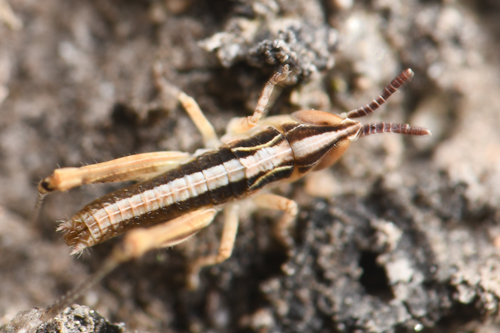
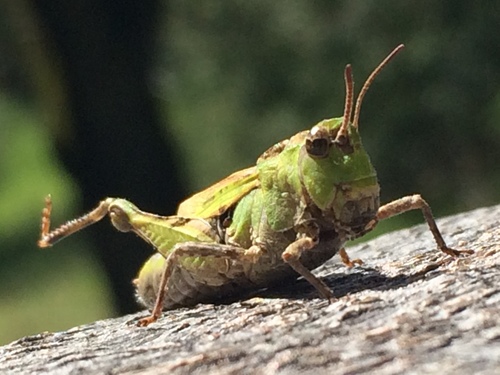
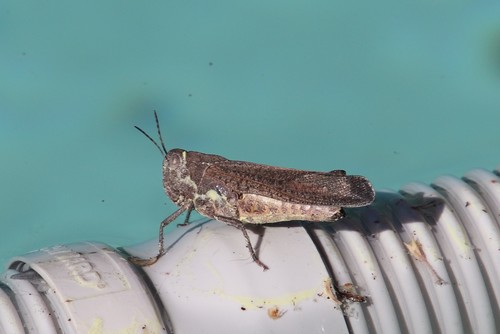
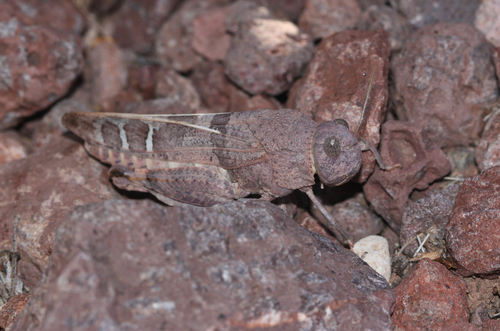
Pallid-Winged Grasshopper

Pallid-Winged Grasshopper

Trimerotropis pallidipennis

Daily sighting probability ~10% · With luck
at San Diego

In 3 days ~20% in a week ~30%

157 Verified sightings at San Diego
558 In all 9 parks From 2019 to 2026
March Best month
☀️ Diurnal When it's spotted

About the Pallid-Winged Grasshopper

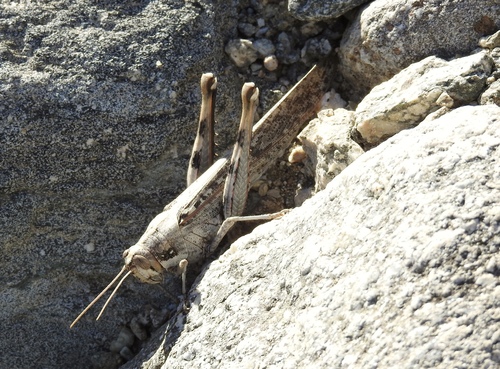
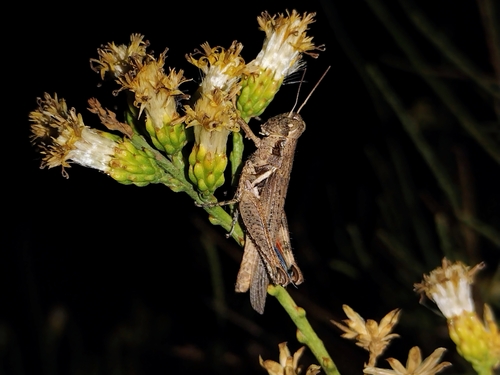
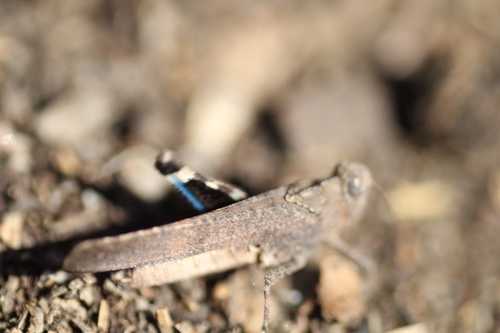
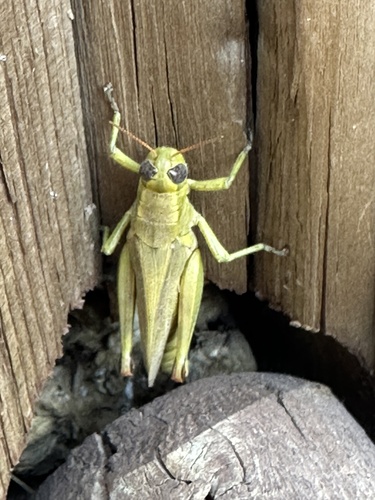
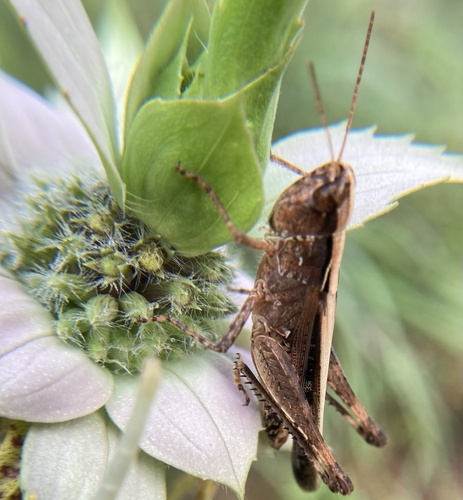
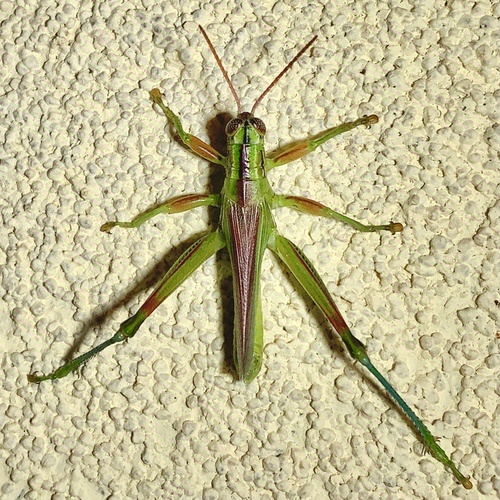
The pallid-winged grasshopper (Trimerotropis pallidipennis) is a common grasshopper of the family Acrididae, native to the deserts of western North America along with South America, ranging from British Columbia to Argentina. They are more active during the summer months, and their pale, mottled coloration makes them hard to see against surfaces such as the granite often found in the gravel of dry river beds. They grow to be 37 millimetres (1.5 in). The behavior of the pallid-winged grasshopper is apparently determined by temperature, with foraging occurring at temperatures of 24–32 °C (75–90 °F) and mating at 30–40 °C (86–104 °F).

Like many band-winged grasshoppers in the subfamily Oedipodinae, males perform crepitation flights, producing crackling sounds with their wings when disturbed or during courtship. Males also stridulate in courtship, rubbing the hind femur against the forewing to make a trilling sound.

Populations of the pallid-winged grasshopper occasionally irrupt to damaging numbers. Between 1952 and 1980, there were six outbreaks in Arizona, only one of which lasted more than one year. Wikipedia →

Global Distribution

Parks Where Found

# Park Country Daily sighting probability
1 Death Valley National Park 🇺🇸 United States
~40%
2 Joshua Tree National Park 🇺🇸 United States
~30%
3 Big Bend National Park 🇺🇸 United States
~20%
4 Saguaro National Park 🇺🇸 United States
~20%
5 Guadalupe Mountains National Park 🇺🇸 United States
~20%
6 Grand Canyon National Park 🇺🇸 United States
~20%
7 Channel Islands National Park 🇺🇸 United States
~10%
8 Zion National Park 🇺🇸 United States
~10%
9 Nahuel Huapi National Park 🇦🇷 Argentina
~10%

Cities Where Found

# City Country Daily sighting probability
1 Mesa 🇺🇸 United States
~30%
2 Las Vegas 🇺🇸 United States
~30%
3 Phoenix 🇺🇸 United States
~20%
4 Ciudad Juárez 🇲🇽 México
~10%
5 La Paz 🇧🇴 Bolivia
~10%
6 Los Angeles 🇺🇸 United States
~10%
7 Salt Lake City 🇺🇸 United States
~10%
8 Sacramento 🇺🇸 United States
~10%
9 San Diego 🇺🇸 United States
~10%
10 Torreón 🇲🇽 México
~10%

Before you go

What are the chances of seeing a Pallid-Winged Grasshopper in San Diego?

With luck

About 10% of wildlife watchers report a Pallid-Winged Grasshopper sighting in San Diego on a given day, based on 157 verified sightings from GBIF citizen-science data. It is the 75th most-seen of the 693 insects we can rate there. Over three days the chance rises to about 20%, and over a week to about 30%, if each day is a fresh chance.

When is the best time to see a Pallid-Winged Grasshopper in San Diego?

March–May, July and October

In those months about 10% of wildlife watchers report a Pallid-Winged Grasshopper in San Diego on a given day, against under 5% in June, August–September and November–February, the lowest months.

What time of day is best to see a Pallid-Winged Grasshopper?

Between 11 am and 2 pm

Across all the parks we cover, that three-hour window holds the most Pallid-Winged Grasshopper sightings with a recorded time, and about 9 in 10 of them come between 6 am and 6 pm: it is a daytime animal.

Is San Diego the best place to see a Pallid-Winged Grasshopper?

9th of 18

Of the 18 cities where we can rate Pallid-Winged Grasshopper sightings, San Diego ranks 9th at about 10%. The best odds are in Mesa (United States, about 30%), Las Vegas (United States, about 30%) and Phoenix (United States, about 20%).

Where does the Pallid-Winged Grasshopper sighting chance come from?

GBIF citizen-science records

It is estimated from how often the Pallid-Winged Grasshopper is recorded against all the insects logged in San Diego (157 verified sightings), calibrated against known sighting rates. Figures are rounded to the nearest 10% because citizen-science data supports honest approximations, not decimals, and months with records from fewer than five people show "—". How it works.

← Back to San Diego