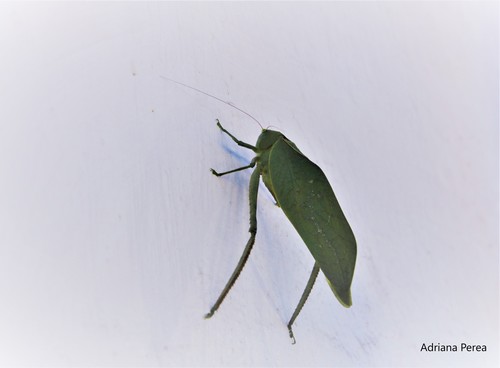
Gray Bird Grasshopper

Gray Bird Grasshopper

Schistocerca nitens

Daily sighting probability <5% · Rare
at San José

In 3 days ~10% in a week ~30%

6 Verified sightings at San José
415 In all 8 parks From 2019 to 2026
October Best month
☀️ Diurnal When it's spotted

About the Gray Bird Grasshopper

Schistocerca nitens is a species of grasshopper known by several names, including vagrant grasshopper and gray bird grasshopper. It is a close relative of the desert locust, which is in the same genus. This grasshopper is native to southern North America including Mexico and the south-western United States from California to Texas. Vagrants are occasionally found in Colorado, Utah, and Oklahoma, where the winters are too cold for them to survive, otherwise. It is also present in parts of Central and South America. It lives in many habitats including desert, woodland, and lower elevation mountainous areas. This species is known as a pest on ornamental plants and many types of crop plants.

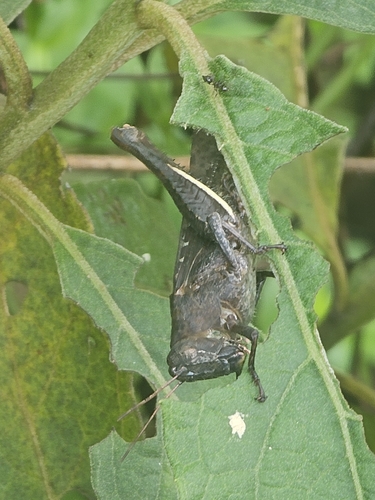
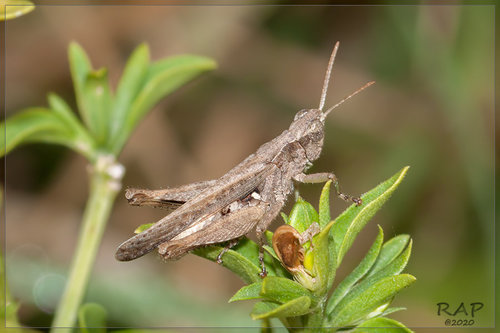
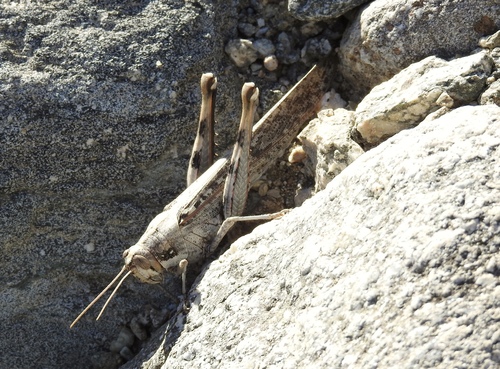
Adult females are 60–70 millimetres (2.4–2.8 in) while the smaller males are 40–50 millimetres (1.6–2.0 in). They are mottled in coloration, with colors including grays, browns, and yellows. A stripe runs from their head to their thorax.

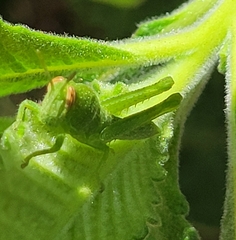
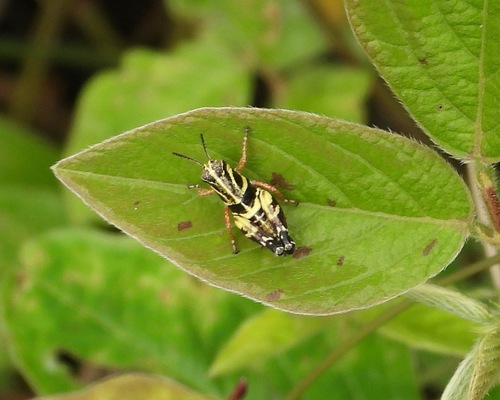
Juveniles, called nymphs, are usually a lighter brown or green, with a dark stripe extending down below the eye. The grasshopper becomes sexually mature at 3 to 4 months of age. Any stage of its life cycle can be seen at any time of... Wikipedia →
Global Distribution

Parks Where Found

# Park Country Daily sighting probability
1 Bahía de Loreto National Park 🇲🇽 Mexico
~30%
2 Saguaro National Park 🇺🇸 United States
~20%
3 Big Bend National Park 🇺🇸 United States
~20%
4 Palo Verde National Park 🇨🇷 Costa Rica
~10%
5 Joshua Tree National Park 🇺🇸 United States
~10%
6 Cumbres de Monterrey National Park 🇲🇽 Mexico
~10%
7 Channel Islands National Park 🇺🇸 United States
~10%
8 La Amistad International Park (Panama) 🇵🇦 Panama
~10%

Cities Where Found

# City Country Daily sighting probability
1 Los Angeles 🇺🇸 United States
~30%
2 Mesa 🇺🇸 United States
~20%
3 San Diego 🇺🇸 United States
~20%
4 Phoenix 🇺🇸 United States
~20%
5 Ciudad Juárez 🇲🇽 México
~20%
6 Monterrey 🇲🇽 México
~20%
7 Torreón 🇲🇽 México
~10%
8 San Luis Potosí 🇲🇽 México
~10%
9 San Antonio 🇺🇸 United States
~10%
10 Mexico City 🇲🇽 México
~10%

Before you go

What are the chances of seeing a Gray Bird Grasshopper in San José?

Rare

Under 5% of wildlife watchers report a Gray Bird Grasshopper sighting in San José on a given day, based on 6 verified sightings from GBIF citizen-science data. It is the 189th most-seen of the 239 insects we can rate there. Over three days the chance rises to about 10%, and over a week to about 30%, if each day is a fresh chance.

When is the best time to see a Gray Bird Grasshopper in San José?

March, May and September–November

In those months about 10% of wildlife watchers report a Gray Bird Grasshopper in San José on a given day, against under 5% in April, June–August and December–February, the lowest months.

What time of day is best to see a Gray Bird Grasshopper?

Between 11 am and 2 pm

Across all the parks we cover, that three-hour window holds the most Gray Bird Grasshopper sightings with a recorded time, and about 7 in 10 of them come between 6 am and 6 pm: it is a daytime animal.

Is San José the best place to see a Gray Bird Grasshopper?

14th of 16

Of the 16 cities where we can rate Gray Bird Grasshopper sightings, San José ranks 14th at under 5%. The best odds are in Los Angeles (United States, about 30%), Mesa (United States, about 20%) and San Diego (United States, about 20%).

Which relatives of the Gray Bird Grasshopper live in San José?

Same family: Acrididae

The closest relatives of the Gray Bird Grasshopper that you can see in San José (family Acrididae, Short-horned Grasshoppers) are Aztec Spur-Throated Grasshopper (about 10%) and Abracris flavolineata (about 10%), with each one's daily chance of a sighting.

Where does the Gray Bird Grasshopper sighting chance come from?

GBIF citizen-science records

It is estimated from how often the Gray Bird Grasshopper is recorded against all the insects logged in San José (6 verified sightings), calibrated against known sighting rates. Figures are rounded to the nearest 10% because citizen-science data supports honest approximations, not decimals, and months with records from fewer than five people show "—". How it works.

← Back to San José