Shore Earwig

Shore Earwig

Labidura riparia

Daily sighting probability ~10% · With luck
at Seoul

In 3 days ~20% in a week ~40%

25 Verified sightings at Seoul
82 In all 6 parks From 2019 to 2026
October Best month
☀️🌙 Day & Night When it's spotted

About the Shore Earwig

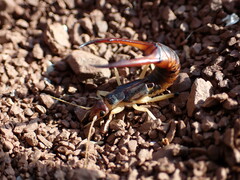
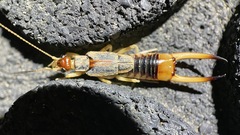
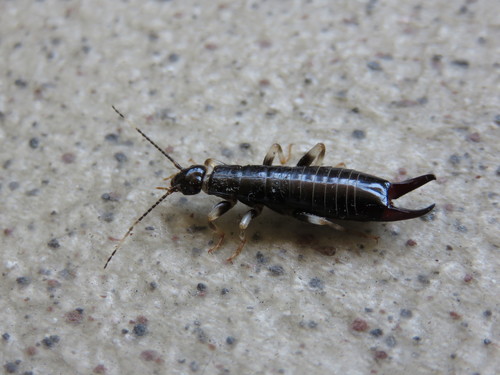
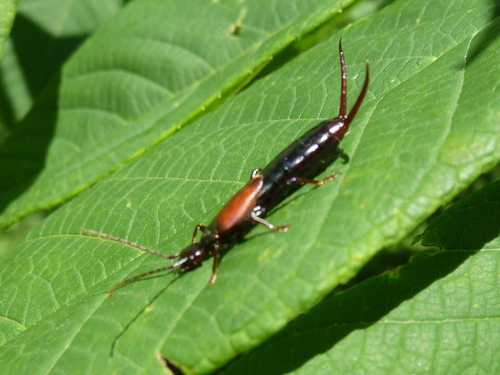
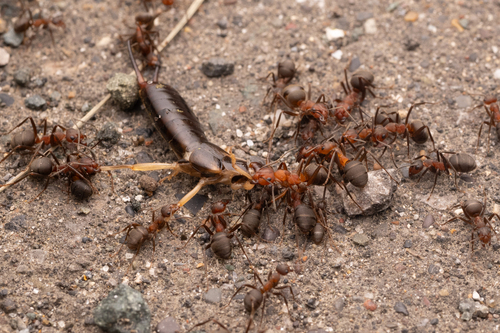
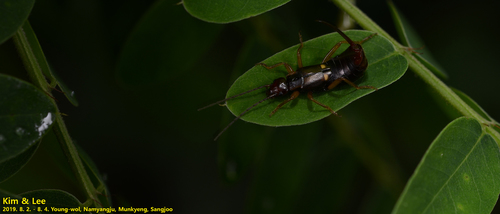
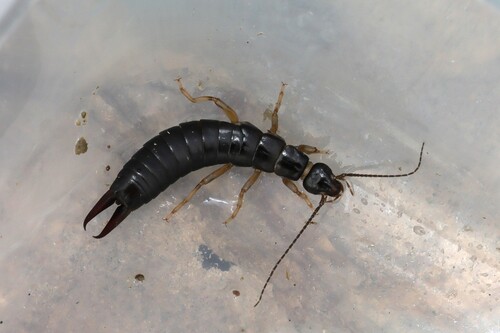
Labidura riparia is a species of earwig in the family Labiduridae characterized by their modified cerci as forceps, and light tan color. They are commonly known as the shore earwig, tawny earwig, riparian earwig, or the striped earwig due to two dark longitudinal stripes down the length of the pronotum. They are sometimes wrongly referred to as Labidura japonica, although said species is actually a subspecies, Labidura riparia japonica, found from Japan and India to Papua New Guinea. L. riparia are a cosmopolitan species primarily in tropical to subtropical regions. Body size varies greatly, ranging from 16 mm to 30 mm, with 10 abdominal segments. Males and females differ in forcep size, with males having much larger and stronger curve, while females have smaller, straighter forceps with a slight curve at the end. Earwigs use these forceps to assist in predation, defense, sexual selection, courtship and mating, and wing folding.

L. riparia are a subsocial earwig with complex maternal habits. They are voracious predators, and highly regarded as efficient for pest control in many situations. Repugnitory glands in the earwigs cause them to secrete a foul smelling pheromone to deter predators, which is said to smell like decomposition.

Males of this species have two penises in which they can use interchangeably. Individuals have a preference on which they dominantly use though. Just like humans’ limb dexterity, L. riparia have a 90% prevalence of “right-handed” penises. This unequal proportion is unique to this species compared to all other earwigs, and may have a relationship with the spermatheca location on females. Wikipedia →
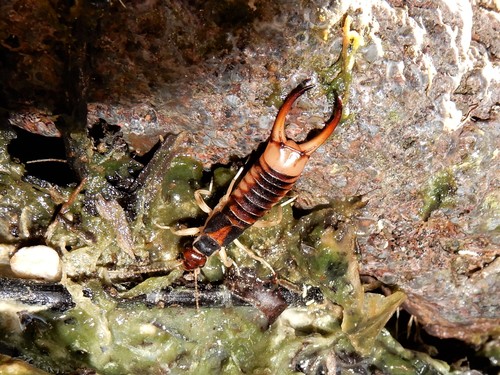
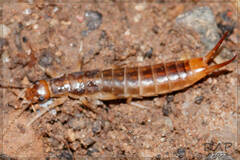
Global Distribution

Parks Where Found

# Park Country Daily sighting probability
1 Big Cypress National Preserve 🇺🇸 United States
~20%
2 Camargue 🇫🇷 France
~10%
3 Hattah-Kulkyne National Park 🇦🇺 Australia
~10%
4 Everglades National Park 🇺🇸 United States
~10%
5 Cévennes National Park 🇫🇷 France
<5%
6 Saguaro National Park 🇺🇸 United States
<5%

Cities Where Found

# City Country Daily sighting probability
1 Cairo 🇪🇬 Egypt
~10%
2 Seoul 🇰🇷 South Korea
~10%
3 Osaka 🇯🇵 Japan
~10%
4 Mesa 🇺🇸 United States
<5%
5 Shanghai 🇨🇳 China
<5%
6 Lyon 🇫🇷 France
<5%
7 Miami 🇺🇸 United States
<5%
8 Phoenix 🇺🇸 United States
<5%
9 Melbourne 🇦🇺 Australia
<5%
10 Orlando 🇺🇸 United States
<5%

Before you go

What are the chances of seeing a Shore Earwig in Seoul?

With luck

About 10% of wildlife watchers report a Shore Earwig sighting in Seoul on a given day, based on 25 verified sightings from GBIF citizen-science data. It is the 119th most-seen of the 525 insects we can rate there. Over three days the chance rises to about 20%, and over a week to about 40%, if each day is a fresh chance.

When is the best time to see a Shore Earwig in Seoul?

April–May, July and September–November

In those months about 10% of wildlife watchers report a Shore Earwig in Seoul on a given day, against under 5% in June, August and December–March, the lowest months.

What time of day is best to see a Shore Earwig?

Between 7 and 10 pm

Across all the parks we cover, that three-hour window holds the most Shore Earwig sightings with a recorded time, and about 7 in 10 of them come between 6 pm and 6 am: it is seen both by day and at night.

Is Seoul the best place to see a Shore Earwig?

Among the best

Of the 18 cities where we can rate Shore Earwig sightings, Seoul ranks 2nd at about 10%, level with the leaders once rounded. The best odds are in Cairo (Egypt, about 10%).

Which relatives of the Shore Earwig live in Seoul?

Same order: Dermaptera

The closest relatives of the Shore Earwig that you can see in Seoul (order Dermaptera, Earwigs) are Anisolabella marginalis (about 10%) and Timomenus komarovi (about 10%), with each one's daily chance of a sighting.

Where does the Shore Earwig sighting chance come from?

GBIF citizen-science records

It is estimated from how often the Shore Earwig is recorded against all the insects logged in Seoul (25 verified sightings), calibrated against known sighting rates. Figures are rounded to the nearest 10% because citizen-science data supports honest approximations, not decimals, and months with records from fewer than five people show "—". How it works.

← Back to Seoul