Beautiful Demoiselle

Beautiful Demoiselle

Calopteryx virgo

Daily sighting probability ~10% · With luck
at Sofia

In 3 days ~20% in a week ~50%

5 Verified sightings at Sofia
764 In all 11 parks From 2019 to 2026
August Best month
☀️ Diurnal When it's spotted

About the Beautiful Demoiselle

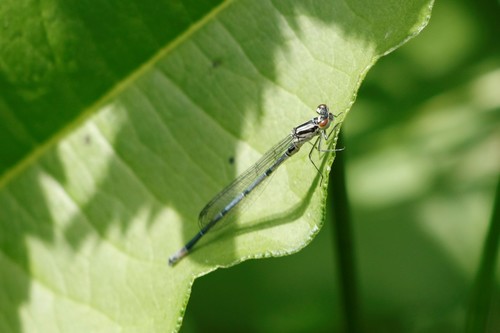
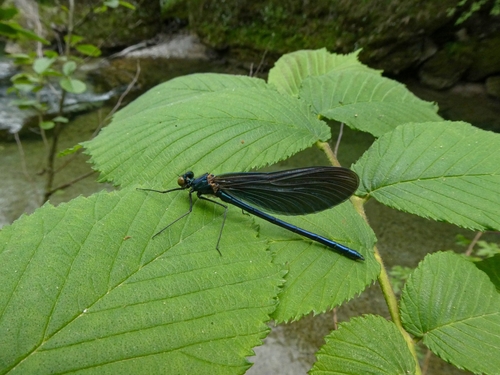
The beautiful demoiselle (Calopteryx virgo) is a species of damselfly belonging to the family Calopterygidae. The species has been found in Europe, North Africa, and Western Asia, and is often found by fast-flowing waters.

Five subspecies have been named, though some authors only accept three subspecies. The subspecies intergrade where their ranges meet. Calopteryx virgo festiva (Brullé, 1832) (eastern Mediterranean, Balkans and Turkey). Wings of males dark throughout.

Calopteryx virgo meridionalis Sélys, 1853 (western Mediterranean and south-west France). Wings of males grading to pale at the base, dark to the tip. Calopteryx virgo padana Conci, 1956 (northern Italy); not accepted by Smallshire et al.

Calopteryx virgo virgo (Linnaeus, 1758) (northern and central Europe). Wings of males grading to pale at both tip and base. Females can lay up to 300 eggs at a time on floating plants, such as water-crowfoot. Similar to the banded demoiselle, they often submerge underwater to do so, and the eggs hatch around 14 days later. The larvae are stick-shaped... Wikipedia →
Global Distribution

Parks Where Found

# Park Country Daily sighting probability
1 Plitvice Lakes National Park 🇭🇷 Croatia
~80%
2 Picos de Europa National Park 🇪🇸 Spain
~30%
3 Gauja National Park 🇱🇻 Latvia
~20%
4 Cévennes National Park 🇫🇷 France
~20%
5 Pyrénées National Park 🇫🇷 France
~20%
6 Aigüestortes National Park 🇪🇸 Spain
~20%
7 Sierra de Guadarrama National Park 🇪🇸 Spain
~20%
8 Triglav National Park 🇸🇮 Slovenia
~20%
9 Białowieża National Park 🇵🇱 Poland
~10%
10 Bavarian Forest National Park 🇩🇪 Germany
~10%
11 Snowdonia National Park 🇬🇧 United Kingdom
~10%

Cities Where Found

# City Country Daily sighting probability
1 Munich 🇩🇪 Germany
~10%
2 Birmingham 🇬🇧 United Kingdom
~10%
3 Sofia 🇧🇬 Bulgaria
~10%
4 Hamburg 🇩🇪 Germany
~10%
5 Cologne 🇩🇪 Germany
~10%
6 Vienna 🇦🇹 Austria
~10%
7 London 🇬🇧 United Kingdom
~10%
8 Prague 🇨🇿 Czechia
~10%
9 Lyon 🇫🇷 France
~10%
10 Minsk 🇧🇾 Belarus
~10%

Before you go

What are the chances of seeing a Beautiful Demoiselle in Sofia?

With luck

About 10% of wildlife watchers report a Beautiful Demoiselle sighting in Sofia on a given day, based on 5 verified sightings from GBIF citizen-science data. It is the 94th most-seen of the 115 insects we can rate there. Over three days the chance rises to about 20%, and over a week to about 50%, if each day is a fresh chance.

When is the best time to see a Beautiful Demoiselle in Sofia?

August

In that month about 20% of wildlife watchers report a Beautiful Demoiselle in Sofia on a given day, against under 5% in September to May, the lowest months.

What time of day is best to see a Beautiful Demoiselle?

Between noon and 3 pm

Across all the parks we cover, that three-hour window holds the most Beautiful Demoiselle sightings with a recorded time, and about 9 in 10 of them come between 6 am and 6 pm: it is a daytime animal.

Is Sofia the best place to see a Beautiful Demoiselle?

Among the best

Of the 17 cities where we can rate Beautiful Demoiselle sightings, Sofia ranks 3rd at about 10%, level with the leaders once rounded. The best odds are in Munich (Germany, about 10%) and Birmingham (United Kingdom, about 10%).

Which relatives of the Beautiful Demoiselle live in Sofia?

Same order: Odonata

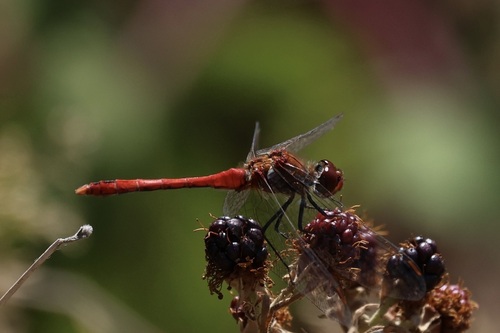
The closest relatives of the Beautiful Demoiselle that you can see in Sofia (order Odonata, Dragonflies and Damselflies) are Common Darter (about 10%), Azure Damselfly (about 10%) and Ruddy Darter (about 10%), with each one's daily chance of a sighting.

Where does the Beautiful Demoiselle sighting chance come from?

GBIF citizen-science records

It is estimated from how often the Beautiful Demoiselle is recorded against all the insects logged in Sofia (5 verified sightings), calibrated against known sighting rates. Figures are rounded to the nearest 10% because citizen-science data supports honest approximations, not decimals, and months with records from fewer than five people show "—". How it works.

← Back to Sofia