Neon Cuckoo Bee
Daily sighting probability ~10% · With luck
at Sydney

In 3 days ~20% in a week ~40%

103 Verified sightings at Sydney
51 In all 4 parks From 2019 to 2026
February Best month
☀️ Diurnal When it's spotted

About the Neon Cuckoo Bee

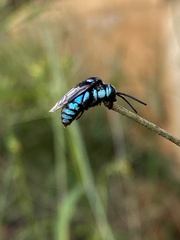
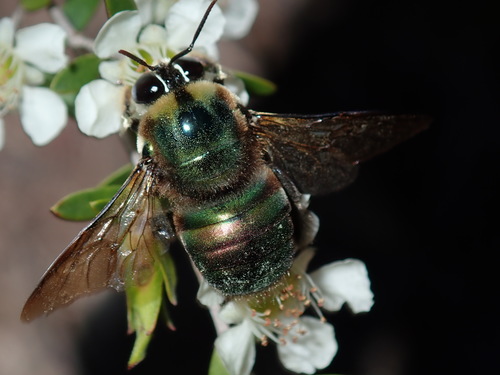
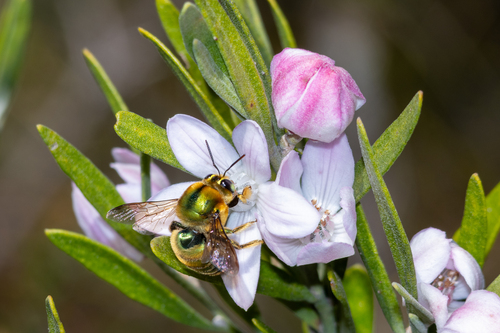
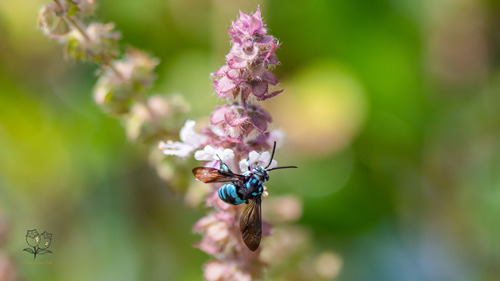
Thyreus nitidulus, commonly known as the neon cuckoo bee, is a parasitic bee of the genus Thyreus, called cuckoo bees. It is a stocky bee, notable for its brilliant metallic blue- and black-banded colors. Originally described by Danish entomologist Johan Christian Fabricius in 1804 as Melecta nitidula – from a collection in the Aru Islands or northern Australia – it was given its current scientific name Thyreus nitidulus in 1959 by M. A. Lieftinck. The specific epithet is derived from the diminutive of the Latin adjective nitidus "shining" (i.e. "little shiny one").

Several subspecies are known - the nominate race T. n. nitidulus is found across eastern and northern Australia, specifically New South Wales, Queensland, South Australia, and the Northern Territory, as well as New Guinea. Other species are found in Southeast Asia.

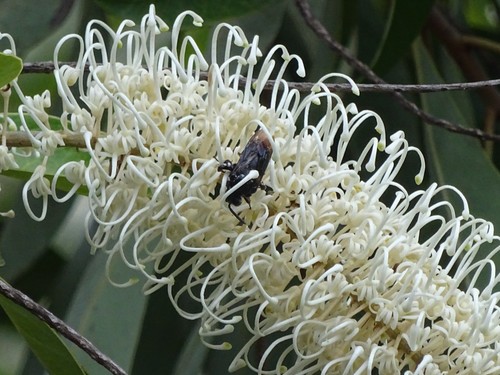
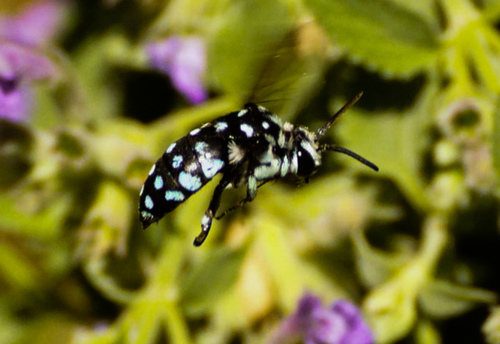
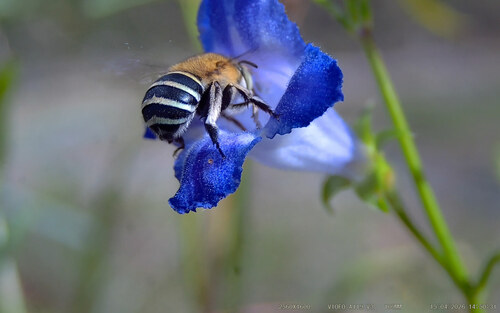
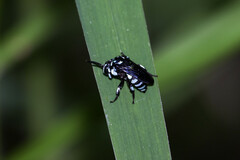
Like all bees, the neon cuckoo bee is covered by furry, branched, flattened hair, which is responsible for both the black and blue colours. Pale blue hair covers much of the face on the head, as well as patches on the sides of the thorax and the legs. The abdomen is striped with bright blue and black, and the transparent wings are purple-tinged brown in colour. The bee is sturdy in build, with a reinforced thorax.

The female neon cuckoo bee seeks out the burrow nests of the blue-banded bee (Amegilla cingulata), and lays an egg into a partly completed brood cell while it is unguarded. The larval cuckoo bee then consumes the larder and later emerges from the cell. Wikipedia →
Global Distribution

Parks Where Found

# Park Country Daily sighting probability
1 Raja Ampat 🇮🇩 Indonesia
~20%
2 Daintree National Park 🇦🇺 Australia
~10%
3 Royal National Park 🇦🇺 Australia
~10%
4 Blue Mountains National Park 🇦🇺 Australia
~10%

Cities Where Found

# City Country Daily sighting probability
1 Brisbane 🇦🇺 Australia
~10%
2 Sydney 🇦🇺 Australia
~10%

Before you go

What are the chances of seeing a Neon Cuckoo Bee in Sydney?

With luck

About 10% of wildlife watchers report a Neon Cuckoo Bee sighting in Sydney on a given day, based on 103 verified sightings from GBIF citizen-science data. It is the 108th most-seen of the 742 insects we can rate there. Over three days the chance rises to about 20%, and over a week to about 40%, if each day is a fresh chance.

When is the best time to see a Neon Cuckoo Bee in Sydney?

November to May

In those months about 10% of wildlife watchers report a Neon Cuckoo Bee in Sydney on a given day, against under 5% in June to October, the lowest months.

What time of day is best to see a Neon Cuckoo Bee?

Between 9 am and noon

Across all the parks we cover, that three-hour window holds the most Neon Cuckoo Bee sightings with a recorded time, and about 9 in 10 of them come between 6 am and 6 pm: it is a daytime animal.

Is Sydney the best place to see a Neon Cuckoo Bee?

Among the best

Of the 2 cities where we can rate Neon Cuckoo Bee sightings, Sydney ranks 2nd at about 10%, level with the leaders once rounded. The best odds are in Brisbane (Australia, about 10%).

Where does the Neon Cuckoo Bee sighting chance come from?

GBIF citizen-science records

It is estimated from how often the Neon Cuckoo Bee is recorded against all the insects logged in Sydney (103 verified sightings), calibrated against known sighting rates. Figures are rounded to the nearest 10% because citizen-science data supports honest approximations, not decimals, and months with records from fewer than five people show "—". How it works.

← Back to Sydney