Anise Swallowtail

Anise Swallowtail

Papilio zelicaon

Daily sighting probability <5% · Rare
at Vancouver

In 3 days ~10% in a week ~20%

25 Verified sightings at Vancouver
424 In all 14 parks From 2019 to 2026
July Best month
☀️ Diurnal When it's spotted

About the Anise Swallowtail

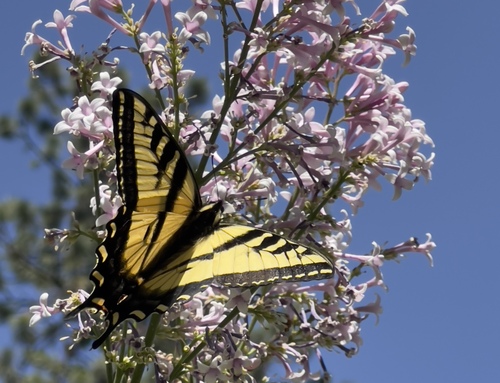
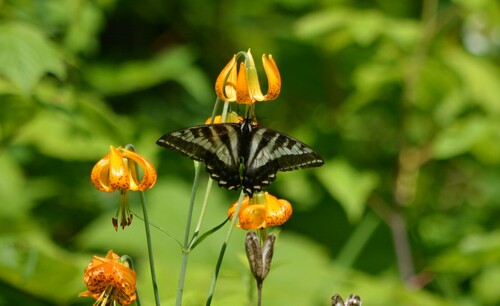
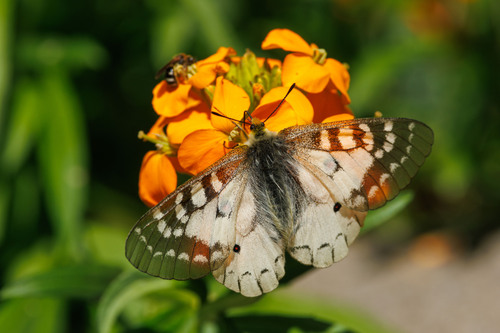
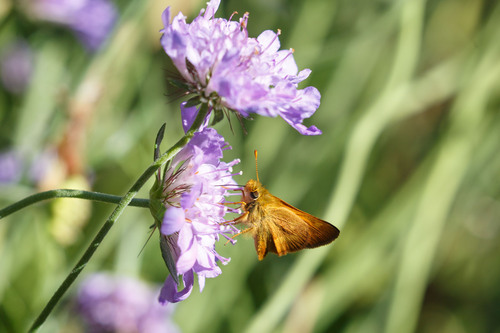
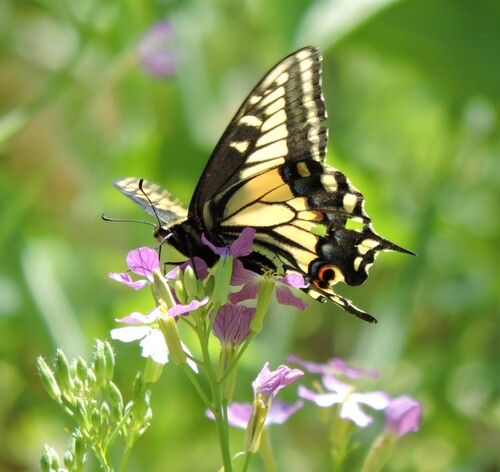
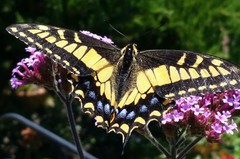
Papilio zelicaon, the Anise Swallowtail, is a common swallowtail butterfly of western North America. Both the upper and lower sides of its wings are black, but the upper wing has a broad yellow stripe across it, giving the butterfly an overall yellow appearance. There are striking blue spots on the rear edge of the rear wing, and the characteristic tails of the swallowtails. Its wingspan is 52–80 mm (2.0–3.1 in). Its body is somewhat shorter than the rather similar western tiger swallowtail, with which its range overlaps; it also lacks the black stripes, converging toward the tail, of the latter. There is a somewhat darker subspecies, P. z. nitra, which is rare throughout the range, though somewhat more often found at lower elevations.

The anise swallowtail has a wingspan ranging from 52 to 80 mm (2.0 to 3.1 in). Wings are mostly yellow, with black bands along the edges of both the forewings and hindwings. They are distinguished from tiger swallowtail butterflies by being smaller in size and lacking the vertical black striping patterns. There are yellowish-orange to red eyespots near the tails of each wing, each containing a black pupil. The body is predominantly black... Wikipedia →
Global Distribution

Parks Where Found

# Park Country Daily sighting probability
1 Glacier National Park 🇺🇸 United States
~20%
2 Grand Teton National Park 🇺🇸 United States
~20%
3 Channel Islands National Park 🇺🇸 United States
~20%
4 Olympic National Park 🇺🇸 United States
~20%
5 Sequoia and Kings Canyon National Parks 🇺🇸 United States
~10%
6 Yosemite National Park 🇺🇸 United States
~10%
7 Yellowstone National Park 🇺🇸 United States
~10%
8 Rocky Mountain National Park 🇺🇸 United States
~10%
9 Great Bear Rainforest 🇨🇦 Canada
~10%
10 Death Valley National Park 🇺🇸 United States
~10%
11 Grand Canyon National Park 🇺🇸 United States
~10%
12 Pacific Rim National Park Reserve 🇨🇦 Canada
~10%
13 Banff National Park 🇨🇦 Canada
~10%
14 Jasper National Park 🇨🇦 Canada
~10%

Cities Where Found

# City Country Daily sighting probability
1 San Francisco 🇺🇸 United States
~20%
2 Tijuana 🇲🇽 México
~20%
3 San Diego 🇺🇸 United States
~10%
4 Sacramento 🇺🇸 United States
~10%
5 Los Angeles 🇺🇸 United States
~10%
6 Vancouver 🇨🇦 Canada
<5%
7 Portland 🇺🇸 United States
<5%

Before you go

What are the chances of seeing an Anise Swallowtail in Vancouver?

Rare

Under 5% of wildlife watchers report an Anise Swallowtail sighting in Vancouver on a given day, based on 25 verified sightings from GBIF citizen-science data. It is the 208th most-seen of the 482 insects we can rate there. Over three days the chance rises to about 10%, and over a week to about 20%, if each day is a fresh chance.

When is the best time to see an Anise Swallowtail in Vancouver?

July

In that month about 10% of wildlife watchers report an Anise Swallowtail in Vancouver on a given day, against under 5% in August to June, the lowest months. That is one of Vancouver's driest months, with about 25 mm of rain against 210 mm in November.

What time of day is best to see an Anise Swallowtail?

Between 11 am and 2 pm

Across all the parks we cover, that three-hour window holds the most Anise Swallowtail sightings with a recorded time, and about 9 in 10 of them come between 6 am and 6 pm: it is a daytime animal.

Is Vancouver the best place to see an Anise Swallowtail?

6th of 7

Of the 7 cities where we can rate Anise Swallowtail sightings, Vancouver ranks 6th at under 5%. The best odds are in San Francisco (United States, about 20%), Tijuana (México, about 20%) and San Diego (United States, about 10%).

Where does the Anise Swallowtail sighting chance come from?

GBIF citizen-science records

It is estimated from how often the Anise Swallowtail is recorded against all the insects logged in Vancouver (25 verified sightings), calibrated against known sighting rates. Figures are rounded to the nearest 10% because citizen-science data supports honest approximations, not decimals, and months with records from fewer than five people show "—". How it works.

← Back to Vancouver