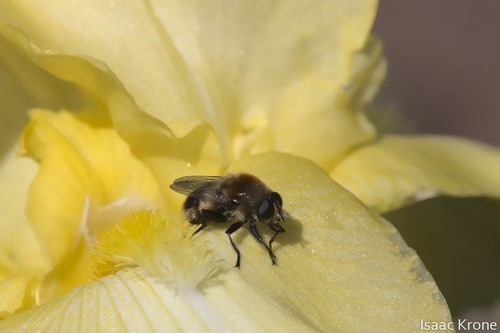
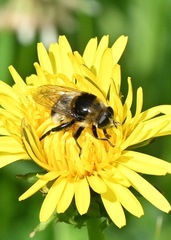
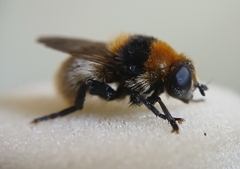
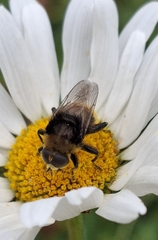



Narcissus Bulb Fly

Narcissus Bulb Fly

Merodon equestris

Daily sighting probability ~10% · With luck
at Vancouver

In 3 days ~20% in a week ~40%

137 Verified sightings at Vancouver
56 In all 7 parks From 2019 to 2026
June Best month
☀️ Diurnal When it's spotted

About the Narcissus Bulb Fly

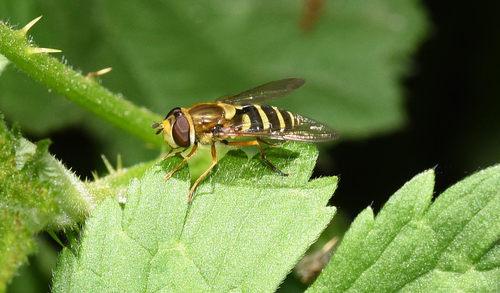
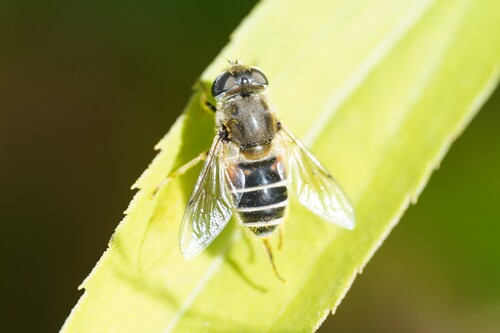
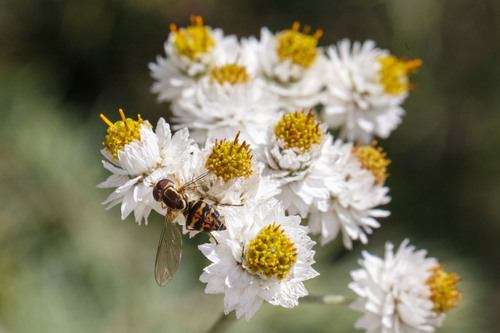
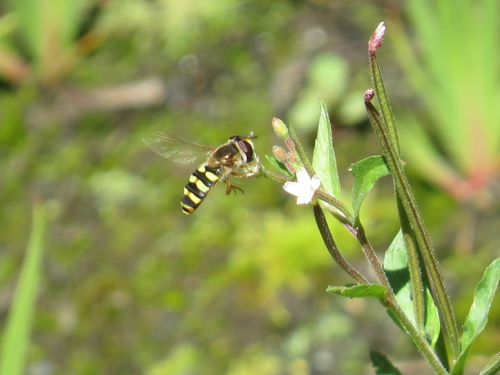
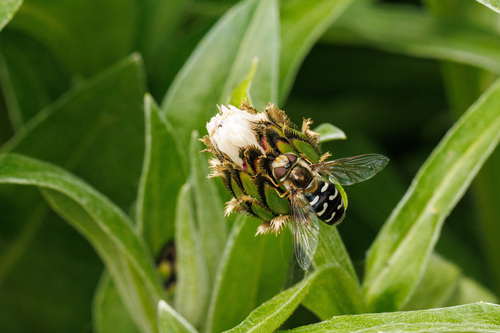
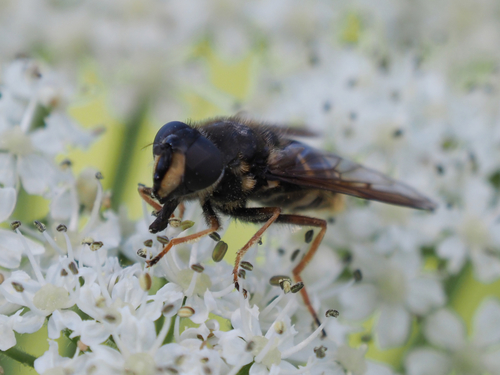
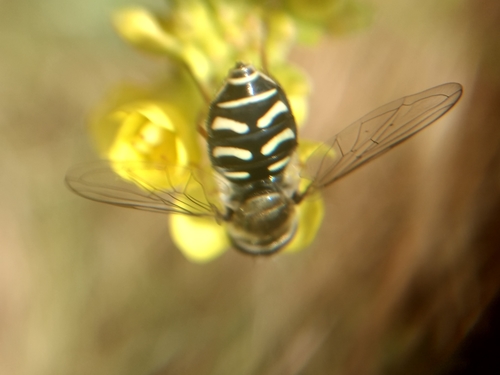
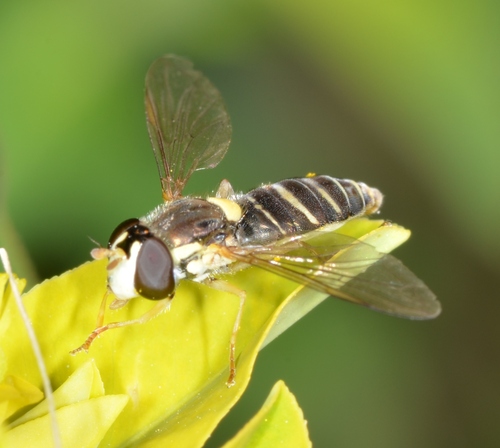
Merodon equestris (Narcissus bulb fly, greater bulb fly, large bulb fly, large Narcissus fly) is a Holarctic species of hoverfly (Family Syrphidae). Like many other hoverflies it displays a colouration pattern similar to a stinging insect (a bumblebee in this case) as an evolutionary defense mechanism. Other syrphid bee mimics are Mallota, Arctophila, Criorhina, Pocota and Brachypalpus. Merodon species are distinguished from these by the very strong hind femora, which bear a large triangular projection on the underside near the tip. It flies in low vegetation while the other bumblebee mimics prefer higher vegetation layers.

A stout fly with a small head (10–14 mm in length). The tergites are black, without the dust spots or blue-purple sheen of other Merodon species. The thorax and abdomen are hidden by dense, long, erect hairs of variable colouration. Tibia 3 of the male has 2 spurs at the apex.

Males have eyes clearly touching at the front, while in females these are separated by a (yellow haired) antenna like structure at the front. In the... Wikipedia →

Global Distribution

Parks Where Found

# Park Country Daily sighting probability
1 Snowdonia National Park 🇬🇧 United Kingdom
~10%
2 Cairngorms National Park 🇬🇧 United Kingdom
~10%
3 Bavarian Forest National Park 🇩🇪 Germany
~10%
4 Acadia National Park 🇺🇸 United States
~10%
5 Great Smoky Mountains National Park 🇺🇸 United States
<5%
6 Wadden Sea National Park 🇩🇪 Germany
<5%
7 Pyrénées National Park 🇫🇷 France
<5%

Cities Where Found

# City Country Daily sighting probability
1 Birmingham 🇬🇧 United Kingdom
~20%
2 London 🇬🇧 United Kingdom
~20%
3 Liverpool 🇬🇧 United Kingdom
~20%
4 Manchester 🇬🇧 United Kingdom
~10%
5 Portland 🇺🇸 United States
~10%
6 Copenhagen 🇩🇰 Denmark
~10%
7 Boston 🇺🇸 United States
~10%
8 Hamburg 🇩🇪 Germany
~10%
9 Leeds 🇬🇧 United Kingdom
~10%
10 Seattle 🇺🇸 United States
~10%

Before you go

What are the chances of seeing a Narcissus Bulb Fly in Vancouver?

With luck

About 10% of wildlife watchers report a Narcissus Bulb Fly sighting in Vancouver on a given day, based on 137 verified sightings from GBIF citizen-science data. It is the 57th most-seen of the 482 insects we can rate there. Over three days the chance rises to about 20%, and over a week to about 40%, if each day is a fresh chance.

When is the best time to see a Narcissus Bulb Fly in Vancouver?

June

In that month about 20% of wildlife watchers report a Narcissus Bulb Fly in Vancouver on a given day, against under 5% in August to April, the lowest months. That is one of Vancouver's driest months, with about 45 mm of rain against 210 mm in November.

What time of day is best to see a Narcissus Bulb Fly?

Between 11 am and 2 pm

Across all the parks we cover, that three-hour window holds the most Narcissus Bulb Fly sightings with a recorded time, and about 9 in 10 of them come between 6 am and 6 pm: it is a daytime animal.

Is Vancouver the best place to see a Narcissus Bulb Fly?

14th of 42

Of the 42 cities where we can rate Narcissus Bulb Fly sightings, Vancouver ranks 14th at about 10%. The best odds are in Birmingham (United Kingdom, about 20%), London (United Kingdom, about 20%) and Liverpool (United Kingdom, about 20%).

Which relatives of the Narcissus Bulb Fly live in Vancouver?

Same family: Syrphidae

The closest relatives of the Narcissus Bulb Fly that you can see in Vancouver (family Syrphidae, Hover Flies) are Black-Margined Flower Fly (about 10%), Common Drone Fly (about 10%) and Eurasian Drone Fly (about 10%), with each one's daily chance of a sighting.

Where does the Narcissus Bulb Fly sighting chance come from?

GBIF citizen-science records

It is estimated from how often the Narcissus Bulb Fly is recorded against all the insects logged in Vancouver (137 verified sightings), calibrated against known sighting rates. Figures are rounded to the nearest 10% because citizen-science data supports honest approximations, not decimals, and months with records from fewer than five people show "—". How it works.

← Back to Vancouver