Cabbage Bug
Daily sighting probability ~10% · With luck
at Vienna

In 3 days ~20% in a week ~50%

117 Verified sightings at Vienna
148 In all 10 parks From 2019 to 2026
April Best month
☀️ Diurnal When it's spotted

About the Cabbage Bug

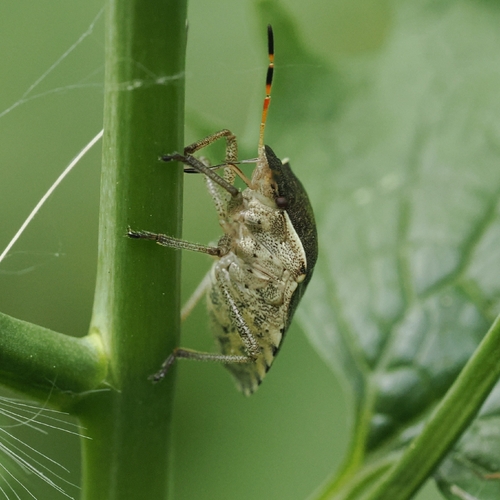
Eurydema oleracea is a species of shield bug in the family Pentatomidae commonly known as the rape bug, crucifer shield bug, cabbage bug, or brassica bug. Its specific name oleracea means "related to vegetables/herbs" in Latin and is a form of holeraceus (oleraceus).

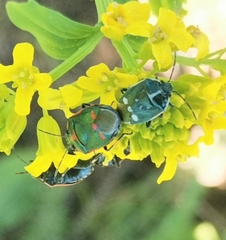
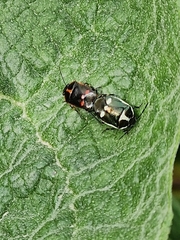
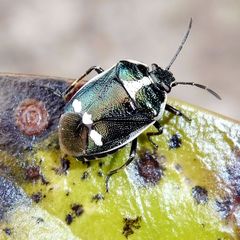
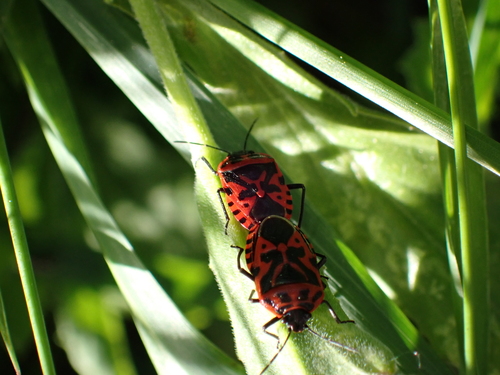
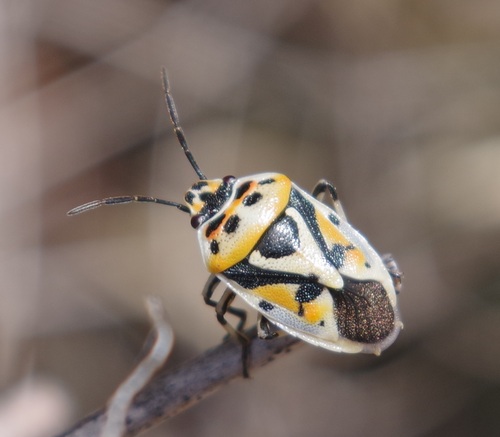
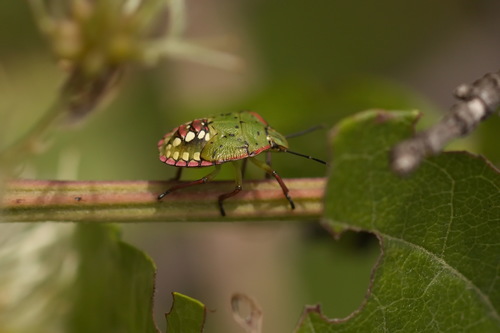
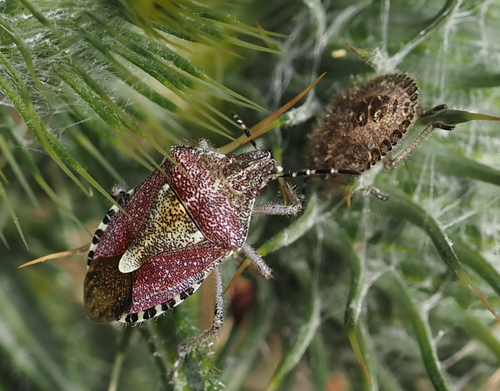
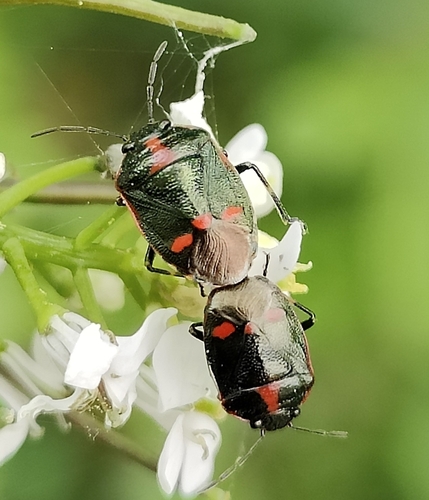
The rape bug has a shiny, flat, dark-colored body about 5–7 mm (0.20–0.28 in) long and 4 mm (0.16 in) wide. The species has a dark ground colour, which is overlain with red, yellow, cream, white, or orange markings. An oval spot is on the top of the mesonotum and one on each of the elytra, as well as a longitudinal stripe on the prothorax. In young adults, these spots are yellow, but change to white or red in older bugs. The colour of the abdomen changes at the same time from buff to black. Such age-specific changes in the imago coloration are connected with sexual maturation of the bugs and often take place in diapausing imagos at the time they are becoming active again.

The eggs are cylindrical and buff-colored with a dark pattern. They are laid on the stems and inflorescences of host plants in batches usually of about 12 eggs in two neat rows. Each female lays 60 to 80 eggs over a period... Wikipedia →
Global Distribution

Parks Where Found

# Park Country Daily sighting probability
1 Mercantour National Park 🇫🇷 France
~20%
2 Vanoise National Park 🇫🇷 France
~20%
3 Aigüestortes National Park 🇪🇸 Spain
~10%
4 Ecrins National Park 🇫🇷 France
~10%
5 Sierra Nevada National Park 🇪🇸 Spain
~10%
6 Fertő-Hanság National Park 🇭🇺 Hungary
~10%
7 Bavarian Forest National Park 🇩🇪 Germany
~10%
8 Pyrénées National Park 🇫🇷 France
~10%
9 Cévennes National Park 🇫🇷 France
~10%
10 Wadden Sea National Park 🇩🇪 Germany
<5%

Cities Where Found

# City Country Daily sighting probability
1 Kharkiv 🇺🇦 Ukraine
~20%
2 Berlin 🇩🇪 Germany
~20%
3 London 🇬🇧 United Kingdom
~10%
4 Warsaw 🇵🇱 Poland
~10%
5 Barcelona 🇪🇸 Spain
~10%
6 Birmingham 🇬🇧 United Kingdom
~10%
7 Helsinki 🇫🇮 Finland
~10%
8 Kyiv 🇺🇦 Ukraine
~10%
9 Nizhny Novgorod 🇷🇺 Russia
~10%
10 Vienna 🇦🇹 Austria
~10%

Before you go

What are the chances of seeing a Cabbage Bug in Vienna?

With luck

About 10% of wildlife watchers report a Cabbage Bug sighting in Vienna on a given day, based on 117 verified sightings from GBIF citizen-science data. It is the 137th most-seen of the 1406 insects we can rate there. Over three days the chance rises to about 20%, and over a week to about 50%, if each day is a fresh chance.

When is the best time to see a Cabbage Bug in Vienna?

April

In that month about 20% of wildlife watchers report a Cabbage Bug in Vienna on a given day, against under 5% in August–September and November–March, the lowest months.

What time of day is best to see a Cabbage Bug?

Between 9 am and noon

Across all the parks we cover, that three-hour window holds the most Cabbage Bug sightings with a recorded time, and about 8 in 10 of them come between 6 am and 6 pm: it is a daytime animal.

Is Vienna the best place to see a Cabbage Bug?

10th of 33

Of the 33 cities where we can rate Cabbage Bug sightings, Vienna ranks 10th at about 10%. The best odds are in Kharkiv (Ukraine, about 20%), Berlin (Germany, about 20%) and London (United Kingdom, about 10%).

Which relatives of the Cabbage Bug live in Vienna?

Same genus: Eurydema

The closest relatives of the Cabbage Bug that you can see in Vienna (genus Eurydema, Cabbage Bugs, Caper Bugs and Allies) are Cruciferous Bug (about 10%) and Red Cabbage Bug (about 10%), with each one's daily chance of a sighting.

Where does the Cabbage Bug sighting chance come from?

GBIF citizen-science records

It is estimated from how often the Cabbage Bug is recorded against all the insects logged in Vienna (117 verified sightings), calibrated against known sighting rates. Figures are rounded to the nearest 10% because citizen-science data supports honest approximations, not decimals, and months with records from fewer than five people show "—". How it works.

← Back to Vienna