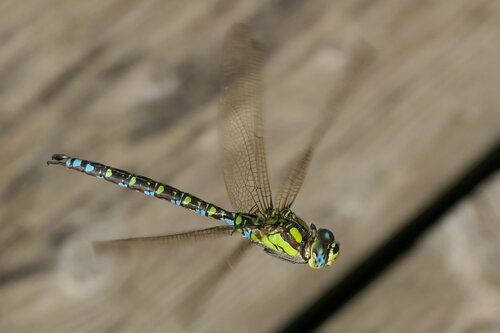
Common Spreadwing

Common Spreadwing

Lestes sponsa

Daily sighting probability <5% · Rare
at Vienna

In 3 days ~10% in a week ~20%

9 Verified sightings at Vienna
147 In all 7 parks From 2019 to 2026
July Best month
☀️ Diurnal When it's spotted

About the Common Spreadwing

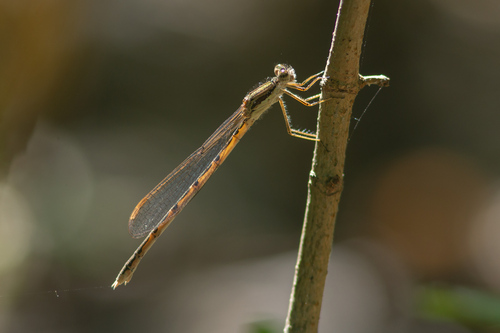
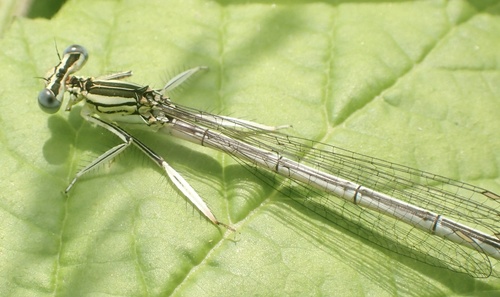
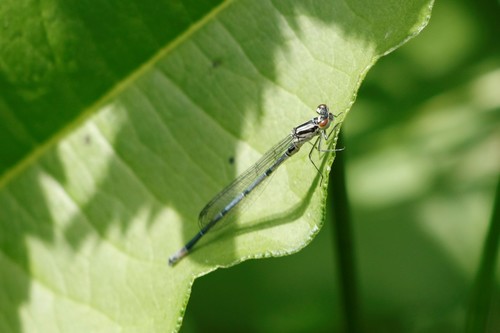
Lestes sponsa is a damselfly with a wide Palaearctic distribution. It is known commonly as the emerald damselfly or common spreadwing. Both males and females have a metallic green colour and brown wing spots. It resides near pools with aquatic plants. When resting its wings are usually half opened.

One of the larger damselflies, this species is most common in July and August. It is often found by ponds and lakes, and is very rarely seen along flowing water. Emerald damselflies like to perch among reeds, their colour providing good camouflage. They are not as strong fliers when compared to other common damselflies such as the common blue or large red damselflies, but they are more likely to be seen on misty, rainy days than those species. When disturbed they usually do not fly very far away, landing on another perch a few yards away. Their habit of perching with their wings half open is characteristic of the family Lestidae and gives rise to their other common name of spreadwings. A population can consist of several hundred insects.

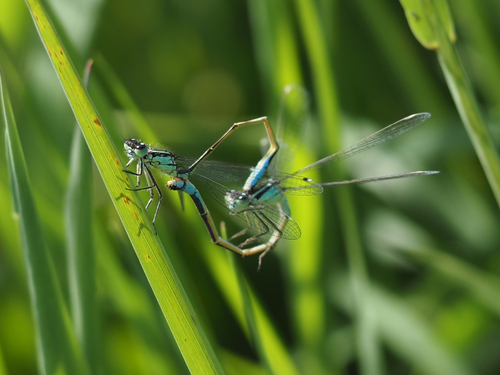
L. sponsa mate in the usual dragonfly manner and will form tandem pairs away from water. Copulation lasts from 30–60 minutes and after mating... Wikipedia →

Global Distribution

Parks Where Found

# Park Country Daily sighting probability
1 Cairngorms National Park 🇬🇧 United Kingdom
~20%
2 Aigüestortes National Park 🇪🇸 Spain
~10%
3 Pyrénées National Park 🇫🇷 France
~10%
4 Snowdonia National Park 🇬🇧 United Kingdom
~10%
5 Cévennes National Park 🇫🇷 France
~10%
6 Bavarian Forest National Park 🇩🇪 Germany
~10%
7 Wadden Sea National Park 🇩🇪 Germany
<5%

Cities Where Found

# City Country Daily sighting probability
1 Leeds 🇬🇧 United Kingdom
~10%
2 Helsinki 🇫🇮 Finland
~10%
3 Saint Petersburg 🇷🇺 Russia
~10%
4 Moscow 🇷🇺 Russia
~10%
5 Minsk 🇧🇾 Belarus
~10%
6 Manchester 🇬🇧 United Kingdom
<5%
7 Novosibirsk 🇷🇺 Russia
<5%
8 Hamburg 🇩🇪 Germany
<5%
9 Copenhagen 🇩🇰 Denmark
<5%
10 Berlin 🇩🇪 Germany
<5%

Before you go

What are the chances of seeing a Common Spreadwing in Vienna?

Rare

Under 5% of wildlife watchers report a Common Spreadwing sighting in Vienna on a given day, based on 9 verified sightings from GBIF citizen-science data. It is the 1090th most-seen of the 1406 insects we can rate there. Over three days the chance rises to about 10%, and over a week to about 20%, if each day is a fresh chance.

When is the best time to see a Common Spreadwing in Vienna?

Any time of year

In every month with enough records, under 5% of wildlife watchers report a Common Spreadwing in Vienna on a given day, so our monthly data shows no clear season.

What time of day is best to see a Common Spreadwing?

Between noon and 3 pm

Across all the parks we cover, that three-hour window holds the most Common Spreadwing sightings with a recorded time, and about 9 in 10 of them come between 6 am and 6 pm: it is a daytime animal.

Is Vienna the best place to see a Common Spreadwing?

11th of 13

Of the 13 cities where we can rate Common Spreadwing sightings, Vienna ranks 11th at under 5%. The best odds are in Leeds (United Kingdom, about 10%), Helsinki (Finland, about 10%) and Saint Petersburg (Russia, about 10%).

Which relatives of the Common Spreadwing live in Vienna?

Same family: Lestidae

The closest relatives of the Common Spreadwing that you can see in Vienna (family Lestidae, Spreadwings and allies) are Common Winter Damselfly (about 10%) and Western Willow Spreadwing (about 10%), with each one's daily chance of a sighting.

Where does the Common Spreadwing sighting chance come from?

GBIF citizen-science records

It is estimated from how often the Common Spreadwing is recorded against all the insects logged in Vienna (9 verified sightings), calibrated against known sighting rates. Figures are rounded to the nearest 10% because citizen-science data supports honest approximations, not decimals, and months with records from fewer than five people show "—". How it works.
← Back to Vienna