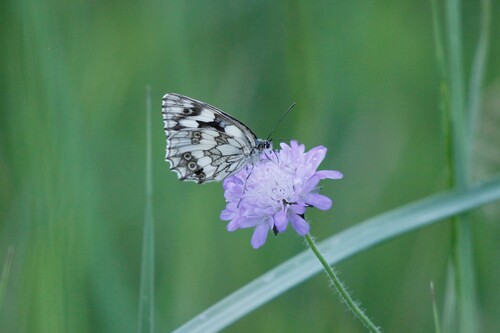
Orange Swift

Orange Swift

Triodia sylvina

Daily sighting probability ~10% · With luck
at Warsaw

In 3 days ~20% in a week ~30%

14 Verified sightings at Warsaw
117 In all 6 parks From 2019 to 2026
August Best month
☀️🌙 Day & Night When it's spotted

About the Orange Swift

The orange swift or orange moth (Triodia sylvina) is a moth belonging to the family Hepialidae. The species was first described by Carl Linnaeus in 1761 and was previously placed in the genus Hepialus. It is distributed throughout Europe.

This species has a wingspan of 32–48 mm. The male has rich orange forewings with two white bars forming a "V" shape. The hindwings are dark brown. The female is similar but generally larger and less brightly coloured. It flies at night from June to September[1] and is attracted to light. They do not have a proboscis so will not be found at flowers feeding. The globular, shiny black eggs are broadcast by the female as she hovers over the food plant.

Larva When they hatch the larvae find their foodplant, bore into the root and are 25 to 30 mm long when fully fed. They have an orange-brown head and a shiny white body with brownish-orange dorsal plates on the thoracic segments; spiracles are black. They can feed for two years from September to July on the roots of various plants including bracken (Pteridium species), dandelion (Taraxacum species), docks (Rumex species), hop (Humulus lupulus) and viper's bugloss (Echium vulgare).

Pupa... Wikipedia →

Global Distribution

Parks Where Found

# Park Country Daily sighting probability
1 Bavarian Forest National Park 🇩🇪 Germany
~10%
2 Fertő-Hanság National Park 🇭🇺 Hungary
~10%
3 Cévennes National Park 🇫🇷 France
~10%
4 Pyrénées National Park 🇫🇷 France
~10%
5 Wadden Sea National Park 🇩🇪 Germany
~10%
6 Sierra de Guadarrama National Park 🇪🇸 Spain
<5%

Cities Where Found

# City Country Daily sighting probability
1 Lyon 🇫🇷 France
~10%
2 Prague 🇨🇿 Czechia
~10%
3 Birmingham 🇬🇧 United Kingdom
~10%
4 Copenhagen 🇩🇰 Denmark
~10%
5 Vienna 🇦🇹 Austria
~10%
6 Hamburg 🇩🇪 Germany
~10%
7 Rotterdam [The Hague] 🇳🇱 Netherlands
~10%
8 Paris 🇫🇷 France
~10%
9 Cologne 🇩🇪 Germany
~10%
10 Milan 🇮🇹 Italy
~10%

Before you go

What are the chances of seeing an Orange Swift in Warsaw?

With luck

About 10% of wildlife watchers report an Orange Swift sighting in Warsaw on a given day, based on 14 verified sightings from GBIF citizen-science data. It is the 247th most-seen of the 580 insects we can rate there. Over three days the chance rises to about 20%, and over a week to about 30%, if each day is a fresh chance.

When is the best time to see an Orange Swift in Warsaw?

August

In that month about 20% of wildlife watchers report an Orange Swift in Warsaw on a given day, against under 5% in October to July, the lowest months.

What time of day is best to see an Orange Swift?

Between 9 pm and midnight

Across all the parks we cover, that three-hour window holds the most Orange Swift sightings with a recorded time, and about 6 in 10 of them come between 6 pm and 6 am: it is seen both by day and at night.

Is Warsaw the best place to see an Orange Swift?

Among the best

Of the 27 cities where we can rate Orange Swift sightings, Warsaw ranks 18th at about 10%, level with the leaders once rounded. The best odds are in Lyon (France, about 10%), Prague (Czechia, about 10%) and Birmingham (United Kingdom, about 10%).

Which relatives of the Orange Swift live in Warsaw?

Same order: Lepidoptera

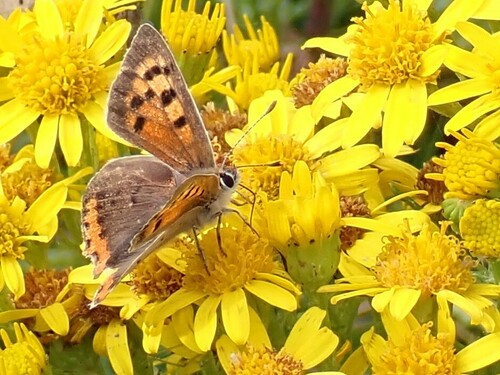
The closest relatives of the Orange Swift that you can see in Warsaw (order Lepidoptera, Butterflies and Moths) are Common Blue (about 30%), European Peacock Butterfly (about 30%) and Small Copper (about 20%), with each one's daily chance of a sighting.

Where does the Orange Swift sighting chance come from?

GBIF citizen-science records

It is estimated from how often the Orange Swift is recorded against all the insects logged in Warsaw (14 verified sightings), calibrated against known sighting rates. Figures are rounded to the nearest 10% because citizen-science data supports honest approximations, not decimals, and months with records from fewer than five people show "—". How it works.


← Back to Warsaw