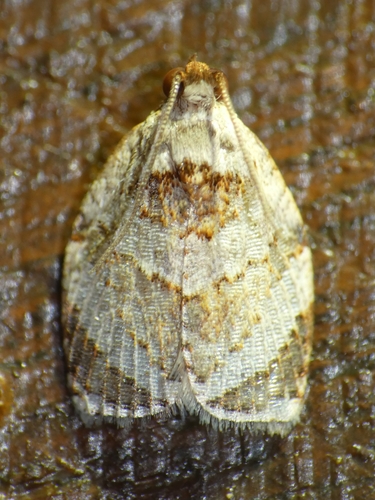
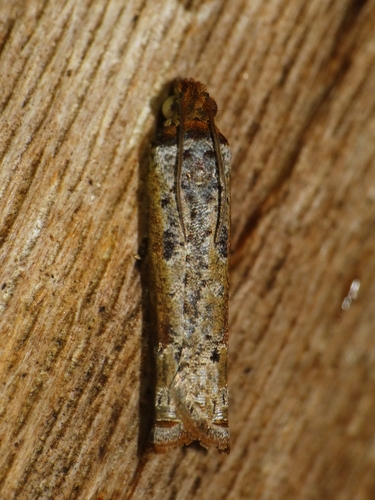
Cotton Tipworm Moth

Cotton Tipworm Moth

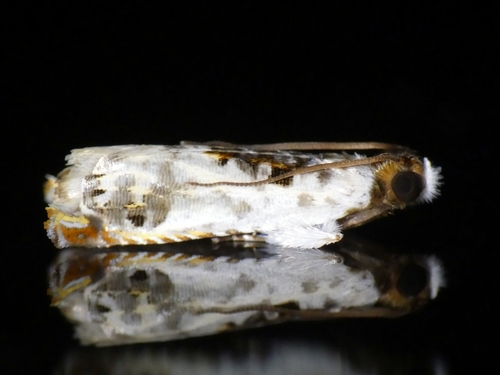
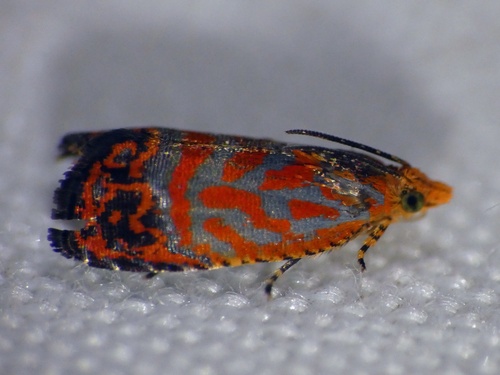
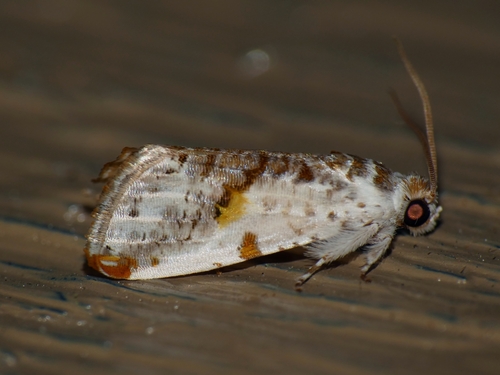
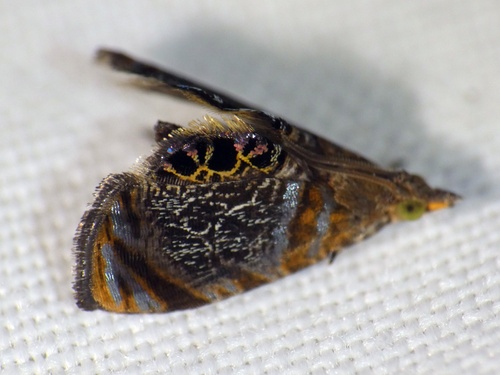
Crocidosema plebejana

Daily sighting probability ~10% · With luck
at Daintree National Park

In 3 days ~20% in a week ~50%

10 Verified sightings at Daintree National Park From 2019 to 2026
54 In all 4 parks
June Best month
🌅 Crepuscular When it's spotted

About the Cotton Tipworm Moth

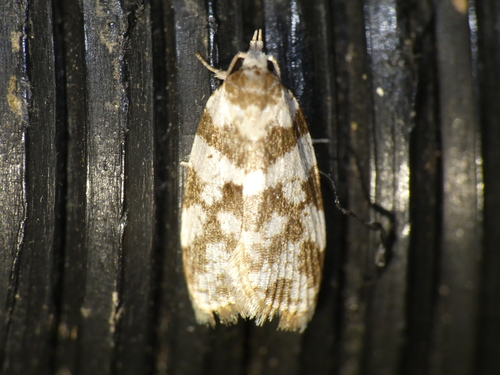
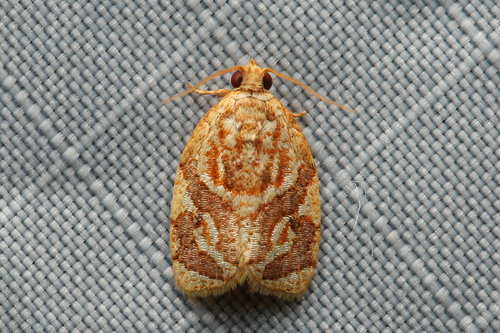
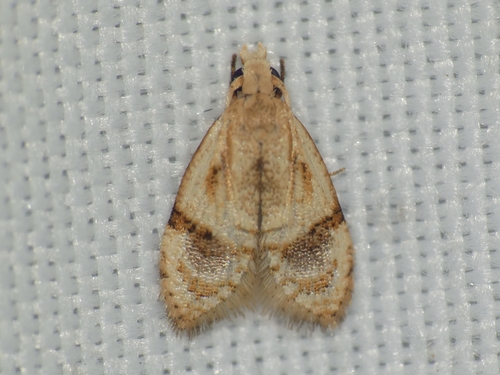
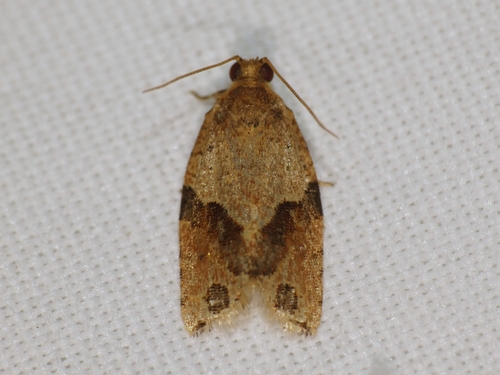
Crocidosema plebejana, the cotton tipworm, is a tortrix moth (family Tortricidae), belonging to tribe Eucosmini of subfamily Olethreutinae. It is found today all over the subtropical and tropical regions of the world and even occurs on many oceanic islands – in Polynesia and Saint Helena for example – but has probably been accidentally introduced to much of its current range by humans. In addition, it is also found in some cooler regions, e.g. in Europe except in the east and north; this is probably also not natural, as it was, for example, not recorded in the British Isles before 1900.

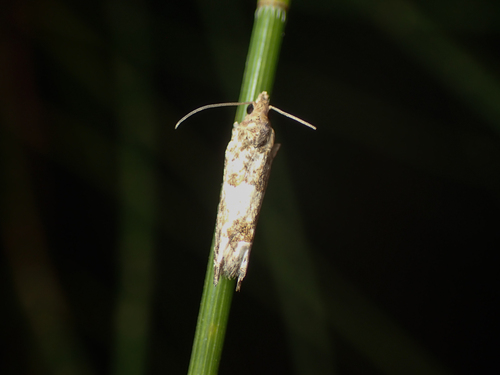
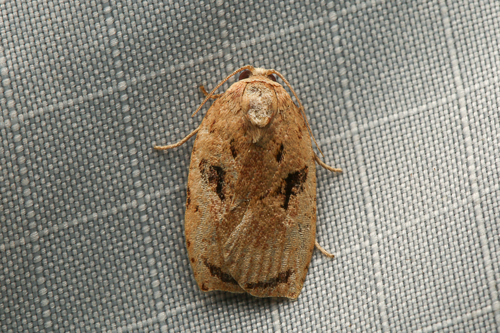
It is the type species of its genus Crocidosema, established by Philipp Christoph Zeller when he described the present species in 1847, as he found it unlike any moth then known to science. The wingspan of adults is 12–16 mm. Males are dark brown to black with a white ocellus and dorsal patch. Females are pale brown to tan with a dark basal patch that does not extend to the costa. Julius von Kennel provides a full description.

In the seasonal parts of its range, this moth flies from midsummer to early autumn, e.g. from July to October in southern England. It is not quite... Wikipedia →
Global Distribution

Parks Where Found

# Park Country Daily sighting probability
1 Booderee National Park 🇦🇺 Australia
~10%
2 Blue Mountains National Park 🇦🇺 Australia
~10%
3 Daintree National Park 🇦🇺 Australia
~10%
4 Lamington National Park 🇦🇺 Australia
~10%

Cities Where Found

# City Country Daily sighting probability
1 Auckland 🇳🇿 New Zealand
~10%
2 Brisbane 🇦🇺 Australia
~10%
3 Madrid 🇪🇸 Spain
<5%
4 San Diego 🇺🇸 United States
<5%
5 Melbourne 🇦🇺 Australia
<5%
6 Austin 🇺🇸 United States
<5%
7 Houston 🇺🇸 United States
<5%
8 Sydney 🇦🇺 Australia
<5%
9 Los Angeles 🇺🇸 United States
<5%

Before you go

What are the chances of seeing a Cotton Tipworm Moth in Daintree National Park?

With luck

About 10% of wildlife watchers report a Cotton Tipworm Moth sighting in Daintree National Park on a given day, based on 10 verified sightings from GBIF citizen-science data from 2019 to 2026. It is the 402nd most-seen of the 856 insects we can rate there. Over three days the chance rises to about 20%, and over a week to about 50%, if each day is a fresh chance.

When is the best time to see a Cotton Tipworm Moth in Daintree National Park?

June

In that month about 20% of wildlife watchers report a Cotton Tipworm Moth in Daintree National Park on a given day, against under 5% in September to April, the lowest months. That is one of Daintree National Park's driest months, with about 80 mm of rain against 380 mm in January.

What time of day is best to see a Cotton Tipworm Moth?

Between 7 and 10 am

Across all the parks we cover, that three-hour window holds the most Cotton Tipworm Moth sightings with a recorded time, and about 7 in 10 of them come between 6 am and 6 pm: it is most active around dawn and dusk.

Is Daintree National Park the best place to see a Cotton Tipworm Moth?

Among the best

Of the 4 parks where we can rate Cotton Tipworm Moth sightings, Daintree National Park ranks 3rd at about 10%, level with the leaders once rounded. The best odds are in Booderee National Park (Australia, about 10%) and Blue Mountains National Park (Australia, about 10%).

Which relatives of the Cotton Tipworm Moth live in Daintree National Park?

Same family: Tortricidae

The closest relatives of the Cotton Tipworm Moth that you can see in Daintree National Park (family Tortricidae, Tortricid Leafroller Moths) are Homona mermerodes (about 10%), Caenognosis incisa (about 10%) and Loboschiza martia (about 10%), with each one's daily chance of a sighting.

Where does the Cotton Tipworm Moth sighting chance come from?

GBIF citizen-science records

It is estimated from how often the Cotton Tipworm Moth is recorded against all the insects logged in Daintree National Park (10 verified sightings from 2019 to 2026), calibrated against known sighting rates. Figures are rounded to the nearest 10% because citizen-science data supports honest approximations, not decimals, and months with records from fewer than five people show "—". How it works.

← Back to Daintree National Park