Giant Grasshopper

Giant Grasshopper

Valanga irregularis

Endemic
Daily sighting probability ~30% · Possible
at Daintree National Park

In 3 days ~70% in a week ~90%

108 Verified sightings at Daintree National Park From 2019 to 2026
153 In all 5 parks
September Best month
☀️ Diurnal When it's spotted

About the Giant Grasshopper

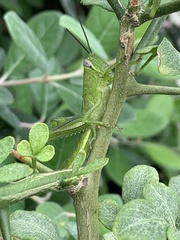
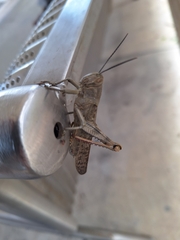
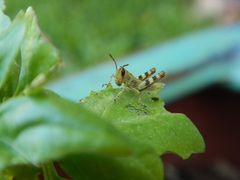
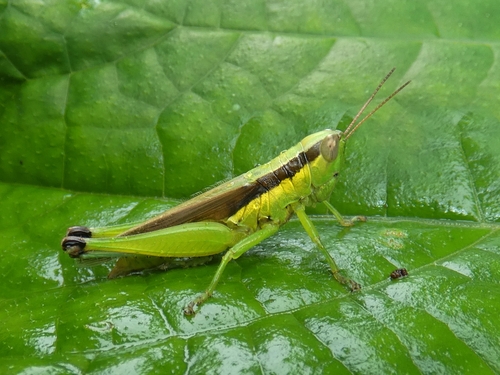
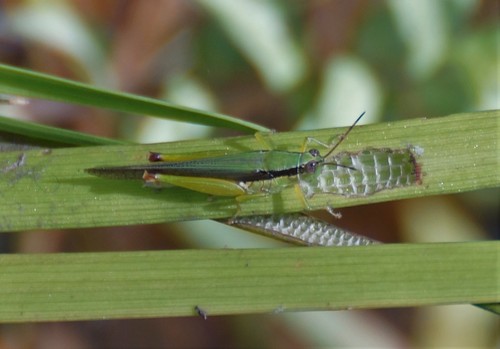
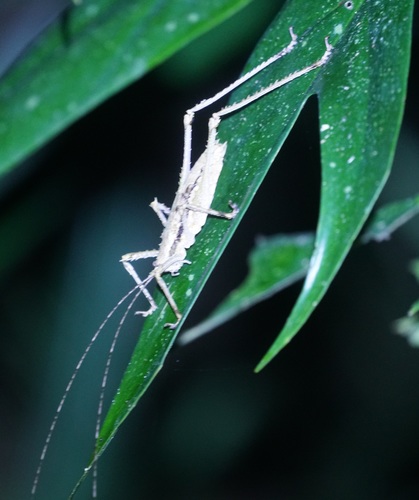
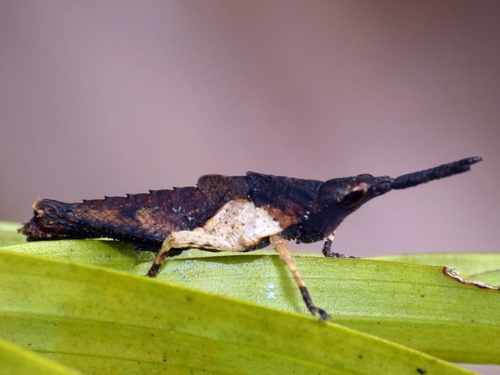
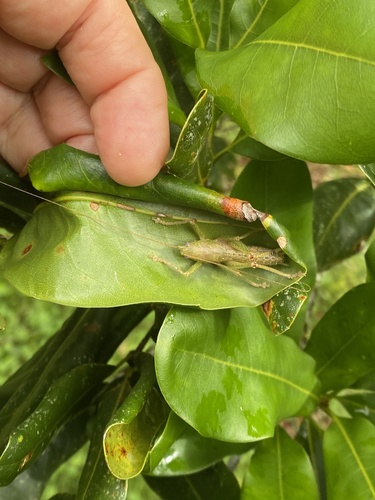
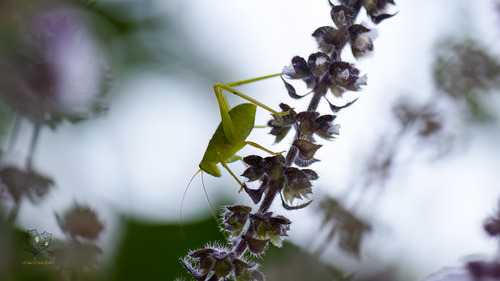
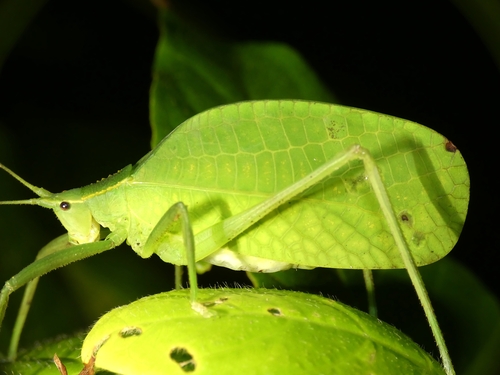
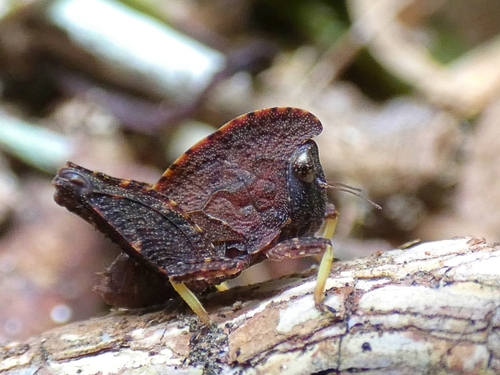
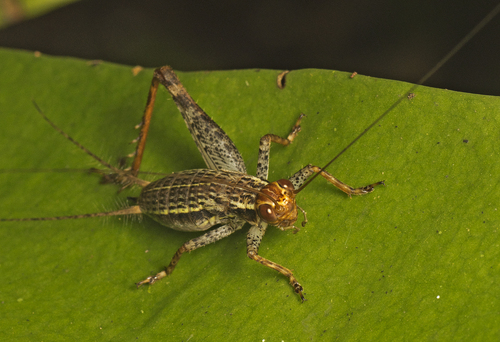
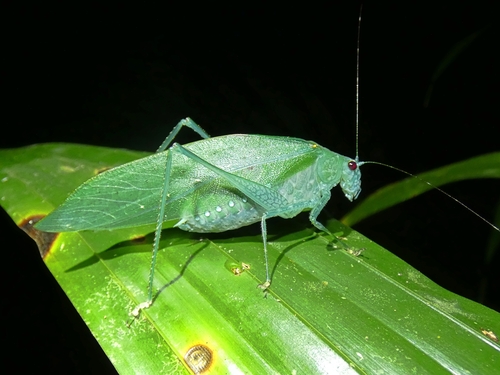
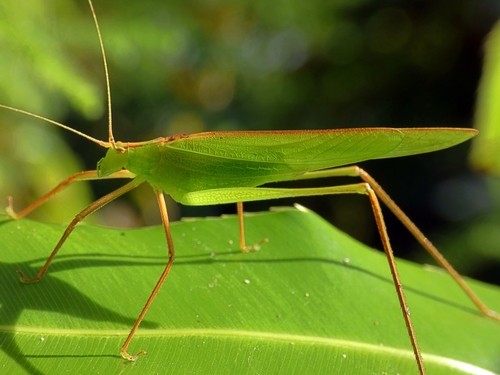
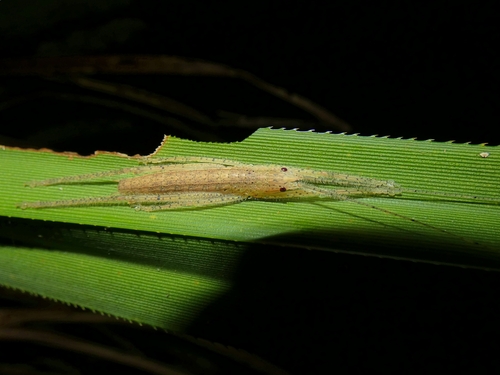
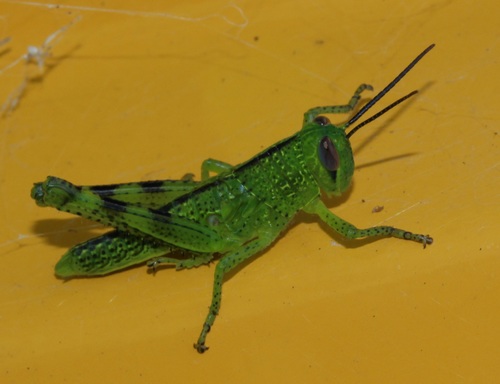
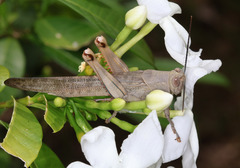
Valanga irregularis, the giant grasshopper, giant valanga or hedge grasshopper, is a large grasshopper belonging to the family Acrididae. The largest grasshopper in Australia, its distribution is restricted to the Australian tropics and subtropics. They are a solitary species.

Both sexes look similar but differ in body size. Female individuals can reach up to 60 to 75 millimetres in length, males about 45 to 55 millimetres, hence they count as the largest grasshopper in Australia and in Southern African countries. Some reports refer a body length up to 90 millimetres.

The body colour and pattern varies highly. Adults have a creamy brown to greyish green colouring. The forewings show a black dot pattern, the hindwings are dark grey, sometimes also colourless or light green. At the tibia orange and red spines with black stings are visible.

Valanga irregularis is native in the tropic and subtropic regions of Australia, northward of Sydney, although in WA they are found as far south as Perth. The species favours a moist climate. In spring and autumn they are often found in grassland or forest. If the atmospheric conditions are ideal they sometimes leave... Wikipedia →
Global Distribution

Parks Where Found

# Park Country Daily sighting probability
1 Daintree National Park 🇦🇺 Australia
~30%
2 Nitmiluk National Park 🇦🇺 Australia
~30%
3 Kakadu National Park 🇦🇺 Australia
~20%
4 Noosa National Park 🇦🇺 Australia
~10%
5 Springbrook National Park 🇦🇺 Australia
~10%

Cities Where Found

# City Country Daily sighting probability
1 Brisbane 🇦🇺 Australia
~30%
2 Perth 🇦🇺 Australia
~20%

Before you go

What are the chances of seeing a Giant Grasshopper in Daintree National Park?

Possible

About 30% of wildlife watchers report a Giant Grasshopper sighting in Daintree National Park on a given day, based on 108 verified sightings from GBIF citizen-science data from 2019 to 2026. It is the 13th most-seen of the 856 insects we can rate there. Over three days the chance rises to about 70%, and over a week to about 90%, if each day is a fresh chance.

When is the best time to see a Giant Grasshopper in Daintree National Park?

September

In that month about 50% of wildlife watchers report a Giant Grasshopper in Daintree National Park on a given day, against under 5% in December, the lowest month. That is one of Daintree National Park's driest months, with about 50 mm of rain against 380 mm in January.

What time of day is best to see a Giant Grasshopper?

Between 2 and 5 pm

Across all the parks we cover, that three-hour window holds the most Giant Grasshopper sightings with a recorded time, and about 7 in 10 of them come between 6 am and 6 pm: it is a daytime animal.

Is Daintree National Park the best place to see a Giant Grasshopper?

Yes

Of the 5 parks where we can rate Giant Grasshopper sightings, Daintree National Park has the highest daily chance: about 30%. Next come Nitmiluk National Park (Australia, about 30%) and Kakadu National Park (Australia, about 20%).

Which relatives of the Giant Grasshopper live in Daintree National Park?

Same family: Acrididae

The closest relatives of the Giant Grasshopper that you can see in Daintree National Park (family Acrididae, Short-horned Grasshoppers) are Japanese Rice Grasshopper (about 10%) and Common Gesonula (about 10%), with each one's daily chance of a sighting.

Where does the Giant Grasshopper sighting chance come from?

GBIF citizen-science records

It is estimated from how often the Giant Grasshopper is recorded against all the insects logged in Daintree National Park (108 verified sightings from 2019 to 2026), calibrated against known sighting rates. Figures are rounded to the nearest 10% because citizen-science data supports honest approximations, not decimals, and months with records from fewer than five people show "—". How it works.

← Back to Daintree National Park