Trefoil Horseshoe Bat

Trefoil Horseshoe Bat

Rhinolophus trifoliatus

Silhouette: Margot Michaud · PhyloPic

LCNTNear ThreatenedVUENCR
Daily sighting probability ~20% · Possible
at Danum Valley Conservation Area

In 3 days ~50% in a week ~80%

9 Verified sightings at Danum Valley Conservation Area From 2019 to 2026
15 In all 2 parks
October Best month
🌅 Crepuscular When it's spotted

About the Trefoil Horseshoe Bat

The trefoil horseshoe bat (Rhinolophus trifoliatus) is a species of bat in the family Rhinolophidae. It is found in Brunei, India, Indonesia, Malaysia, Myanmar, Singapore, and Thailand. In Borneo locally common up to 1,800m, including mangroves.

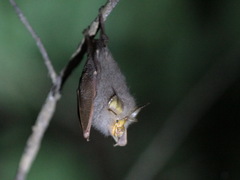
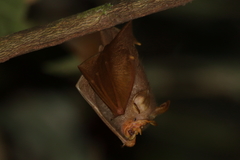
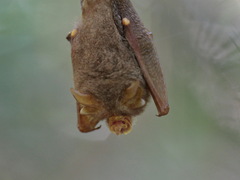
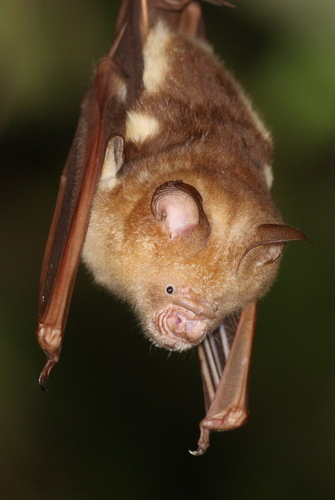
Rhinolophus trifoliatus is a medium-sized horseshoe bat with a forearm length of 47–52 mm (1.9–2.0 in) and weight of 10.5–18 g (0.37–0.63 oz). This bat has fluffy, pale grey fur, with a yellow nose-leaf and ear membranes.

R. trifoliatus is caught in the understory of primary and secondary rainforest. This species is thought to be solitary, with individuals observed roosting underneath exposed leaves. As with the neotropical Honduran white bat it is thought that their pale fur may be an adaptation to make them camouflaged when roosting, as sunlight filtering through the leaf will make them appear green.

Sound recordings of Rhinolophus trifoliatus on BioAcoustica Wikipedia →

Global Distribution

Parks Where Found

# Park Country Daily sighting probability
1 Danum Valley Conservation Area 🇲🇾 Malaysia
~20%
2 Sepilok 🇲🇾 Malaysia
~10%

Before you go

What are the chances of seeing a Trefoil Horseshoe Bat in Danum Valley Conservation Area?

Possible

About 20% of wildlife watchers report a Trefoil Horseshoe Bat sighting in Danum Valley Conservation Area on a given day, based on 9 verified sightings from GBIF citizen-science data from 2019 to 2026. It is the 22nd most-seen of the 26 mammals we can rate there. Over three days the chance rises to about 50%, and over a week to about 80%, if each day is a fresh chance.

When is the best time to see a Trefoil Horseshoe Bat in Danum Valley Conservation Area?

February–March and October–November

In those months about 30% of wildlife watchers report a Trefoil Horseshoe Bat in Danum Valley Conservation Area on a given day, against under 5% in April, July–September and December–January, the lowest months.

What time of day is best to see a Trefoil Horseshoe Bat?

Between 1 and 4 pm

Across all the parks we cover, that three-hour window holds the most Trefoil Horseshoe Bat sightings with a recorded time, and about 7 in 10 of them come between 6 am and 6 pm: it is most active around dawn and dusk.

Is Danum Valley Conservation Area the best place to see a Trefoil Horseshoe Bat?

Yes

Of the 2 parks where we can rate Trefoil Horseshoe Bat sightings, Danum Valley Conservation Area has the highest daily chance: about 20%. Next come Sepilok (Malaysia, about 10%).

Where does the Trefoil Horseshoe Bat sighting chance come from?

GBIF citizen-science records

It is estimated from how often the Trefoil Horseshoe Bat is recorded against all the mammals logged in Danum Valley Conservation Area (9 verified sightings from 2019 to 2026), calibrated against known sighting rates. Figures are rounded to the nearest 10% because citizen-science data supports honest approximations, not decimals, and months with records from fewer than five people show "—". How it works.

← Back to Danum Valley Conservation Area