
Black-throated Sparrow

Black-throated Sparrow

Amphispiza bilineata

Silhouette: L. Shyamal · PhyloPic

LCLeast ConcernNTVUENCR
Daily sighting probability ~20% · Possible
at Death Valley National Park

In 3 days ~50% in a week ~80%

376 Verified sightings at Death Valley National Park From 2019 to 2026
13,937 In all 11 parks
May Best month
☀️ Diurnal When it's spotted

About the Black-throated Sparrow

The black-throated sparrow (Amphispiza bilineata) is a species of bird in the family Passerellidae, the New World sparrows. It is found in Mexico and the United States. The black-throated sparrow was formally described in 1850 with the binomial Emberiza bilineata. Elliott Coues erected the new genus Amphispiza in 1874 with the black-throated sparrow as the type species.

Several other species including the five-striped sparrow (Amphispizopsis quinquestriata) and what are now Bell's sparrow (Artemisiospiza belli) and the sagebrush sparrow (Artemisiospiza nevadensis) were previously also assigned to Amphispiza. These reassignments left the black-throated sparrow as the only member of the genus. They were adopted by the American Ornithological Society (AOS), the IOC, the Clements taxonomy, and AviList. However, as of late 2025 BirdLife International's Handbook of the Birds of the World (HBW) retains the five-striped sparrow in Amphispiza with the black-throated.

The black-throated sparrow's further taxonomy is unresolved. The IOC, AviList, and HBW assign it these nine subspecies: The Clements taxonomy adds a tenth subspecies, A. b. carmenae (Van Rossem,... Wikipedia →

Sounds

Song0:11

United States · 2017

© Pat Goltz · XC1142475 · CC BY-NC-SA 4.0

Vesper calling0:53

United States · 2020

© Richard E. Webster · XC677432 · CC BY-NC-SA 4.0

Call0:43

United States · 2020

© Lance A. M. Benner · XC551162 · CC BY-NC-SA 4.0

Global Distribution

Parks Where Found

# Park Country Daily sighting probability
1 Joshua Tree National Park 🇺🇸 United States
~80%
2 Saguaro National Park 🇺🇸 United States
~50%
3 Big Bend National Park 🇺🇸 United States
~40%
4 Guadalupe Mountains National Park 🇺🇸 United States
~40%
5 Death Valley National Park 🇺🇸 United States
~20%
6 Bahía de Loreto National Park 🇲🇽 Mexico
~10%
7 El Vizcaíno Biosphere Reserve 🇲🇽 Mexico
~10%
8 Cabo Pulmo National Park 🇲🇽 Mexico
~10%
9 Zion National Park 🇺🇸 United States
~10%
10 Grand Canyon National Park 🇺🇸 United States
~10%
11 Cumbres de Monterrey National Park 🇲🇽 Mexico
<5%

Cities Where Found

# City Country Daily sighting probability
1 Phoenix 🇺🇸 United States
~10%
2 Mesa 🇺🇸 United States
<5%
3 Las Vegas 🇺🇸 United States
<5%
4 San Diego 🇺🇸 United States
<5%
5 Denver 🇺🇸 United States
<5%
6 San Francisco 🇺🇸 United States
<5%
7 Los Angeles 🇺🇸 United States
<5%

Before you go

What are the chances of seeing a Black-throated Sparrow in Death Valley National Park?

Possible

About 20% of wildlife watchers report a Black-throated Sparrow sighting in Death Valley National Park on a given day, based on 376 verified sightings from GBIF citizen-science data from 2019 to 2026. It is the 37th most-seen of the 213 birds we can rate there. Over three days the chance rises to about 50%, and over a week to about 80%, if each day is a fresh chance.

When is the best time to see a Black-throated Sparrow in Death Valley National Park?

April–June and August

In those months about 30% of wildlife watchers report a Black-throated Sparrow in Death Valley National Park on a given day, against about 10% in January–February and October–November, the lowest months.

What time of day is best to see a Black-throated Sparrow?

Between 6 and 9 am

Across all the parks we cover, that three-hour window holds the most Black-throated Sparrow sightings with a recorded time, and about 9 in 10 of them come between 6 am and 6 pm: it is a daytime animal.

Which relatives of the Black-throated Sparrow live in Death Valley National Park?

Same family: Passerellidae

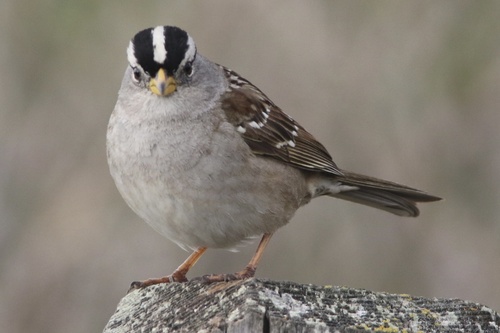
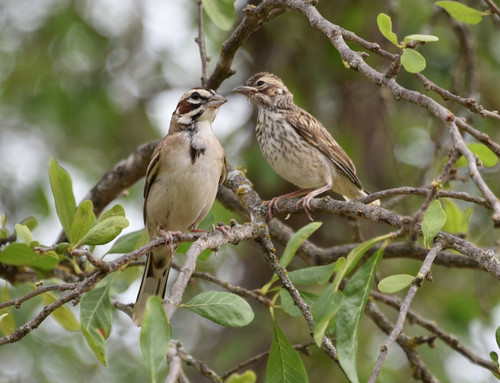
The closest relatives of the Black-throated Sparrow that you can see in Death Valley National Park (family Passerellidae, New World Sparrows) are White-crowned Sparrow (about 50%), Song Sparrow (about 30%) and Lincoln's Sparrow (about 20%), with each one's daily chance of a sighting.

Where does the Black-throated Sparrow sighting chance come from?

GBIF citizen-science records

It is estimated from how often the Black-throated Sparrow is recorded against all the birds logged in Death Valley National Park (376 verified sightings from 2019 to 2026), calibrated against known sighting rates. Figures are rounded to the nearest 10% because citizen-science data supports honest approximations, not decimals, and months with records from fewer than five people show "—". How it works.

← Back to Death Valley National Park