



Large-Tailed Aphideater

Large-Tailed Aphideater

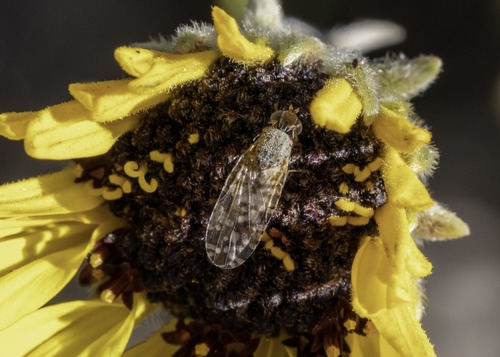
Eupeodes volucris

Daily sighting probability ~20% · Possible
at Death Valley National Park

In 3 days ~40% in a week ~70%

25 Verified sightings at Death Valley National Park From 2019 to 2026
154 In all 8 parks
December Best month
☀️ Diurnal When it's spotted

About the Large-Tailed Aphideater

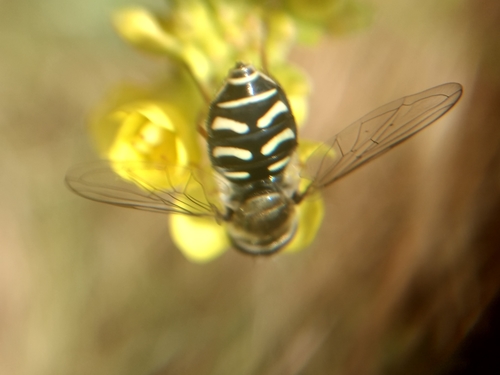
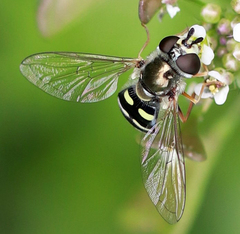
Eupeodes volucris, the large-tailed aphideater or bird hover fly, is a species of hover fly in the family Syrphidae. As its "aphideater" name implies, larvae prey on plant-sucking insects, primarily aphids. The "hover" part of the family name derives from the fact that adults often hover over the plants they visit. Wikipedia →

Global Distribution

Parks Where Found

# Park Country Daily sighting probability
1 Death Valley National Park 🇺🇸 United States
~20%
2 Joshua Tree National Park 🇺🇸 United States
~10%
3 Channel Islands National Park 🇺🇸 United States
~10%
4 Grand Canyon National Park 🇺🇸 United States
~10%
5 Saguaro National Park 🇺🇸 United States
~10%
6 Sequoia and Kings Canyon National Parks 🇺🇸 United States
~10%
7 Rocky Mountain National Park 🇺🇸 United States
~10%
8 Yellowstone National Park 🇺🇸 United States
<5%

Cities Where Found

# City Country Daily sighting probability
1 Sacramento 🇺🇸 United States
~10%
2 Salt Lake City 🇺🇸 United States
~10%
3 Ciudad Juárez 🇲🇽 México
~10%
4 Denver 🇺🇸 United States
~10%
5 Phoenix 🇺🇸 United States
~10%
6 Mesa 🇺🇸 United States
~10%
7 San Diego 🇺🇸 United States
~10%
8 Los Angeles 🇺🇸 United States
~10%
9 Portland 🇺🇸 United States
~10%
10 San Francisco 🇺🇸 United States
~10%

Before you go

What are the chances of seeing a Large-Tailed Aphideater in Death Valley National Park?

Possible

About 20% of wildlife watchers report a Large-Tailed Aphideater sighting in Death Valley National Park on a given day, based on 25 verified sightings from GBIF citizen-science data from 2019 to 2026. It is the 25th most-seen of the 108 insects we can rate there. Over three days the chance rises to about 40%, and over a week to about 70%, if each day is a fresh chance.

When is the best time to see a Large-Tailed Aphideater in Death Valley National Park?

March and December

In those months about 30% of wildlife watchers report a Large-Tailed Aphideater in Death Valley National Park on a given day, against under 5% in January, May–September and November, the lowest months. Those are among Death Valley National Park's wettest months, with about 25 mm of rain a month against 5 mm in June.

What time of day is best to see a Large-Tailed Aphideater?

Between noon and 3 pm

Across all the parks we cover, that three-hour window holds the most Large-Tailed Aphideater sightings with a recorded time, and about 9 in 10 of them come between 6 am and 6 pm: it is a daytime animal.

Is Death Valley National Park the best place to see a Large-Tailed Aphideater?

Yes

Of the 8 parks where we can rate Large-Tailed Aphideater sightings, Death Valley National Park has the highest daily chance: about 20%. Next come Joshua Tree National Park (United States, about 10%) and Channel Islands National Park (United States, about 10%).

Where does the Large-Tailed Aphideater sighting chance come from?

GBIF citizen-science records

It is estimated from how often the Large-Tailed Aphideater is recorded against all the insects logged in Death Valley National Park (25 verified sightings from 2019 to 2026), calibrated against known sighting rates. Figures are rounded to the nearest 10% because citizen-science data supports honest approximations, not decimals, and months with records from fewer than five people show "—". How it works.

← Back to Death Valley National Park