





Completed


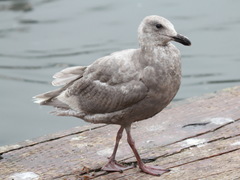
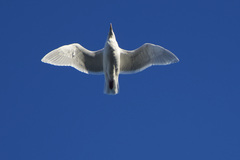


Glaucous-winged Gull
Larus glaucescens
Silhouette: Sharon Wegner-Larsen · PhyloPic
- KingdomAnimalia (Animals)
- PhylumChordata (Chordates)
- ClassAves (Birds)
- OrderCharadriiformes (Shorebirds and Allies)
- FamilyLaridae (Gulls, Terns, and Skimmers)
- GenusLarus (Large White-headed Gulls)
- SpeciesLarus glaucescens (Glaucous-winged Gull)
In 3 days ~10%
24 Verified sightings at El Vizcaíno Biosphere Reserve From 2019 to 2026
12,092 In all 10 parks
February Best month
☀️ Diurnal When it's spotted
About the Glaucous-winged Gull
The glaucous-winged gull (Larus glaucescens) is a large, white-headed gull. The genus name is from Latin Larus which appears to have referred to a gull or other large seabird. The specific glaucescens is Neo-Latin for "glaucous" from the Ancient Greek, glaukos, denoting the grey color of its wings.
The glaucous-winged gull is rarely found far from the ocean. It is a resident from the western coast of Alaska to the coast of Washington. These glaucous winged gulls can be found in the Puget Sound region as well. It also breeds on the northwest coast of Alaska, in the summertime and in the Russian Far East. During winter, they can be found along the coast of California, Oregon, Baja California, Baja California Sur, and Sonora. Glaucous-winged gulls are thought to live about 15 years, but some live much longer; a bird in British Columbia, for example, lived for more than 21 years, while one in the US state of Washington lived for at least 22 years, 9 months. The longevity record, though, is more than 37 years, for a bird banded as a chick in British Columbia.
It is an exceptionally rare vagrant to the Western Palearctic region, with records from Morocco, the Canary... Wikipedia →
Recent sightings of Glaucous-winged Gull in El Vizcaíno Biosphere Reserve
LIVEiNaturalistGlobal Distribution
Parks Where Found
| # | Park | Country | Daily sighting probability |
|---|---|---|---|
| 1 | Katmai National Park | 🇺🇸 United States | |
| 2 | Pacific Rim National Park Reserve | 🇨🇦 Canada | |
| 3 | Kenai Fjords National Park | 🇺🇸 United States | |
| 4 | Great Bear Rainforest | 🇨🇦 Canada | |
| 5 | Olympic National Park | 🇺🇸 United States | |
| 6 | Redwood National Park | 🇺🇸 United States | |
| 7 | Wrangell-St. Elias National Park | 🇺🇸 United States | |
| 8 | Channel Islands National Park | 🇺🇸 United States | |
| 9 | El Vizcaíno Biosphere Reserve | 🇲🇽 Mexico | |
| 10 | Denali National Park | 🇺🇸 United States |
Cities Where Found
| # | City | Country | Daily sighting probability |
|---|---|---|---|
| 1 | Vancouver | 🇨🇦 Canada | |
| 2 | Seattle | 🇺🇸 United States | |
| 3 | Anchorage | 🇺🇸 United States | |
| 4 | Portland | 🇺🇸 United States | |
| 5 | San Francisco | 🇺🇸 United States | |
| 6 | Sacramento | 🇺🇸 United States | |
| 7 | Los Angeles | 🇺🇸 United States | |
| 8 | San Diego | 🇺🇸 United States | |
| 9 | Calgary | 🇨🇦 Canada | |
| 10 | Tokyo | 🇯🇵 Japan |
Zoos & Centres Where Found
| # | Zoo / Centre | Country | |
|---|---|---|---|
| 1 | Woodland Park Zoo | 🇺🇸 United States |
Closest Relatives at El Vizcaíno Biosphere Reserve


Before you go
What are the chances of seeing a Glaucous-winged Gull in El Vizcaíno Biosphere Reserve?
Rare
Under 5% of wildlife watchers report a Glaucous-winged Gull sighting in El Vizcaíno Biosphere Reserve on a given day, based on 24 verified sightings from GBIF citizen-science data from 2019 to 2026. It is the 175th most-seen of the 237 birds we can rate there. Over three days the chance rises to about 10%, if each day is a fresh chance.
When is the best time to see a Glaucous-winged Gull in El Vizcaíno Biosphere Reserve?
February
In that month about 10% of wildlife watchers report a Glaucous-winged Gull in El Vizcaíno Biosphere Reserve on a given day, against under 5% in March to January, the lowest months.
What time of day is best to see a Glaucous-winged Gull?
Between 11 am and 2 pm
Across all the parks we cover, that three-hour window holds the most Glaucous-winged Gull sightings with a recorded time, and about 8 in 10 of them come between 6 am and 6 pm: it is a daytime animal.
Is El Vizcaíno Biosphere Reserve the best place to see a Glaucous-winged Gull?
9th of 10
Of the 10 parks where we can rate Glaucous-winged Gull sightings, El Vizcaíno Biosphere Reserve ranks 9th at under 5%. The best odds are in Katmai National Park (United States, about 70%), Pacific Rim National Park Reserve (Canada, about 70%) and Kenai Fjords National Park (United States, about 70%). All parks ranked.
Which relatives of the Glaucous-winged Gull live in El Vizcaíno Biosphere Reserve?
Same genus: Larus
The closest relatives of the Glaucous-winged Gull that you can see in El Vizcaíno Biosphere Reserve (genus Larus, Large White-headed Gulls) are Western Gull (about 70%), Ring-billed Gull (about 40%) and California Gull (about 20%), with each one's daily chance of a sighting.
Where does the Glaucous-winged Gull sighting chance come from?
GBIF citizen-science records
It is estimated from how often the Glaucous-winged Gull is recorded against all the birds logged in El Vizcaíno Biosphere Reserve (24 verified sightings from 2019 to 2026), calibrated against known sighting rates. Figures are rounded to the nearest 10% because citizen-science data supports honest approximations, not decimals, and months with records from fewer than five people show "—". How it works.
