





Completed



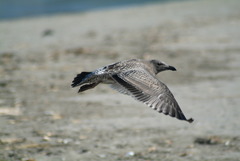

Western Gull
Larus occidentalis
Silhouette: Sharon Wegner-Larsen · PhyloPic
- KingdomAnimalia (Animals)
- PhylumChordata (Chordates)
- ClassAves (Birds)
- OrderCharadriiformes (Shorebirds and Allies)
- FamilyLaridae (Gulls, Terns, and Skimmers)
- GenusLarus (Large White-headed Gulls)
- SpeciesLarus occidentalis (Western Gull)
In 3 days >90%
1,103 Verified sightings at El Vizcaíno Biosphere Reserve From 2019 to 2026
10,896 In all 7 parks
May Best month
☀️ Diurnal When it's spotted
About the Western Gull
The western gull (Larus occidentalis) is a large white-headed gull that lives on the west coast of North America and the Pacific Ocean. The western gull ranges from British Columbia, Canada, to Baja California, Mexico. It was previously considered conspecific with the yellow-footed gull (Larus livens) of the Gulf of California.
The western gull is a large gull that can measure 55 to 68 cm (22 to 27 in) in total length, spans 130 to 144 cm (51 to 57 in) across the wings, and weighs 800 to 1,400 g (1.8 to 3.1 lb). The average mass among a survey of 48 gulls of the species was 1,011 g (2.229 lb). Among standard measurements, the wing chord is 38 to 44.8 cm (15.0 to 17.6 in), the bill is 4.7 to 6.2 cm (1.9 to 2.4 in) and the tarsus is 5.8 to 7.5 cm (2.3 to 3.0 in). The western gull has a white head and body, and upperparts or mantle is dark grey. The head generally remains white year-round, developing little to no streaking patterns in northern populations during the nonbreeding phase (basic plumage). It is debatable the extent of head markings can be found in pure Western Gulls as they form a hybrid zone with the glaucous-winged gull (Larus glaucescens) which... Wikipedia →
Recent sightings of Western Gull in El Vizcaíno Biosphere Reserve
LIVEiNaturalistGlobal Distribution
Parks Where Found
| # | Park | Country | Daily sighting probability |
|---|---|---|---|
| 1 | Channel Islands National Park | 🇺🇸 United States | |
| 2 | El Vizcaíno Biosphere Reserve | 🇲🇽 Mexico | |
| 3 | Redwood National Park | 🇺🇸 United States | |
| 4 | Cabo Pulmo National Park | 🇲🇽 Mexico | |
| 5 | Olympic National Park | 🇺🇸 United States | |
| 6 | Pacific Rim National Park Reserve | 🇨🇦 Canada | |
| 7 | Great Bear Rainforest | 🇨🇦 Canada |
Cities Where Found
| # | City | Country | Daily sighting probability |
|---|---|---|---|
| 1 | San Diego | 🇺🇸 United States | |
| 2 | San Francisco | 🇺🇸 United States | |
| 3 | Tijuana | 🇲🇽 México | |
| 4 | Los Angeles | 🇺🇸 United States | |
| 5 | Seattle | 🇺🇸 United States | |
| 6 | Portland | 🇺🇸 United States | |
| 7 | Sacramento | 🇺🇸 United States | |
| 8 | Vancouver | 🇨🇦 Canada |
Zoos & Centres Where Found
| # | Zoo / Centre | Country | |
|---|---|---|---|
| 1 | Texas Zoo | 🇺🇸 United States |
Closest Relatives at El Vizcaíno Biosphere Reserve


Before you go
What are the chances of seeing a Western Gull in El Vizcaíno Biosphere Reserve?
Very likely
About 70% of wildlife watchers report a Western Gull sighting in El Vizcaíno Biosphere Reserve on a given day, based on 1,103 verified sightings from GBIF citizen-science data from 2019 to 2026. It is the most-seen of the 237 birds we can rate there. Over three days the chance rises to over 90%, if each day is a fresh chance.
When is the best time to see a Western Gull in El Vizcaíno Biosphere Reserve?
January, April–June and September
In those months about 80% of wildlife watchers report a Western Gull in El Vizcaíno Biosphere Reserve on a given day, against about 50% in March and July, the lowest months.
What time of day is best to see a Western Gull?
Between 1 and 4 pm
Across all the parks we cover, that three-hour window holds the most Western Gull sightings with a recorded time, and about 9 in 10 of them come between 6 am and 6 pm: it is a daytime animal.
Is El Vizcaíno Biosphere Reserve the best place to see a Western Gull?
2nd of 7
Of the 7 parks where we can rate Western Gull sightings, El Vizcaíno Biosphere Reserve ranks 2nd at about 70%. The best odds are in Channel Islands National Park (United States, about 90%). All parks ranked.
Which relatives of the Western Gull live in El Vizcaíno Biosphere Reserve?
Same genus: Larus
The closest relatives of the Western Gull that you can see in El Vizcaíno Biosphere Reserve (genus Larus, Large White-headed Gulls) are Ring-billed Gull (about 40%), California Gull (about 20%) and American Herring Gull (about 20%), with each one's daily chance of a sighting.
Where does the Western Gull sighting chance come from?
GBIF citizen-science records
It is estimated from how often the Western Gull is recorded against all the birds logged in El Vizcaíno Biosphere Reserve (1,103 verified sightings from 2019 to 2026), calibrated against known sighting rates. Figures are rounded to the nearest 10% because citizen-science data supports honest approximations, not decimals, and months with records from fewer than five people show "—". How it works.
