About the Wood Tiger
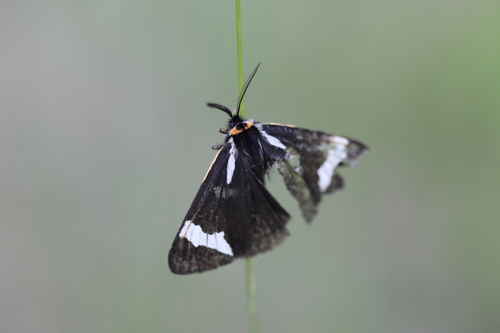
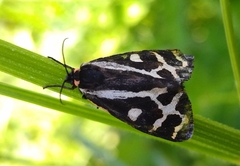
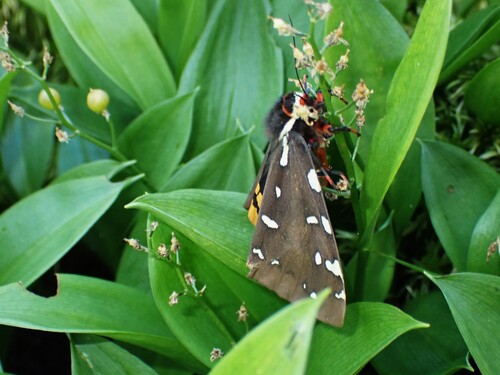
Arctia plantaginis, the wood tiger, is a moth of the family Erebidae. Several subspecies are found in the Holarctic ecozone south to Anatolia, Transcaucasus, northern Iran, Kazakhstan, Mongolia, China, Korea and Japan. One subspecies is endemic to North America.
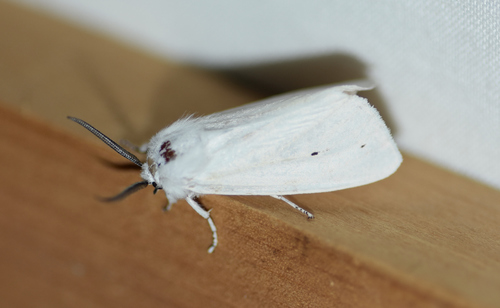
This species was formerly a member of the genus Parasemia, but was moved to Arctia along with the other species of the genera Acerbia, Pararctia, Parasemia, Platarctia, and Platyprepia. P. plantaginis males occur predominantly in two distinct color phenotypes: yellow and white. They are aposematic, meaning their colorations serve to deter predators from attacking. In populations of aposematic species, it is common to have a single coloration phenotype dominate, because predators better learn to avoid the more common phenotype and rare phenotypes suffer higher predation. Rare phenotypes are often selected against because predators are less familiar with their aposematic signal. Thus, other selective pressures exist to perpetuate weaker aposematic signals in exchange for other adaptive benefits. P. plantaginis has become a common model for studying the counteracting selective pressures of predation, mate choice, immune function, thermoregulation, and more. Wikipedia →