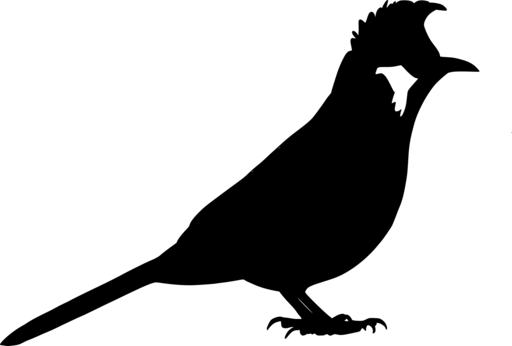
African Red-eyed Bulbul

African Red-eyed Bulbul

Pycnonotus nigricans

Silhouette: Andy Wilson · PhyloPic

LCLeast ConcernNTVUENCR
Daily sighting probability ~60% · Likely
at Etosha National Park

In 3 days ~90% in a week >90%

1,200 Verified sightings at Etosha National Park From 2019 to 2026
2,182 In all 9 parks
November Best month
☀️ Diurnal When it's spotted

About the African Red-eyed Bulbul

The African red-eyed bulbul or black-fronted bulbul (Pycnonotus nigricans) is a species of songbird in the family Pycnonotidae. It is found in south-western Africa. Its natural habitats are dry savanna, subtropical or tropical dry shrubland, and riverine scrub. It feeds on fruit (including Ficus), flowers, nectar, and insects.

The African red-eyed bulbul ranges from 19 to 21 centimeters (7-8 inches) in length and weighs 30-48 grams (1-1.7 ounces). Its call is a series of loud fluty notes, usually given only by the male. The African red-eyed bulbul was originally described in the genus Turdus. The African red-eyed bulbul is considered to belong to a superspecies along with the Himalayan bulbul, white-eared bulbul, white-spectacled bulbul, Cape bulbul, and the common bulbul. The alternate name of 'red-eyed bulbul' is also used by the Asian red-eyed bulbul. Wikipedia →

Sounds

Call0:21

South Africa · 2022

© Tony Archer · XC705587 · CC BY-NC-SA 4.0

Song0:30

South Africa · 2012

© Nature sounds by Simply Birding · XC647982 · CC BY-NC-ND 4.0

Song0:47

South Africa · 2019

© Frank Lambert · XC516037 · CC BY-NC-ND 4.0

Global Distribution

Parks Where Found

# Park Country Daily sighting probability
1 Waterberg Plateau Park 🇳🇦 Namibia
~80%
2 Etosha National Park 🇳🇦 Namibia
~60%
3 Golden Gate Highlands National Park 🇿🇦 South Africa
~50%
4 Namib-Naukluft National Park 🇳🇦 Namibia
~50%
5 Kgalagadi Transfrontier Park 🇿🇦 South Africa
~20%
6 Moremi Game Reserve 🇧🇼 Botswana
~20%
7 Chobe National Park 🇧🇼 Botswana
~10%
8 Hwange National Park 🇿🇼 Zimbabwe
<5%
9 Pilanesberg National Park 🇿🇦 South Africa
<5%

Cities Where Found

# City Country Daily sighting probability
1 Luanda 🇦🇴 Angola
<5%
2 Pretoria 🇿🇦 South Africa
<5%
3 Johannesburg 🇿🇦 South Africa
<5%

Before you go

What are the chances of seeing an African Red-eyed Bulbul in Etosha National Park?

Likely

About 60% of wildlife watchers report an African Red-eyed Bulbul sighting in Etosha National Park on a given day, based on 1,200 verified sightings from GBIF citizen-science data from 2019 to 2026. It is the 7th most-seen of the 260 birds we can rate there. Over three days the chance rises to about 90%, and over a week to over 90%, if each day is a fresh chance.

When is the best time to see an African Red-eyed Bulbul in Etosha National Park?

January–February and May–November

In those months about 60% of wildlife watchers report an African Red-eyed Bulbul in Etosha National Park on a given day, against about 20% in March, the lowest month.

What time of day is best to see an African Red-eyed Bulbul?

Between 3 and 6 pm

Across all the parks we cover, that three-hour window holds the most African Red-eyed Bulbul sightings with a recorded time, and about 9 in 10 of them come between 6 am and 6 pm: it is a daytime animal.

Is Etosha National Park the best place to see an African Red-eyed Bulbul?

2nd of 9

Of the 9 parks where we can rate African Red-eyed Bulbul sightings, Etosha National Park ranks 2nd at about 60%. The best odds are in Waterberg Plateau Park (Namibia, about 80%). All parks ranked.

Where does the African Red-eyed Bulbul sighting chance come from?

GBIF citizen-science records

It is estimated from how often the African Red-eyed Bulbul is recorded against all the birds logged in Etosha National Park (1,200 verified sightings from 2019 to 2026), calibrated against known sighting rates. Figures are rounded to the nearest 10% because citizen-science data supports honest approximations, not decimals, and months with records from fewer than five people show "—". How it works.

← Back to Etosha National Park