American Bumble Bee

American Bumble Bee

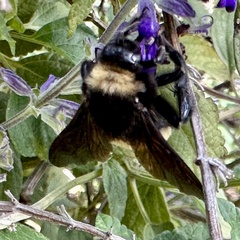
Bombus pensylvanicus

Daily sighting probability ~10% · With luck
at Everglades National Park

In 3 days ~30% in a week ~50%

48 Verified sightings at Everglades National Park From 2019 to 2026
304 In all 8 parks
August Best month
☀️ Diurnal When it's spotted

About the American Bumble Bee

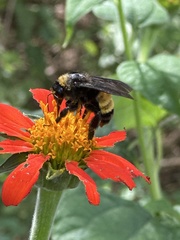
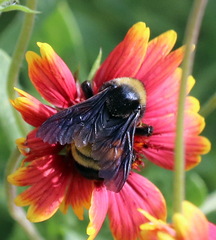
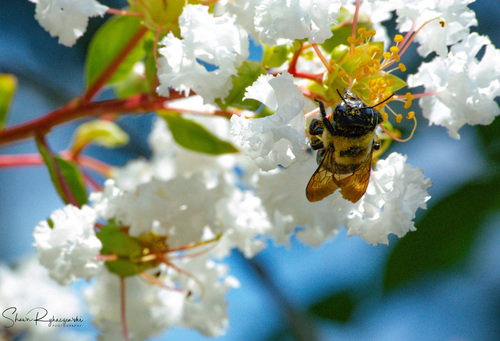
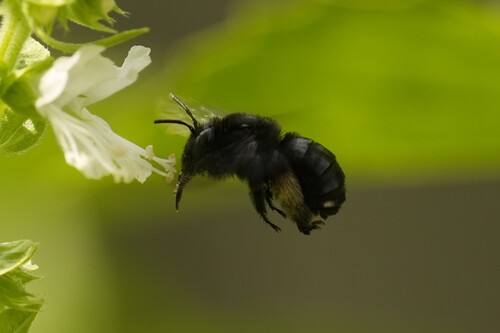
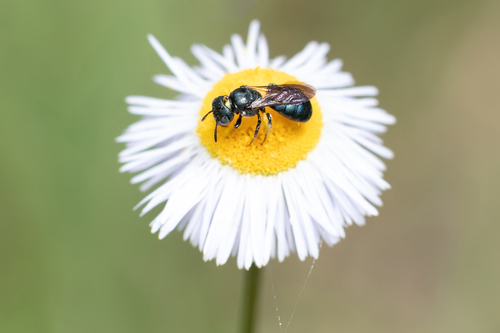
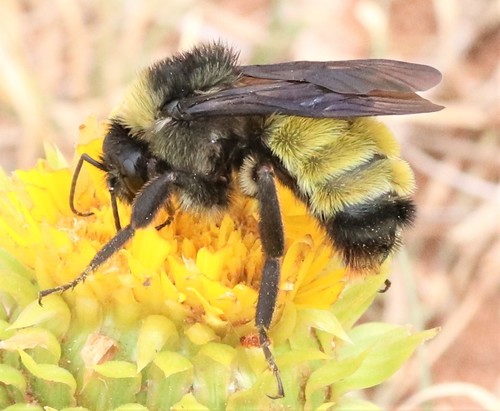
Bombus pensylvanicus, the American bumblebee, is a threatened species of bumblebee native to North America. It occurs in eastern Canada, throughout much of the Eastern United States, and much of Mexico. Once the most prevalent bumblebee in the southern United States, populations of Bombus pensylvanicus have decreased significantly in recent years, including in its scientific namesake state of Pennsylvania, where its numbers are considered critically low. Overall, the population dropped nearly 90% in just the first two decades of the 21st century.

Bombus pensylvanicus tends to live and nest in open farmland and fields. It feeds on several food plants, favoring sunflowers and clovers, and functions as a pollinator. Bombus pensylvanicus belongs to the order Hymenoptera (consisting of ants, wasps, bees, and sawflies), the family Apidae (consisting of cuckoo, digger, carpenter, bumble, and honeybees), the subfamily Apinae (consisting of honey, orchid, bumble, long-horned, and digger bees), and the genus Bombus (consisting of bumblebees). Within Bombus, B. pensylvanicus belongs to the subgenus Thoracobombus, which includes species such as Bombus armeniacus... Wikipedia →
Global Distribution

Parks Where Found

# Park Country Daily sighting probability
1 Badlands National Park 🇺🇸 United States
~20%
2 Big Cypress National Preserve 🇺🇸 United States
~20%
3 Merritt Island National Wildlife Refuge 🇺🇸 United States
~20%
4 Padre Island National Seashore 🇺🇸 United States
~10%
5 Congaree National Park 🇺🇸 United States
~10%
6 Everglades National Park 🇺🇸 United States
~10%
7 Great Smoky Mountains National Park 🇺🇸 United States
~10%
8 Shenandoah National Park 🇺🇸 United States
~10%

Cities Where Found

# City Country Daily sighting probability
1 Dallas 🇺🇸 United States
~20%
2 Austin 🇺🇸 United States
~20%
3 Houston 🇺🇸 United States
~20%
4 San Antonio 🇺🇸 United States
~20%
5 Orlando 🇺🇸 United States
~10%
6 Denver 🇺🇸 United States
~10%
7 Washington 🇺🇸 United States
~10%
8 Baltimore 🇺🇸 United States
~10%
9 Chicago 🇺🇸 United States
<5%
10 Philadelphia 🇺🇸 United States
<5%

Before you go

What are the chances of seeing an American Bumble Bee in Everglades National Park?

With luck

About 10% of wildlife watchers report an American Bumble Bee sighting in Everglades National Park on a given day, based on 48 verified sightings from GBIF citizen-science data from 2019 to 2026. It is the 103rd most-seen of the 496 insects we can rate there. Over three days the chance rises to about 30%, and over a week to about 50%, if each day is a fresh chance.

When is the best time to see an American Bumble Bee in Everglades National Park?

July to September

In those months about 20% of wildlife watchers report an American Bumble Bee in Everglades National Park on a given day, against under 5% in December and January, the lowest months. Those are among Everglades National Park's wettest months, with about 180 mm of rain a month against 40 mm in March.

What time of day is best to see an American Bumble Bee?

Between 10 am and 1 pm

Across all the parks we cover, that three-hour window holds the most American Bumble Bee sightings with a recorded time, and nearly all of them come between 6 am and 6 pm: it is a daytime animal.

Which relatives of the American Bumble Bee live in Everglades National Park?

Same family: Apidae

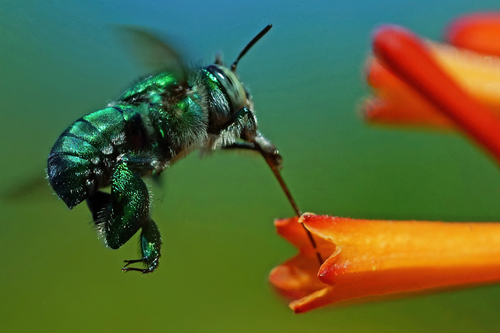
The closest relatives of the American Bumble Bee that you can see in Everglades National Park (family Apidae, Honey Bees, Bumble Bees, and Allies) are Southern Carpenter Bee (about 30%), Eastern Carpenter Bee (about 10%) and Dilemma Orchid Bee (about 10%), with each one's daily chance of a sighting.

Where does the American Bumble Bee sighting chance come from?

GBIF citizen-science records

It is estimated from how often the American Bumble Bee is recorded against all the insects logged in Everglades National Park (48 verified sightings from 2019 to 2026), calibrated against known sighting rates. Figures are rounded to the nearest 10% because citizen-science data supports honest approximations, not decimals, and months with records from fewer than five people show "—". How it works.

← Back to Everglades National Park