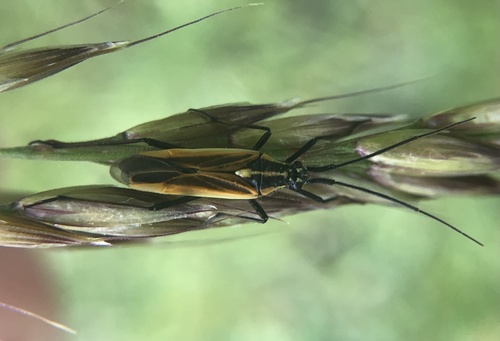
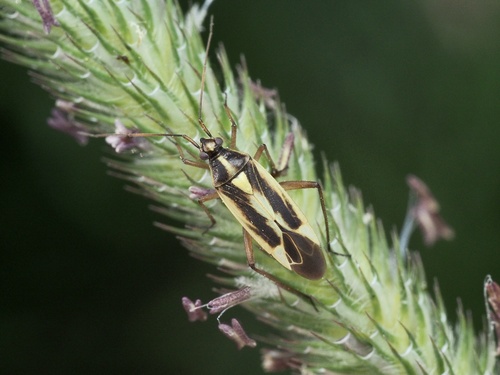
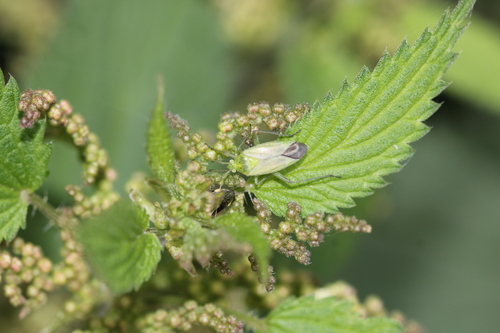
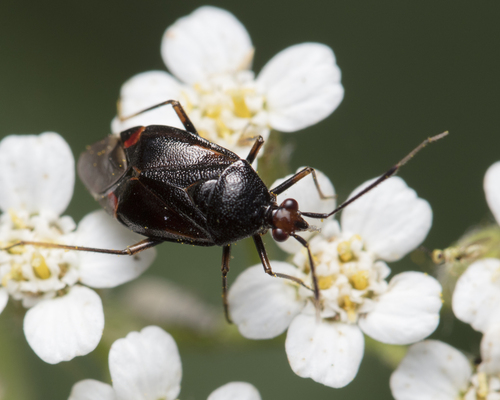
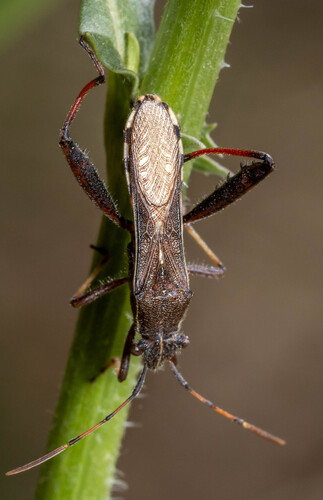
Alfalfa Plant Bug

Alfalfa Plant Bug

Adelphocoris lineolatus

Daily sighting probability ~10% · With luck
at Fertő-Hanság National Park

In 3 days ~20% in a week ~40%

9 Verified sightings at Fertő-Hanság National Park From 2019 to 2026
106 In all 8 parks
July Best month
☀️🌙 Day & Night When it's spotted

About the Alfalfa Plant Bug

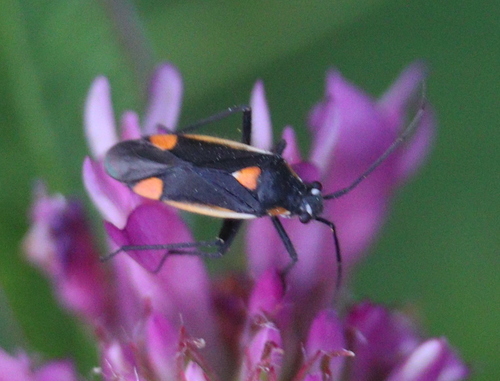
Adelphocoris lineolatus, is commonly known as the Lucerne bug or the alfalfa plant bug, and belongs to the family Miridae. It is an agricultural pest causing vast amounts of damage to numerous crops, but primarily to alfalfa crops around the globe.

Calocoris chenopodii Calocoris chenopodii implagiata Calocoris chenopodii lineolatus Calocoris lineolatus bisbipunctatus Reuter, 1891 Adelphocoris lineolatus are an Old World Species native to Western Europe, Northern Africa, Asia, and the Middle East. In 1917, this species had been introduced into Canada and the United States. In the Nearctic realm, these insects range from Southern Ontario and Northeastern United States, to the south of North Carolina, and west of Colorado.

Alfalfa plant bugs require a certain set of optimal conditions in order to thrive and become a pest in any country. A. lineolatus are primarily located in... Wikipedia →
Global Distribution

Parks Where Found

# Park Country Daily sighting probability
1 Sierra Nevada National Park 🇪🇸 Spain
~10%
2 Vanoise National Park 🇫🇷 France
~10%
3 Ecrins National Park 🇫🇷 France
~10%
4 Bavarian Forest National Park 🇩🇪 Germany
~10%
5 Fertő-Hanság National Park 🇭🇺 Hungary
~10%
6 Cévennes National Park 🇫🇷 France
~10%
7 Pyrénées National Park 🇫🇷 France
~10%
8 Wadden Sea National Park 🇩🇪 Germany
<5%

Cities Where Found

# City Country Daily sighting probability
1 Kharkiv 🇺🇦 Ukraine
~10%
2 Berlin 🇩🇪 Germany
~10%
3 Helsinki 🇫🇮 Finland
~10%
4 Warsaw 🇵🇱 Poland
~10%
5 Lyon 🇫🇷 France
~10%
6 Montreal 🇨🇦 Canada
~10%
7 Vienna 🇦🇹 Austria
~10%
8 Kyiv 🇺🇦 Ukraine
~10%
9 Bucharest 🇷🇴 Romania
~10%
10 Amsterdam 🇳🇱 Netherlands
~10%

Before you go

What are the chances of seeing an Alfalfa Plant Bug in Fertő-Hanság National Park?

With luck

About 10% of wildlife watchers report an Alfalfa Plant Bug sighting in Fertő-Hanság National Park on a given day, based on 9 verified sightings from GBIF citizen-science data from 2019 to 2026. It is the 135th most-seen of the 243 insects we can rate there. Over three days the chance rises to about 20%, and over a week to about 40%, if each day is a fresh chance.

When is the best time to see an Alfalfa Plant Bug in Fertő-Hanság National Park?

July and September

In those months about 20% of wildlife watchers report an Alfalfa Plant Bug in Fertő-Hanság National Park on a given day, against under 5% in August and October–May, the lowest months.

What time of day is best to see an Alfalfa Plant Bug?

Between 3 and 6 pm

Across all the parks we cover, that three-hour window holds the most Alfalfa Plant Bug sightings with a recorded time, and about 6 in 10 of them come between 6 am and 6 pm: it is seen both by day and at night.

Is Fertő-Hanság National Park the best place to see an Alfalfa Plant Bug?

Among the best

Of the 8 parks where we can rate Alfalfa Plant Bug sightings, Fertő-Hanság National Park ranks 5th at about 10%, level with the leaders once rounded. The best odds are in Sierra Nevada National Park (Spain, about 10%), Vanoise National Park (France, about 10%) and Ecrins National Park (France, about 10%).

Which relatives of the Alfalfa Plant Bug live in Fertő-Hanság National Park?

Same family: Miridae

The closest relatives of the Alfalfa Plant Bug that you can see in Fertő-Hanság National Park (family Miridae, Plant Bugs) are Megaloceroea recticornis (about 10%), Meadow Plant Bug (about 10%) and Two-Spotted Grass Bug (about 10%), with each one's daily chance of a sighting.

Where does the Alfalfa Plant Bug sighting chance come from?

GBIF citizen-science records

It is estimated from how often the Alfalfa Plant Bug is recorded against all the insects logged in Fertő-Hanság National Park (9 verified sightings from 2019 to 2026), calibrated against known sighting rates. Figures are rounded to the nearest 10% because citizen-science data supports honest approximations, not decimals, and months with records from fewer than five people show "—". How it works.

← Back to Fertő-Hanság National Park