Italian Locust

Italian Locust

Calliptamus italicus

Daily sighting probability ~10% · With luck
at Fertő-Hanság National Park

In 3 days ~30% in a week ~60%

19 Verified sightings at Fertő-Hanság National Park From 2019 to 2026
41 In all 3 parks
September Best month
☀️ Diurnal When it's spotted

About the Italian Locust

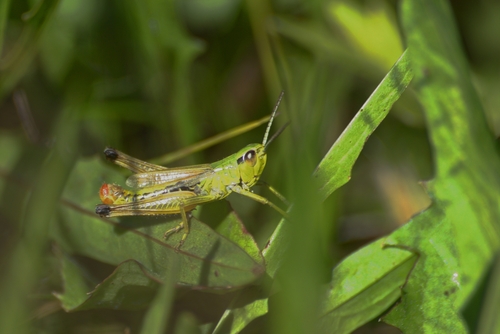
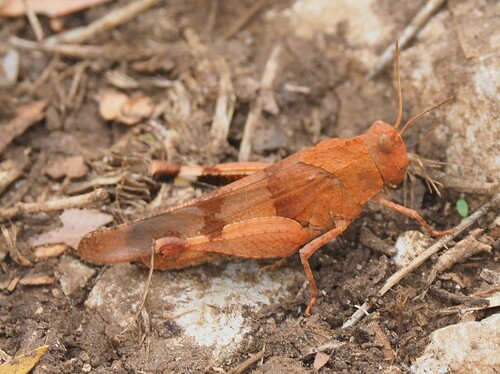
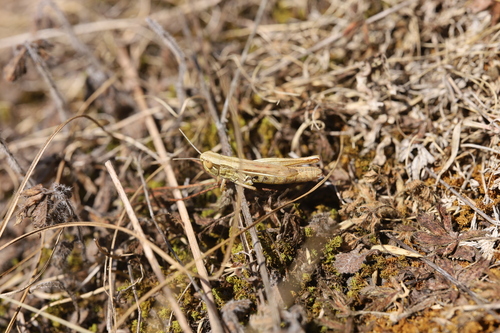
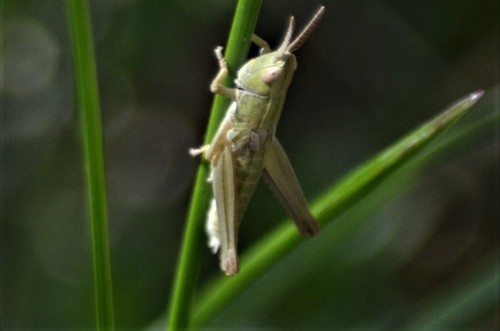
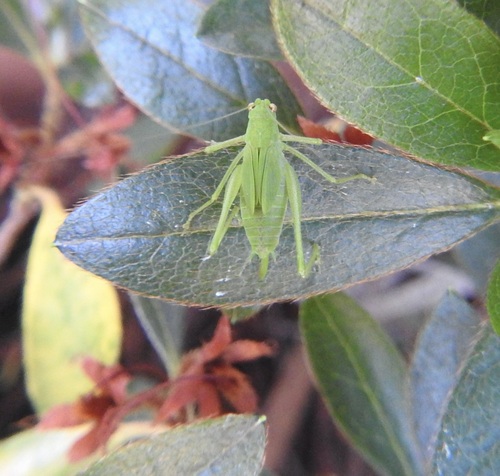
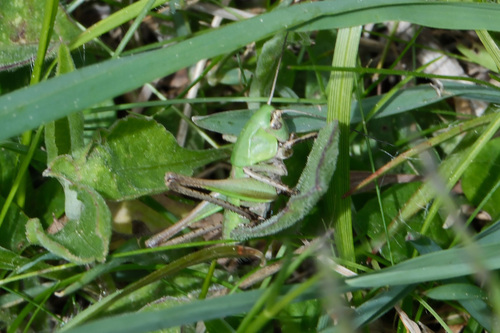
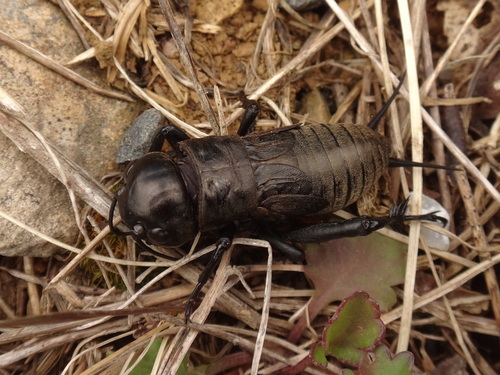
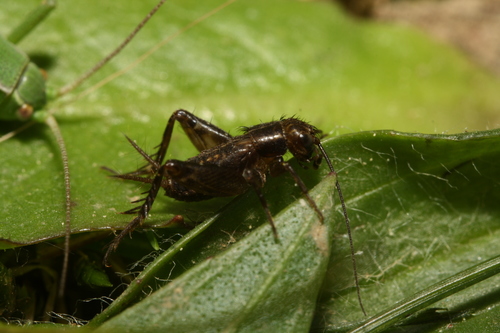
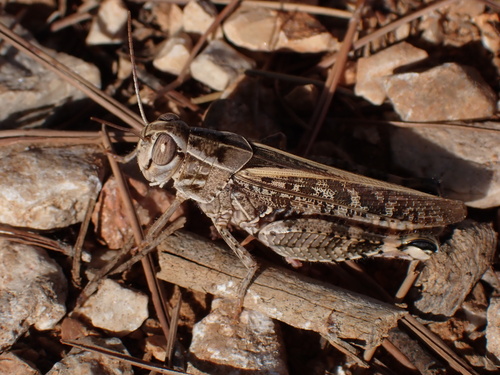
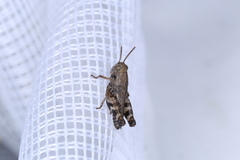
Calliptamus italicus, the Italian locust, is a species of 'short-horned grasshopper' belonging to the family Acrididae, subfamily Calliptaminae. This species is native of the steppes of Central Asia, but it is also present in most of Europe, in the eastern Palearctic realm, in North Africa, and in the Near East.

Calliptamus italicus is found in Western Europe and Central Asia. Its range extends from North Africa and the countries bordering the Mediterranean Sea to Central Europe, Central Asia, Mongolia and western Siberia. These grasshoppers can be encountered from July through October. It thrives in warm dry habitats with sparse vegetation cover such as grasslands and rocky steppes, old quarries, gravel pits, rock-strewn areas beside rivers, sand dunes and fallow land.

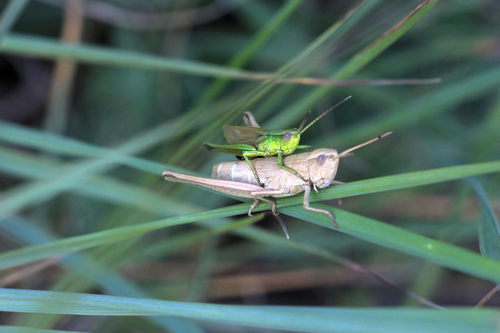
Calliptamus italicus is a medium-sized grasshopper characterized by a significant sexual dimorphism. The adult males grow up to 14–26 millimetres (0.55–1.02 in) long, while females reach 21–40 millimetres (0.83–1.57 in) of length. This species is quite variable in size and colour. The basic coloration of the body varies from gray to brownish-reddish. The wings have a... Wikipedia →
Global Distribution

Parks Where Found

# Park Country Daily sighting probability
1 Kiskunság National Park 🇭🇺 Hungary
~20%
2 Fertő-Hanság National Park 🇭🇺 Hungary
~10%
3 Cévennes National Park 🇫🇷 France
~10%

Cities Where Found

# City Country Daily sighting probability
1 Vienna 🇦🇹 Austria
~20%
2 Kharkiv 🇺🇦 Ukraine
~10%
3 Berlin 🇩🇪 Germany
~10%
4 Budapest 🇭🇺 Hungary
~10%
5 Bucharest 🇷🇴 Romania
~10%
6 Belgrade 🇷🇸 Serbia
~10%
7 Kyiv 🇺🇦 Ukraine
<5%
8 Milan 🇮🇹 Italy
<5%

Before you go

What are the chances of seeing an Italian Locust in Fertő-Hanság National Park?

With luck

About 10% of wildlife watchers report an Italian Locust sighting in Fertő-Hanság National Park on a given day, based on 19 verified sightings from GBIF citizen-science data from 2019 to 2026. It is the 44th most-seen of the 243 insects we can rate there. Over three days the chance rises to about 30%, and over a week to about 60%, if each day is a fresh chance.

When is the best time to see an Italian Locust in Fertő-Hanság National Park?

September

In that month about 30% of wildlife watchers report an Italian Locust in Fertő-Hanság National Park on a given day, against under 5% in November to May, the lowest months. That is one of Fertő-Hanság National Park's wettest months, with about 80 mm of rain against 30 mm in March.

What time of day is best to see an Italian Locust?

Between 2 and 5 pm

Across all the parks we cover, that three-hour window holds the most Italian Locust sightings with a recorded time, and about 8 in 10 of them come between 6 am and 6 pm: it is a daytime animal.

Is Fertő-Hanság National Park the best place to see an Italian Locust?

2nd of 3

Of the 3 parks where we can rate Italian Locust sightings, Fertő-Hanság National Park ranks 2nd at about 10%. The best odds are in Kiskunság National Park (Hungary, about 20%).

Where does the Italian Locust sighting chance come from?

GBIF citizen-science records

It is estimated from how often the Italian Locust is recorded against all the insects logged in Fertő-Hanság National Park (19 verified sightings from 2019 to 2026), calibrated against known sighting rates. Figures are rounded to the nearest 10% because citizen-science data supports honest approximations, not decimals, and months with records from fewer than five people show "—". How it works.

← Back to Fertő-Hanság National Park