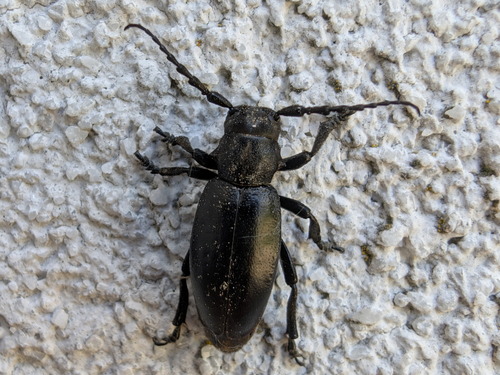
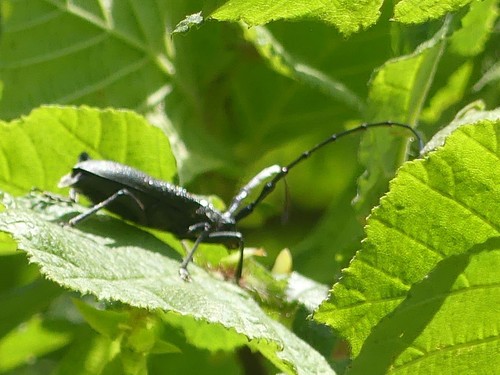
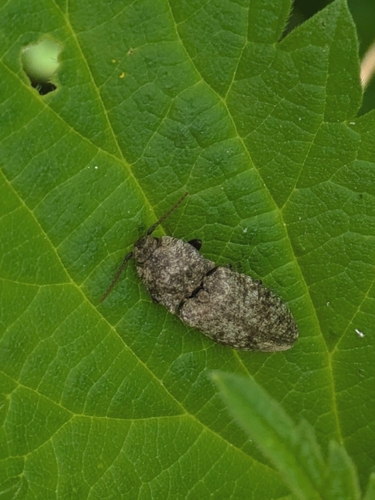
Valgus hemipterus

Valgus hemipterus

Valgus hemipterus

Daily sighting probability ~10% · With luck
at Fertő-Hanság National Park

In 3 days ~20% in a week ~40%

5 Verified sightings at Fertő-Hanság National Park From 2019 to 2026
62 In all 6 parks
April Best month
☀️ Diurnal When it's spotted

About the Valgus hemipterus

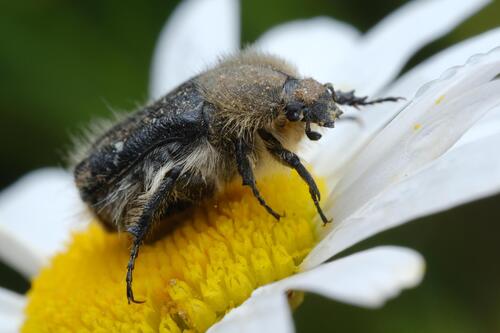
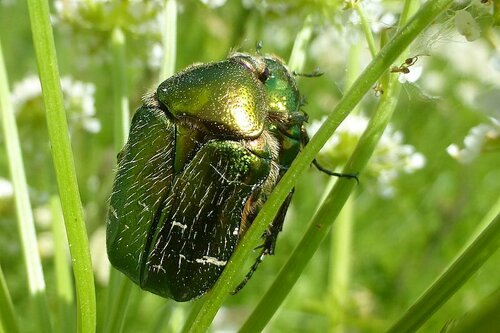
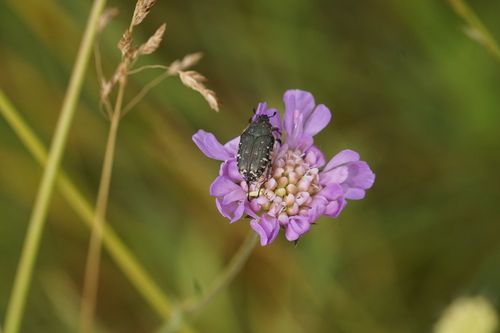
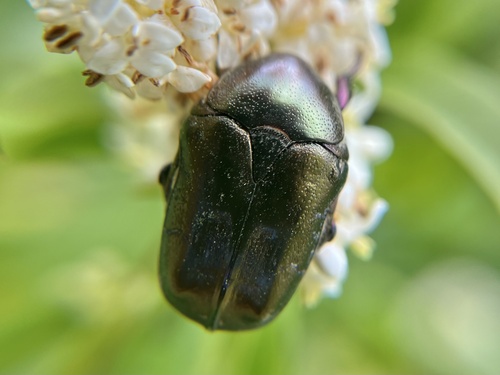
Valgus hemipterus is a smallish species of scarab beetle (family Scarabaeidae) found in the Northern Hemisphere. This species occurs from the Caucasus and Turkey to North Africa and southern and central Europe (Albania, Austria, Belarus, Belgium, Bosnia and Herzegovina, Bulgaria, Central European Russia, Croatia, Cyprus, Czech Republic, Denmark, European Turkey, France, Germany, Greece, Hungary, Italy, Latvia, Lithuania, Luxembourg, Republic of North Macedonia, Northwest European Russia, Poland, Portugal, Romania, Slovakia, Slovenia, South European Russia, Spain, Switzerland, The Netherlands, Ukraine, Yugoslavia).

The species has been introduced to the Nearctic realm, in parts of North America, especially Ontario, Michigan and Ohio. This species reaches a body length of 6–10 mm. The basic color is black or dark brown. The scales on the body of the male are dark brown with a light pattern, while most scales in females are dark. Pronotum is rather serrate along lateral edges, a transverse medial ridges is not well developed... Wikipedia →
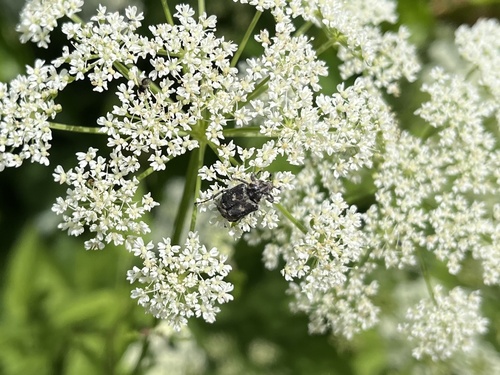
Global Distribution

Parks Where Found

# Park Country Daily sighting probability
1 Kiskunság National Park 🇭🇺 Hungary
~20%
2 Cévennes National Park 🇫🇷 France
~10%
3 Fertő-Hanság National Park 🇭🇺 Hungary
~10%
4 Bavarian Forest National Park 🇩🇪 Germany
~10%
5 Pyrénées National Park 🇫🇷 France
~10%
6 Sierra Nevada National Park 🇪🇸 Spain
<5%

Cities Where Found

# City Country Daily sighting probability
1 Kharkiv 🇺🇦 Ukraine
~20%
2 Kyiv 🇺🇦 Ukraine
~20%
3 Sofia 🇧🇬 Bulgaria
~20%
4 Warsaw 🇵🇱 Poland
~10%
5 Vienna 🇦🇹 Austria
~10%
6 Prague 🇨🇿 Czechia
~10%
7 Budapest 🇭🇺 Hungary
~10%
8 Berlin 🇩🇪 Germany
~10%
9 Bucharest 🇷🇴 Romania
~10%
10 Lyon 🇫🇷 France
~10%

Before you go

What are the chances of seeing a Valgus hemipterus in Fertő-Hanság National Park?

With luck

About 10% of wildlife watchers report a Valgus hemipterus sighting in Fertő-Hanság National Park on a given day, based on 5 verified sightings from GBIF citizen-science data from 2019 to 2026. It is the 199th most-seen of the 243 insects we can rate there. Over three days the chance rises to about 20%, and over a week to about 40%, if each day is a fresh chance.

When is the best time to see a Valgus hemipterus in Fertő-Hanság National Park?

April and May

In those months about 10% of wildlife watchers report a Valgus hemipterus in Fertő-Hanság National Park on a given day, against under 5% in June to March, the lowest months.

What time of day is best to see a Valgus hemipterus?

Between 1 and 4 pm

Across all the parks we cover, that three-hour window holds the most Valgus hemipterus sightings with a recorded time, and about 9 in 10 of them come between 6 am and 6 pm: it is a daytime animal.

Is Fertő-Hanság National Park the best place to see a Valgus hemipterus?

3rd of 6

Of the 6 parks where we can rate Valgus hemipterus sightings, Fertő-Hanság National Park ranks 3rd at about 10%. The best odds are in Kiskunság National Park (Hungary, about 20%) and Cévennes National Park (France, about 10%).

Which relatives of the Valgus hemipterus live in Fertő-Hanság National Park?

Same family: Scarabaeidae

The closest relatives of the Valgus hemipterus that you can see in Fertő-Hanság National Park (family Scarabaeidae, Scarabs) are Apple Blossom Beetle (about 20%), European Rose Chafer (about 20%) and Pentodon idiota (about 10%), with each one's daily chance of a sighting.

Where does the Valgus hemipterus sighting chance come from?

GBIF citizen-science records

It is estimated from how often the Valgus hemipterus is recorded against all the insects logged in Fertő-Hanság National Park (5 verified sightings from 2019 to 2026), calibrated against known sighting rates. Figures are rounded to the nearest 10% because citizen-science data supports honest approximations, not decimals, and months with records from fewer than five people show "—". How it works.

← Back to Fertő-Hanság National Park