


Completed


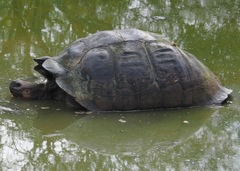
Galápagos Giant Tortoise
Chelonoidis niger
Silhouette: Andrew A. Farke · PhyloPic
- KingdomAnimalia (Animals)
- PhylumChordata (Chordates)
- ClassTestudines
- FamilyTestudinidae (Tortoises)
- GenusChelonoidis (Galápagos Giant Tortoises and Allies)
- SpeciesChelonoidis niger (Galápagos Giant Tortoise)
In 3 days ~90% in a week >90%
1,312 Verified sightings at Galápagos Islands From 2019 to 2026
1,312 In 1 park
May Best month
☀️ Diurnal When it's spotted

Completed


Completed
About the Galápagos Giant Tortoise
The Galápagos tortoise (Chelonoidis niger), also called the Galápagos giant tortoise, is a very large species of tortoise in the genus Chelonoidis (which also contains three smaller species from mainland South America). The species comprises 15 subspecies (12 extant and 3 extinct). It is the largest living species of tortoise, and can weigh up to 417 kg (919 lb). They are also the largest extant terrestrial cold-blooded animals (ectotherms).
With lifespans in the wild of over 100 years, it is one of the longest-lived vertebrates. Captive Galapagos tortoises can live up to 177 years. For example, a captive individual, Harriet, lived for at least 175 years. Spanish explorers, who discovered the islands in the 16th century, named them after the Spanish galápago, meaning "tortoise".
Galápagos tortoises are native to seven of the Galápagos Islands. Shell size and shape vary between subspecies and populations. On islands with humid highlands and abundant low vegetation, the tortoises are larger, with domed shells and short necks; on islands with dry lowlands and less ground-level vegetation, the tortoises are smaller, with "saddleback" shells and long necks. Charles Darwin's observations of these differences on the second voyage of the Beagle in 1835 contributed to the development of his theory of evolution.
Tortoise numbers declined from over 250,000 in the 16th century to a low of around 15,000 in the 1970s. This decline was caused by overexploitation of the subspecies for meat and oil, habitat clearance for agriculture, and introduction of non-native animals to the islands, such as rats, goats, and pigs. The extinction of most giant tortoise lineages is thought to have also been caused by predation by humans or human ancestors, as the tortoises themselves have no natural predators. Tortoise populations on at least three islands have become extinct in historical times due to human activities. Two other subspecies, C. n. niger (the type subspecies of Galápagos tortoise) from Floreana Island and an undescribed subspecies from Santa Fe Island are known to have gone extinct in the mid-late 19th century. Wikipedia →
Recent sightings of Galápagos Giant Tortoise in Galápagos Islands
LIVEiNaturalistGlobal Distribution
Parks Where Found
| # | Park | Country | Daily sighting probability |
|---|---|---|---|
| 1 | Galápagos Islands | 🇪🇨 Ecuador |
More parks will be added in future updates.
Zoos & Centres Where Found
| # | Zoo / Centre | Country | |
|---|---|---|---|
| 1 | Disney's Animal Kingdom | 🇺🇸 United States | |
| 2 | Busch Gardens Tampa | 🇺🇸 United States | |
| 3 | San Diego Zoo | 🇺🇸 United States | |
| 4 | Prague Zoo | 🇨🇿 Czechia | |
| 5 | Cincinnati Zoo and Botanical Garden | 🇺🇸 United States | |
| 6 | Zürich Zoo | 🇨🇭 Switzerland | |
| 7 | Parque das Aves | 🇧🇷 Brazil | |
| 8 | Barcelona Zoo | 🇪🇸 Spain | |
| 9 | North Carolina Zoo | 🇺🇸 United States | |
| 10 | Australia Zoo | 🇦🇺 Australia | |
| 11 | Taronga Western Plains Zoo | 🇦🇺 Australia | |
| 12 | Zoo Miami | 🇺🇸 United States | |
| 13 | San Diego Zoo Safari Park | 🇺🇸 United States | |
| 14 | Lion Country Safari | 🇺🇸 United States | |
| 15 | Binder Park Zoo | 🇺🇸 United States | |
| 16 | SeaWorld San Antonio | 🇺🇸 United States | |
| 17 | Nashville Zoo at Grassmere | 🇺🇸 United States | |
| 18 | Oakland Zoo | 🇺🇸 United States | |
| 19 | Dallas Zoo | 🇺🇸 United States | |
| 20 | Phoenix Zoo | 🇺🇸 United States | |
| 21 | Birmingham Zoo | 🇺🇸 United States | |
| 22 | Oklahoma City Zoo and Botanical Garden | 🇺🇸 United States | |
| 23 | Saint Louis Zoo | 🇺🇸 United States | |
| 24 | Wrocław Zoological Garden | 🇵🇱 Poland | |
| 25 | Temaikén | 🇦🇷 Argentina | |
| 26 | Brevard Zoo | 🇺🇸 United States | |
| 27 | Twycross Zoo | 🇬🇧 United Kingdom | |
| 28 | ZooTampa | 🇺🇸 United States | |
| 29 | Gatorland | 🇺🇸 United States | |
| 30 | Lisbon Zoo | 🇵🇹 Portugal | |
| 31 | Metro Richmond Zoo | 🇺🇸 United States | |
| 32 | Taronga Zoo | 🇦🇺 Australia | |
| 33 | Houston Zoo | 🇺🇸 United States | |
| 34 | Currumbin Wildlife Sanctuary | 🇦🇺 Australia | |
| 35 | Perth Zoo | 🇦🇺 Australia | |
| 36 | Cameron Park Zoo | 🇺🇸 United States | |
| 37 | Philadelphia Zoo | 🇺🇸 United States | |
| 38 | Fresno Chaffee Zoo | 🇺🇸 United States | |
| 39 | Honolulu Zoo | 🇺🇸 United States | |
| 40 | Schönbrunn Zoo | 🇦🇹 Austria | |
| 41 | Auckland Zoo | 🇳🇿 New Zealand | |
| 42 | London Zoo | 🇬🇧 United Kingdom | |
| 43 | Ueno Zoo | 🇯🇵 Japan | |
| 44 | Akron Zoo | 🇺🇸 United States | |
| 45 | Pittsburgh Zoo & Aquarium | 🇺🇸 United States | |
| 46 | Riverbanks Zoo | 🇺🇸 United States | |
| 47 | Aquarama Barcelona | 🇪🇸 Spain | |
| 48 | bioparco | 🇮🇹 Italy | |
| 49 | Amaru | 🇪🇨 Ecuador | |
| 50 | Parque de las Leyendas | 🇵🇪 Peru |
Closest Relatives at Galápagos Islands


Before you go
What are the chances of seeing a Galápagos Giant Tortoise in Galápagos Islands?
Likely
About 50% of wildlife watchers report a Galápagos Giant Tortoise sighting in Galápagos Islands on a given day, based on 1,312 verified sightings from GBIF citizen-science data from 2019 to 2026. It is the 5th most-seen of the 31 reptiles we can rate there. Over three days the chance rises to about 90%, and over a week to over 90%, if each day is a fresh chance.
When is the best time to see a Galápagos Giant Tortoise in Galápagos Islands?
May
In that month about 60% of wildlife watchers report a Galápagos Giant Tortoise in Galápagos Islands on a given day, against about 40% in October, the lowest month.
What time of day is best to see a Galápagos Giant Tortoise?
Between 10 am and 1 pm
Across all the parks we cover, that three-hour window holds the most Galápagos Giant Tortoise sightings with a recorded time, and nearly all of them come between 6 am and 6 pm: it is a daytime animal.
Where else can you see a Galápagos Giant Tortoise?
Only Galápagos Islands, in our data
Galápagos Islands is the only park on Wallace's Line with enough records to rate Galápagos Giant Tortoise sightings: about 50% of wildlife watchers there report one on a given day.
Which relatives of the Galápagos Giant Tortoise live in Galápagos Islands?
Same genus: Chelonoidis
The closest relatives of the Galápagos Giant Tortoise that you can see in Galápagos Islands (genus Chelonoidis, Galápagos Giant Tortoises and Allies) are Indefatigable Island Giant Tortoise (about 40%), Sierra Negra Giant Tortoise (about 10%) and Chatham Island Giant Tortoise (about 10%), with each one's daily chance of a sighting.
Where does the Galápagos Giant Tortoise sighting chance come from?
GBIF citizen-science records
It is estimated from how often the Galápagos Giant Tortoise is recorded against all the reptiles logged in Galápagos Islands (1,312 verified sightings from 2019 to 2026), calibrated against known sighting rates. Figures are rounded to the nearest 10% because citizen-science data supports honest approximations, not decimals, and months with records from fewer than five people show "—". How it works.
