Pink-footed Shearwater

Pink-footed Shearwater

Puffinus creatopus

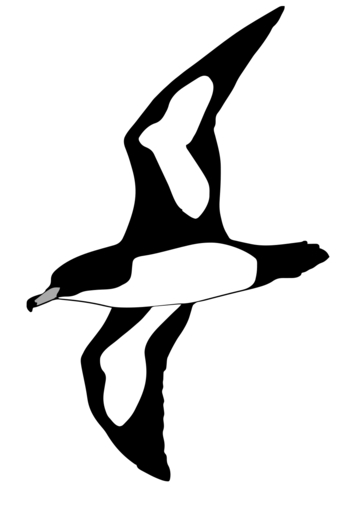
Silhouette: Edwin Price · PhyloPic

Daily sighting probability <5% · Rare
at Galápagos Islands

In 3 days <5%

25 Verified sightings at Galápagos Islands From 2019 to 2026
330 In all 9 parks
April Best month
☀️ Diurnal When it's spotted

About the Pink-footed Shearwater

The pink-footed shearwater (Ardenna creatopus) is a species of seabird. The bird is 48 cm (19 in) in length, with a 109 cm (43 in) wingspan. It is polymorphic, having both darker- and lighter-phase populations. Together with the equally light-billed flesh-footed shearwater, it forms the Hemipuffinus group, a superspecies that may or may not have an Atlantic relative in the great shearwater. These are large shearwaters which are among those that could be separated in the genus Ardenna.

A molecular phylogenetic study published in 2021 found very little genetic difference between the pink-footed shearwater and the flesh-footed shearwater (Ardenna carneipes). The authors of the study suggested that these two taxa might be better considered as conspecific.

This species is pelagic, occurring in the Pacific Ocean. It predominantly nests on offshore islands off Chile, i.e. Mocha Island. It is a transequatorial migrant, moving toward subarctic waters of the Pacific after raising its young. It is fairly common well off the West Coast of the United States during the country's warmer months.

The pink-footed shearwater feeds on mainly fish, squid, and crustaceans. This bird nests in burrows, preferring forested slopes. It is a colonial nester. Numbers of this shearwater have been reduced due to predation by introduced species, such as rats and cats. Some loss of birds also occurs from becoming entangled in fishing gear. The pink-footed shearwater is one of the species to which the Agreement on the Conservation of Albatrosses and Petrels applies. Wikipedia →

Sounds

Recording

© Ignacio Escobar · XCXC691336 · CC BY-NC-SA 4.0

Recording

© Cristian Pinto · XCXC502554 · CC BY-NC-SA 4.0

Recording

© Fabrice Schmitt · XCXC380096 · CC BY-NC-SA 4.0

Global Distribution

Parks Where Found

# Park Country Daily sighting probability
1 Cabo Pulmo National Park 🇲🇽 Mexico
<5%
2 Cabo Blanco Absolute Nature Reserve 🇨🇷 Costa Rica
<5%
3 Channel Islands National Park 🇺🇸 United States
<5%
4 Machalilla National Park 🇪🇨 Ecuador
<5%
5 Las Baulas Marine National Park 🇨🇷 Costa Rica
<5%
6 Great Bear Rainforest 🇨🇦 Canada
<5%
7 Manuel Antonio National Park 🇨🇷 Costa Rica
<5%
8 Galápagos Islands 🇪🇨 Ecuador
<5%
9 Olympic National Park 🇺🇸 United States
<5%

Cities Where Found

# City Country Daily sighting probability
1 San Diego 🇺🇸 United States
<5%
2 Los Angeles 🇺🇸 United States
<5%

Zoos & Centres Where Found

# Zoo / Centre Country
1 Zoológico de Concepción 🇨🇱 Chile In captivity

Before you go

What are the chances of seeing a Pink-footed Shearwater in Galápagos Islands?

Rare

Under 5% of wildlife watchers report a Pink-footed Shearwater sighting in Galápagos Islands on a given day, based on 25 verified sightings from GBIF citizen-science data from 2019 to 2026. It is the 93rd most-seen of the 114 birds we can rate there. Over three days the chance rises to under 5%, if each day is a fresh chance.

When is the best time to see a Pink-footed Shearwater in Galápagos Islands?

Any time of year

In every month with enough records, under 5% of wildlife watchers report a Pink-footed Shearwater in Galápagos Islands on a given day, so our monthly data shows no clear season.

What time of day is best to see a Pink-footed Shearwater?

Between 11 am and 2 pm

Across all the parks we cover, that three-hour window holds the most Pink-footed Shearwater sightings with a recorded time, and nearly all of them come between 6 am and 6 pm: it is a daytime animal.

Where does the Pink-footed Shearwater sighting chance come from?

GBIF citizen-science records

It is estimated from how often the Pink-footed Shearwater is recorded against all the birds logged in Galápagos Islands (25 verified sightings from 2019 to 2026), calibrated against known sighting rates. Figures are rounded to the nearest 10% because citizen-science data supports honest approximations, not decimals, and months with records from fewer than five people show "—". How it works.

← Back to Galápagos Islands
