Canadian Tiger Swallowtail

Canadian Tiger Swallowtail

Papilio canadensis

Daily sighting probability ~10% · With luck
at Glacier National Park

In 3 days ~30% in a week ~50%

20 Verified sightings at Glacier National Park From 2019 to 2026
454 In all 13 parks
May Best month
☀️ Diurnal When it's spotted

About the Canadian Tiger Swallowtail

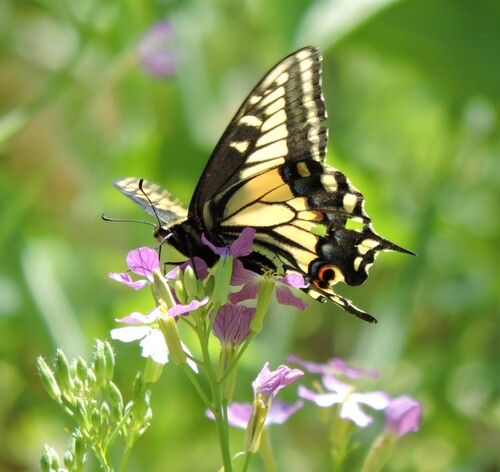
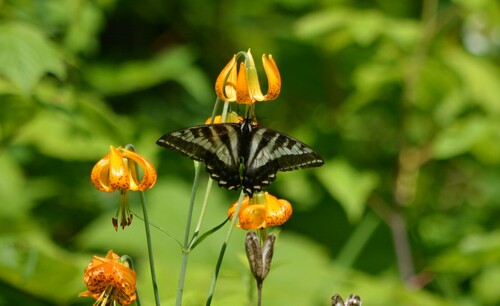
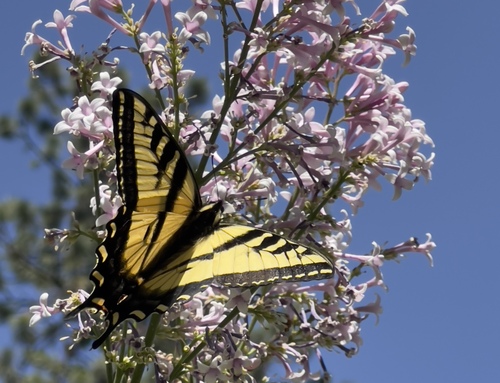
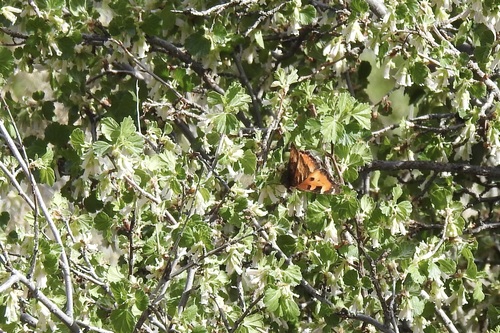
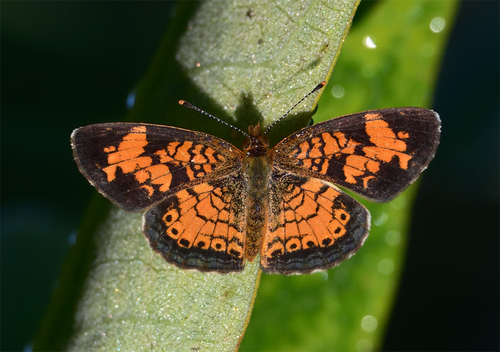
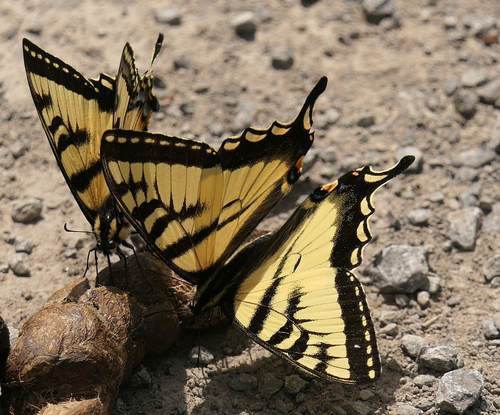
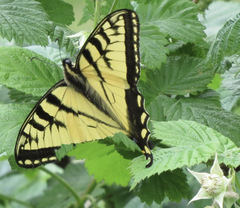
Papilio canadensis, the Canadian tiger swallowtail, is a species of butterfly in the family Papilionidae. It was once classified as a subspecies of Papilio glaucus. The wingspan of this species is 67 to 80 mm. It is very similar to the eastern tiger swallowtail, but has a noticeably smaller wingspan. Unlike it, the forewing underside, yellow marginal band is continuous. The hindwing has many orange scales on both morphs. This species has also been known to hybridize with both the eastern and western tiger swallowtail, though extremely rarely.

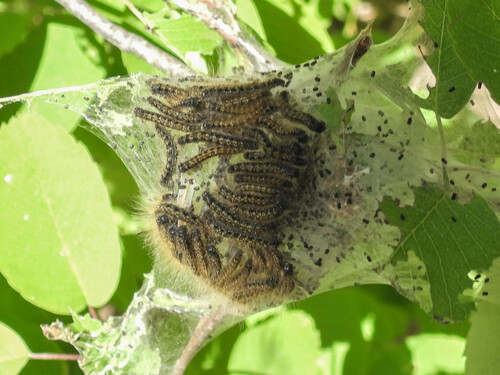
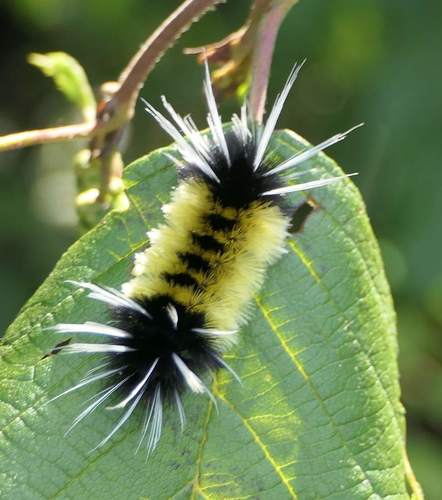
The caterpillar is large and green with an enlarged head. It has four yellow dots and two false eyes with bluish centers. In profile, this caterpillar appears snake-like. The immature larvae are brown and white to mimic bird droppings, making them unappealing to predators.

This butterfly is found in most provinces and territories in Canada, as its name implies. Its range extends north of the Arctic Circle in the Yukon, and to Churchill in Manitoba, Little Shagamu River in Ontario, and to Schefferville in Quebec. It does not occur in southern British Columbia, being replaced there... Wikipedia →
Global Distribution

Parks Where Found

# Park Country Daily sighting probability
1 Elk Island National Park 🇨🇦 Canada
~40%
2 Kluane National Park 🇨🇦 Canada
~40%
3 Isle Royale National Park 🇺🇸 United States
~40%
4 Cape Breton Highlands National Park 🇨🇦 Canada
~30%
5 Wrangell-St. Elias National Park 🇺🇸 United States
~30%
6 Gros Morne National Park 🇨🇦 Canada
~30%
7 Riding Mountain National Park 🇨🇦 Canada
~30%
8 Voyageurs National Park 🇺🇸 United States
~20%
9 Jasper National Park 🇨🇦 Canada
~20%
10 Banff National Park 🇨🇦 Canada
~20%
11 Acadia National Park 🇺🇸 United States
~20%
12 Denali National Park 🇺🇸 United States
~10%
13 Glacier National Park 🇺🇸 United States
~10%

Cities Where Found

# City Country Daily sighting probability
1 Anchorage 🇺🇸 United States
~10%
2 Edmonton 🇨🇦 Canada
~10%
3 Calgary 🇨🇦 Canada
~10%
4 Montreal 🇨🇦 Canada
~10%
5 Boston 🇺🇸 United States
<5%

Before you go

What are the chances of seeing a Canadian Tiger Swallowtail in Glacier National Park?

With luck

About 10% of wildlife watchers report a Canadian Tiger Swallowtail sighting in Glacier National Park on a given day, based on 20 verified sightings from GBIF citizen-science data from 2019 to 2026. It is the 43rd most-seen of the 147 insects we can rate there. Over three days the chance rises to about 30%, and over a week to about 50%, if each day is a fresh chance.

When is the best time to see a Canadian Tiger Swallowtail in Glacier National Park?

May and June

In those months about 20% of wildlife watchers report a Canadian Tiger Swallowtail in Glacier National Park on a given day, against under 5% in August to April, the lowest months.

What time of day is best to see a Canadian Tiger Swallowtail?

Between noon and 3 pm

Across all the parks we cover, that three-hour window holds the most Canadian Tiger Swallowtail sightings with a recorded time, and about 9 in 10 of them come between 6 am and 6 pm: it is a daytime animal.

Which relatives of the Canadian Tiger Swallowtail live in Glacier National Park?

Same genus: Papilio

The closest relatives of the Canadian Tiger Swallowtail that you can see in Glacier National Park (genus Papilio, Common Swallowtails) are Anise Swallowtail (about 20%), Pale Swallowtail (about 20%) and Western Tiger Swallowtail (about 10%), with each one's daily chance of a sighting.

Where does the Canadian Tiger Swallowtail sighting chance come from?

GBIF citizen-science records

It is estimated from how often the Canadian Tiger Swallowtail is recorded against all the insects logged in Glacier National Park (20 verified sightings from 2019 to 2026), calibrated against known sighting rates. Figures are rounded to the nearest 10% because citizen-science data supports honest approximations, not decimals, and months with records from fewer than five people show "—". How it works.

← Back to Glacier National Park