Green-Head Ant

Green-Head Ant

Rhytidoponera metallica

Endemic
Daily sighting probability ~30% · Possible
at Grampians National Park

In 3 days ~70% in a week ~90%

63 Verified sightings at Grampians National Park From 2019 to 2026
127 In all 5 parks
August Best month
☀️ Diurnal When it's spotted

About the Green-Head Ant

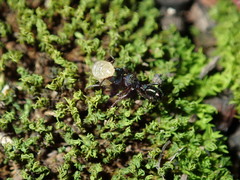
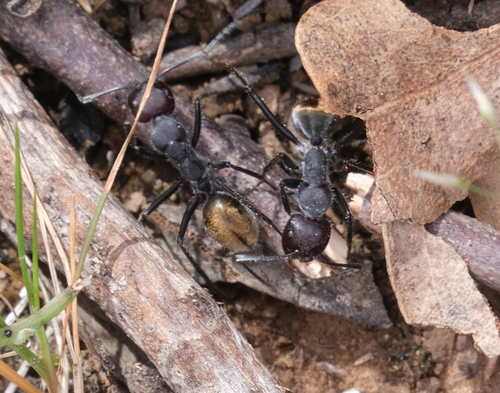
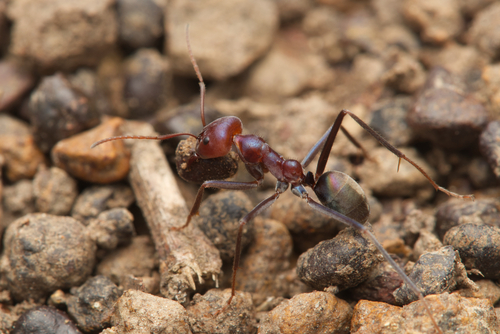
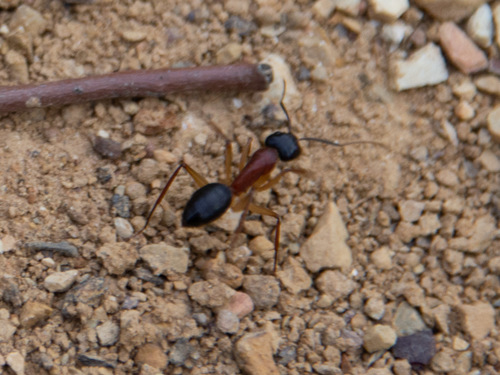
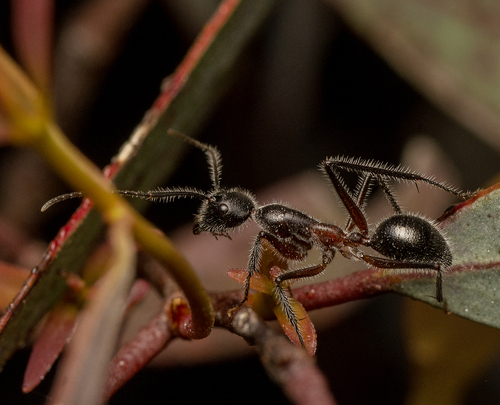
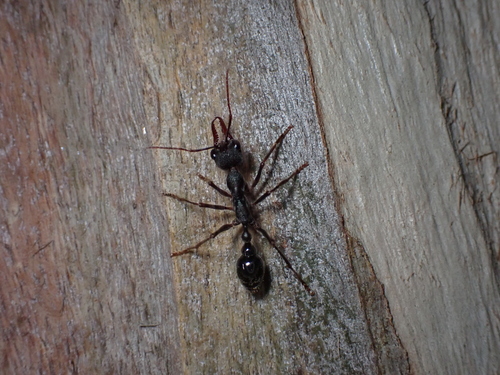
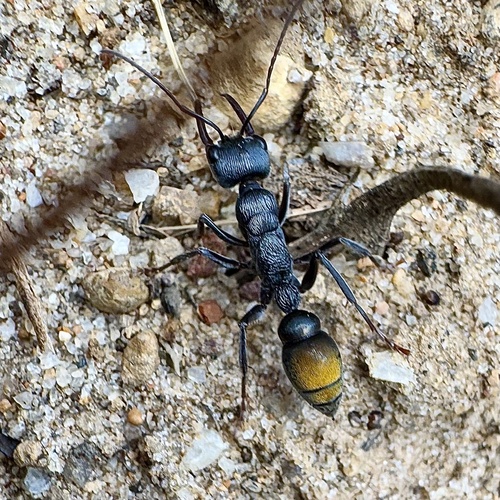
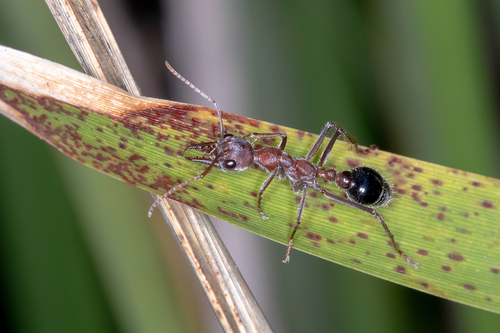
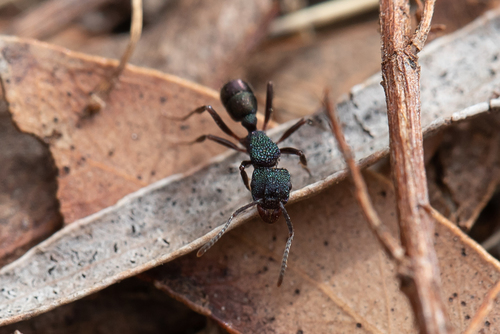
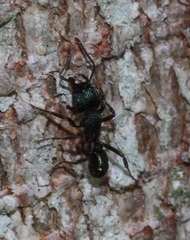
The green-head ant (Rhytidoponera metallica) is a species of ant that is endemic to Australia. It was described by British entomologist Frederick Smith in 1858 as a member of the genus Rhytidoponera in the subfamily Ectatomminae. These ants measure between 5 and 7 mm (0.20 and 0.28 in). The queens and workers look similar, differing only in size, with the males being the smallest. They are well known for their distinctive metallic appearance, which varies from green to purple or even reddish-violet. Among the most widespread of all insects in Australia, green-head ants are found in almost every Australian state, but are absent in Tasmania. They have also been introduced in New Zealand, where several populations have been established.

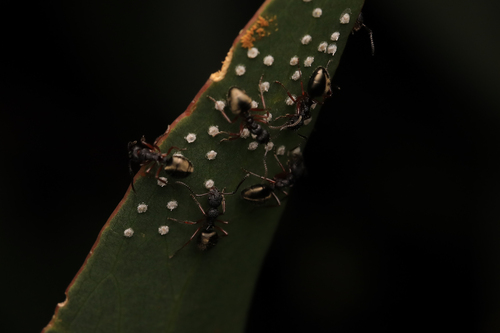
This species lives in many habitats, including deserts, forests, woodland and urban areas. They nest underground below logs, stones, twigs, and shrubs, or in decayed wooden stumps, and are sometimes found living in termite mounds. They are among the first insects to be found in burnt-off areas after the embers have stopped smouldering. Rain presents no threat to colonies as long as it is a light shower in continuous sunshine. The green-head ant is diurnal, active throughout the day, preying on arthropods and small insects or collecting sweet substances such as honeydew from sap-sucking insects. They play an important role in seed dispersal, scattering and consuming seeds from a variety of species. Predators include the short-beaked echidna (Tachyglossus aculeatus) and a number of bird species.

Green-head ant workers are gamergates, meaning they can reproduce with winged males. With workers taking over the reproductive role, queens are relatively insignificant and are rarely produced in colonies. Nuptial flight begins in spring, with males mating with one or two females. Queens that establish their own colonies are semi-claustral, going out and foraging to support their young. Another way colonies are formed is through budding, where a subset of the colony leaves the main colony for an alternative nest site. The green-head ant is known for its painful and venomous sting that can cause anaphylactic shock in sensitive humans. However, they can also be beneficial to humans, acting as a form of pest control by preying on agricultural pests such as beetles, moths and termites. Wikipedia →
Global Distribution

Parks Where Found

# Park Country Daily sighting probability
1 Grampians National Park 🇦🇺 Australia
~30%
2 Royal National Park 🇦🇺 Australia
~20%
3 Lamington National Park 🇦🇺 Australia
~10%
4 Blue Mountains National Park 🇦🇺 Australia
~10%
5 Great Otway National Park 🇦🇺 Australia
~10%

Cities Where Found

# City Country Daily sighting probability
1 Perth 🇦🇺 Australia
~20%
2 Brisbane 🇦🇺 Australia
~20%
3 Sydney 🇦🇺 Australia
~10%
4 Melbourne 🇦🇺 Australia
~10%

Before you go

What are the chances of seeing a Green-Head Ant in Grampians National Park?

Possible

About 30% of wildlife watchers report a Green-Head Ant sighting in Grampians National Park on a given day, based on 63 verified sightings from GBIF citizen-science data from 2019 to 2026. It is the 9th most-seen of the 148 insects we can rate there. Over three days the chance rises to about 70%, and over a week to about 90%, if each day is a fresh chance.

When is the best time to see a Green-Head Ant in Grampians National Park?

February, April and July–September

In those months about 40% of wildlife watchers report a Green-Head Ant in Grampians National Park on a given day, against about 20% in October and November, the lowest months.

What time of day is best to see a Green-Head Ant?

Between 11 am and 2 pm

Across all the parks we cover, that three-hour window holds the most Green-Head Ant sightings with a recorded time, and about 9 in 10 of them come between 6 am and 6 pm: it is a daytime animal.

Is Grampians National Park the best place to see a Green-Head Ant?

Yes

Of the 5 parks where we can rate Green-Head Ant sightings, Grampians National Park has the highest daily chance: about 30%. Next come Royal National Park (Australia, about 20%) and Lamington National Park (Australia, about 10%).

Which relatives of the Green-Head Ant live in Grampians National Park?

Same family: Formicidae

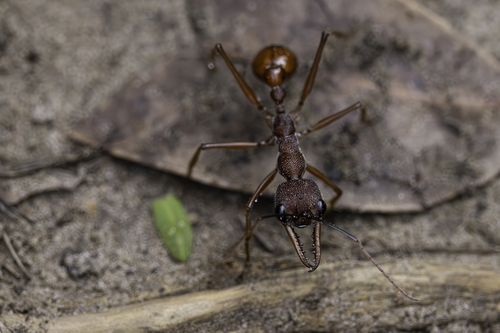
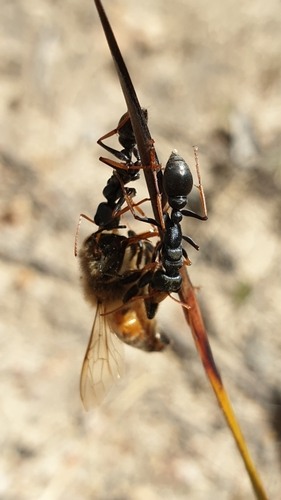
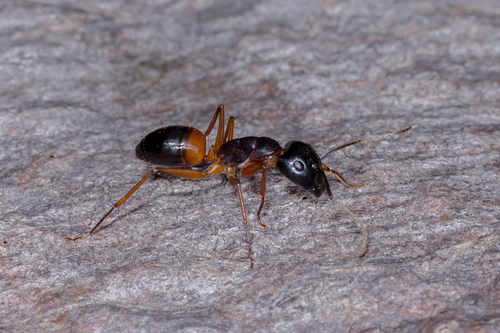
The closest relatives of the Green-Head Ant that you can see in Grampians National Park (family Formicidae, Ants) are Black-Scaped Bull Ant (about 40%), Jack Jumper Ant (about 40%) and Banded Sugar Ant (about 40%), with each one's daily chance of a sighting.

Where does the Green-Head Ant sighting chance come from?

GBIF citizen-science records

It is estimated from how often the Green-Head Ant is recorded against all the insects logged in Grampians National Park (63 verified sightings from 2019 to 2026), calibrated against known sighting rates. Figures are rounded to the nearest 10% because citizen-science data supports honest approximations, not decimals, and months with records from fewer than five people show "—". How it works.

← Back to Grampians National Park