Blue Ringtail

Blue Ringtail

Austrolestes annulosus

Endemic
Daily sighting probability ~10% · With luck
at Great Otway National Park

In 3 days ~30% in a week ~60%

50 Verified sightings at Great Otway National Park From 2019 to 2026
77 In all 3 parks
November Best month
☀️ Diurnal When it's spotted

About the Blue Ringtail

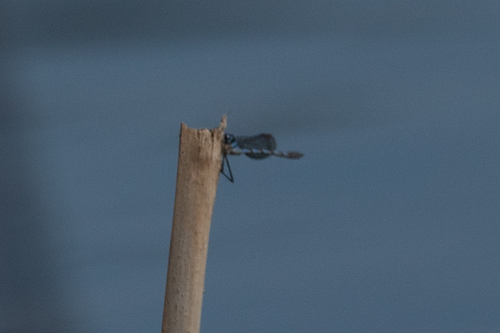
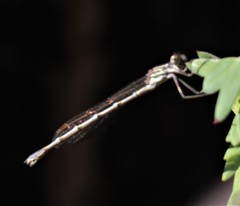
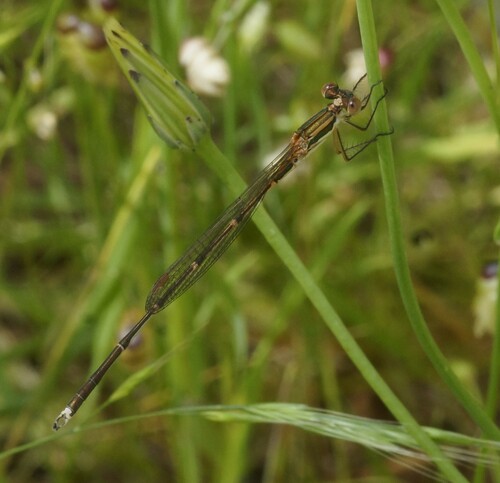
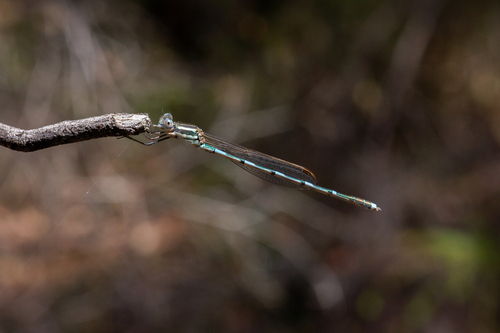
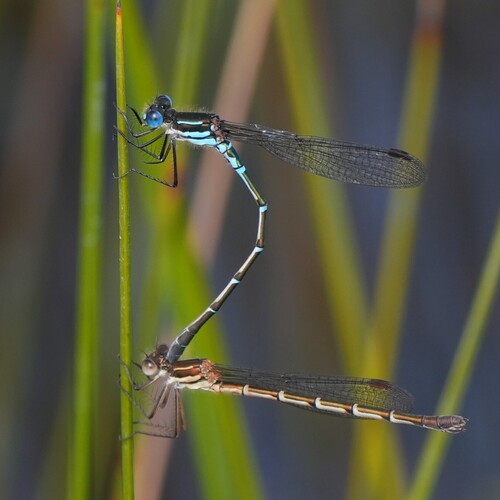
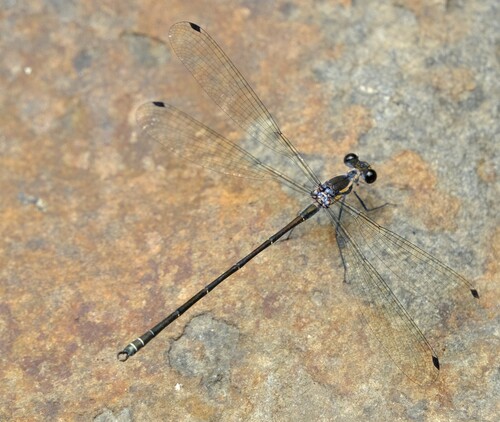
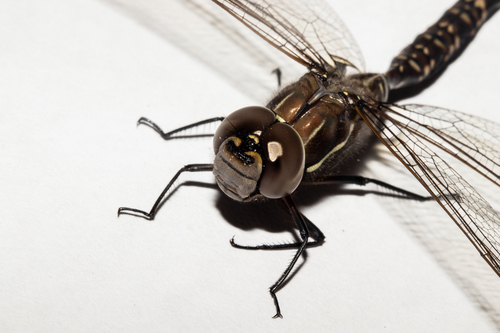
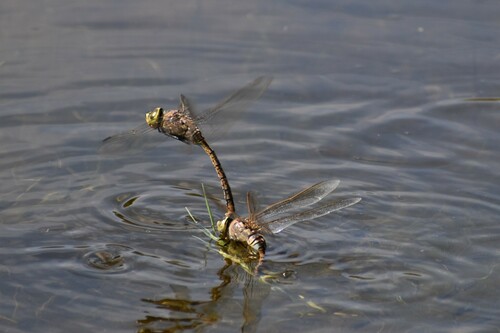
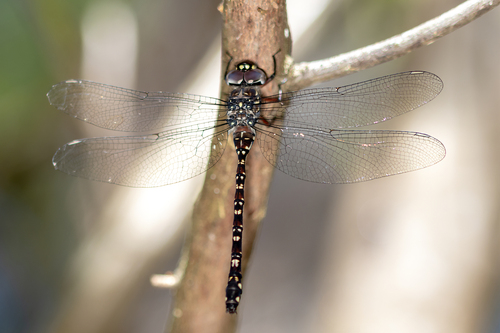
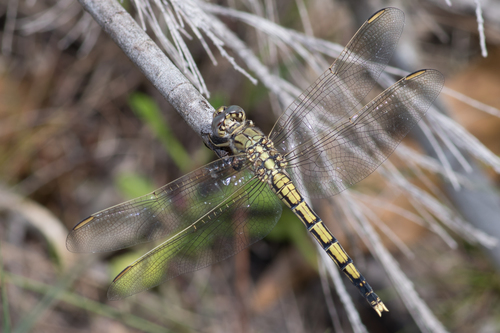
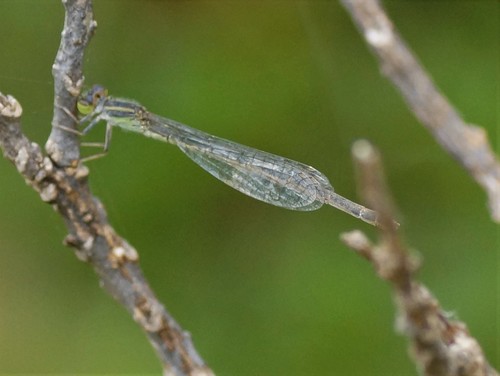
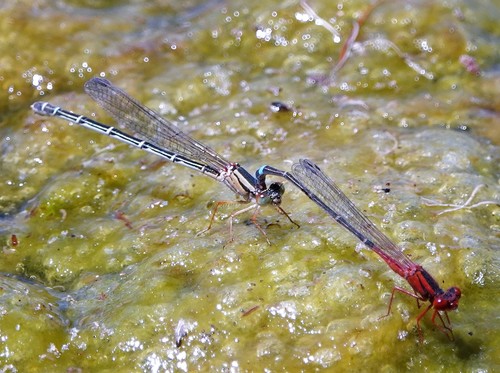
The blue ringtail (Austrolestes annulosus) is an Australian damselfly. It is found on most of the continent. The blue ringtail was first described by Edmond de Sélys Longchamps in 1862. The abdomen is 3 cm long. It can easily be confused with Austrocoenagrion lyelli or Caliagrion billinghursti, but can be differentiated through dorsal patterns. They are a thin, medium-sized damselfly with varying coloration, which depends on maturity and temperature. However most are a striking blue with minimal black markings. Females are slightly more robust than males, and have a black and white/pale blue coloration.

It is widely distributed in most of Australia, except for the northern and north-eastern parts. It is active through September to April in still water bodies such as riverine pools, lakes and ponds, including temporary pools.

The genus name Austrolestes combines the prefix austro- (from Latin auster, meaning “south wind”, hence “southern”) with Lestes, a genus name derived from Greek λῃστής (lēstēs, “robber”). The species name annulosus is derived from the Latin annulus ("ring") and the suffix -osus ("abounding... Wikipedia →

Global Distribution

Parks Where Found

# Park Country Daily sighting probability
1 Hattah-Kulkyne National Park 🇦🇺 Australia
~20%
2 Great Otway National Park 🇦🇺 Australia
~10%
3 Grampians National Park 🇦🇺 Australia
~10%

Cities Where Found

# City Country Daily sighting probability
1 Perth 🇦🇺 Australia
~10%
2 Melbourne 🇦🇺 Australia
~10%

Before you go

What are the chances of seeing a Blue Ringtail in Great Otway National Park?

With luck

About 10% of wildlife watchers report a Blue Ringtail sighting in Great Otway National Park on a given day, based on 50 verified sightings from GBIF citizen-science data from 2019 to 2026. It is the 34th most-seen of the 418 insects we can rate there. Over three days the chance rises to about 30%, and over a week to about 60%, if each day is a fresh chance.

When is the best time to see a Blue Ringtail in Great Otway National Park?

March and October–December

In those months about 20% of wildlife watchers report a Blue Ringtail in Great Otway National Park on a given day, against under 5% in May to August, the lowest months.

What time of day is best to see a Blue Ringtail?

Between 1 and 4 pm

Across all the parks we cover, that three-hour window holds the most Blue Ringtail sightings with a recorded time, and about 9 in 10 of them come between 6 am and 6 pm: it is a daytime animal.

Is Great Otway National Park the best place to see a Blue Ringtail?

2nd of 3

Of the 3 parks where we can rate Blue Ringtail sightings, Great Otway National Park ranks 2nd at about 10%. The best odds are in Hattah-Kulkyne National Park (Australia, about 20%).

Which relatives of the Blue Ringtail live in Great Otway National Park?

Same genus: Austrolestes

The closest relatives of the Blue Ringtail that you can see in Great Otway National Park (genus Austrolestes, Ringtails) are Slender Ringtail (about 10%), Wandering Ringtail (about 10%) and Cup Ringtail (about 10%), with each one's daily chance of a sighting.

Where does the Blue Ringtail sighting chance come from?

GBIF citizen-science records

It is estimated from how often the Blue Ringtail is recorded against all the insects logged in Great Otway National Park (50 verified sightings from 2019 to 2026), calibrated against known sighting rates. Figures are rounded to the nearest 10% because citizen-science data supports honest approximations, not decimals, and months with records from fewer than five people show "—". How it works.

← Back to Great Otway National Park