Acanthocephala terminalis

Acanthocephala terminalis

Acanthocephala terminalis

Daily sighting probability ~20% · Possible
at Great Smoky Mountains National Park

In 3 days ~40% in a week ~70%

88 Verified sightings at Great Smoky Mountains National Park From 2019 to 2026
173 In all 3 parks
February Best month
☀️ Diurnal When it's spotted

About the Acanthocephala terminalis

Acanthocephala terminalis is a species of leaf-footed bug in the family Coreidae. It is found in the eastern half of the United States and eastern Mexico. It is harmless to humans and pets and does not bite or sting and there is no evidence that it carries parasites or human diseases; however, it may release a foul odor if threatened or squashed.

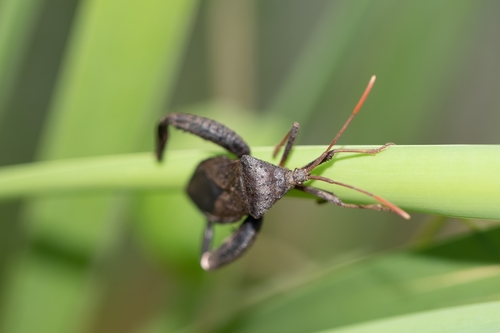
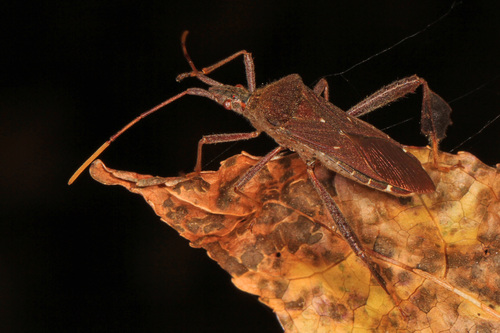
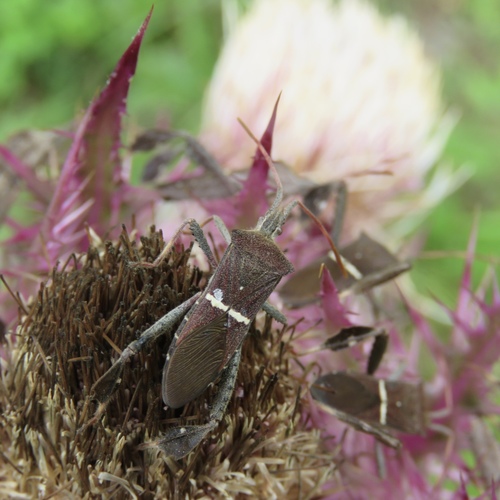
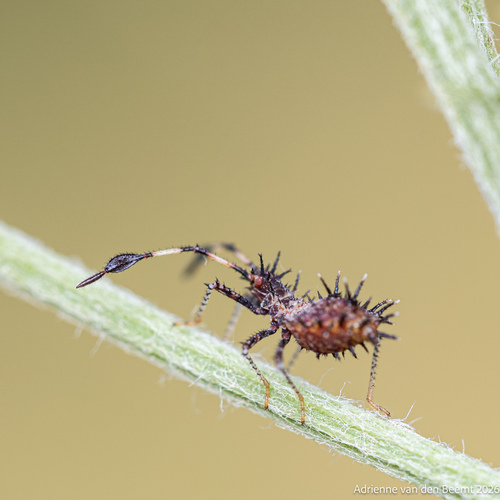
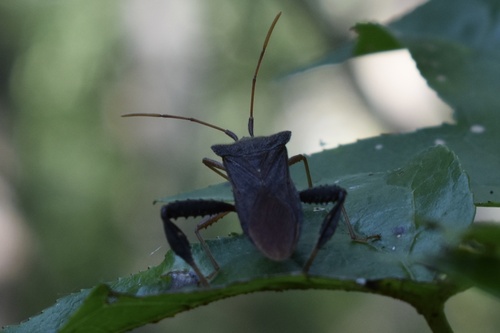
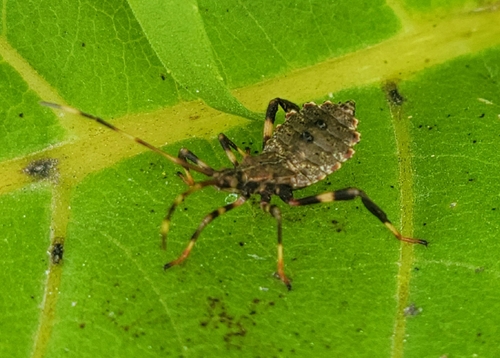
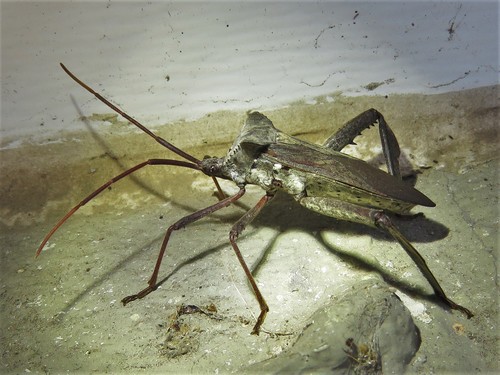
Acanthocephala terminalis is usually around 18–25 millimetres (0.71–0.98 in) long with a dark gray to black color. The fourth (and last) segment of their antennae have orange coloration, and the tibia of their hind legs have a flat, leaf-like appearance. Sexual dimorphism is relatively limited. The hind femora and shape of the expanded hind tibia may differ slightly in shape, while body size remains relatively constant.

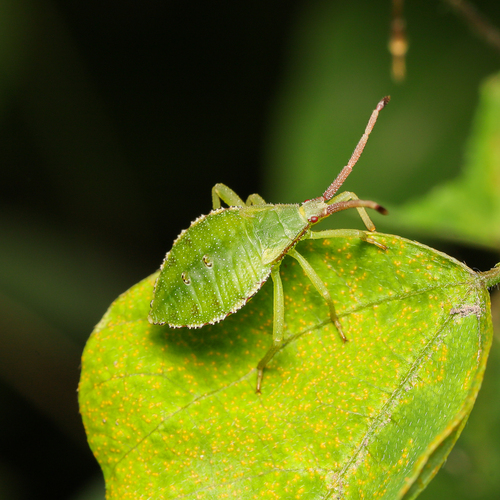
Acanthocephala terminalis is usually found in the eastern half of the United States and parts of southeast Canada. They will usually live in woodlands, fields, and meadows. Acanthocephala terminalis will begin its mating period in late spring, and females will lay eggs on host plants. Once the juveniles hatch they will molt five times before they reach adulthood... Wikipedia →
Global Distribution

Parks Where Found

# Park Country Daily sighting probability
1 Shenandoah National Park 🇺🇸 United States
~20%
2 Great Smoky Mountains National Park 🇺🇸 United States
~20%
3 Congaree National Park 🇺🇸 United States
~10%

Cities Where Found

# City Country Daily sighting probability
1 Dallas 🇺🇸 United States
~10%
2 Austin 🇺🇸 United States
~10%
3 Boston 🇺🇸 United States
~10%
4 Montreal 🇨🇦 Canada
~10%
5 Washington 🇺🇸 United States
~10%
6 Baltimore 🇺🇸 United States
~10%
7 Houston 🇺🇸 United States
~10%
8 Toronto 🇨🇦 Canada
~10%
9 Minneapolis [Saint Paul] 🇺🇸 United States
~10%
10 San Antonio 🇺🇸 United States
<5%

Before you go

What are the chances of seeing an Acanthocephala terminalis in Great Smoky Mountains National Park?

Possible

About 20% of wildlife watchers report an Acanthocephala terminalis sighting in Great Smoky Mountains National Park on a given day, based on 88 verified sightings from GBIF citizen-science data from 2019 to 2026. It is the 50th most-seen of the 822 insects we can rate there. Over three days the chance rises to about 40%, and over a week to about 70%, if each day is a fresh chance.

When is the best time to see an Acanthocephala terminalis in Great Smoky Mountains National Park?

February

In that month about 30% of wildlife watchers report an Acanthocephala terminalis in Great Smoky Mountains National Park on a given day, against under 5% in December and January, the lowest months.

What time of day is best to see an Acanthocephala terminalis?

Between 11 am and 2 pm

Across all the parks we cover, that three-hour window holds the most Acanthocephala terminalis sightings with a recorded time, and about 9 in 10 of them come between 6 am and 6 pm: it is a daytime animal.

Is Great Smoky Mountains National Park the best place to see an Acanthocephala terminalis?

Among the best

Of the 3 parks where we can rate Acanthocephala terminalis sightings, Great Smoky Mountains National Park ranks 2nd at about 20%, level with the leaders once rounded. The best odds are in Shenandoah National Park (United States, about 20%).

Where does the Acanthocephala terminalis sighting chance come from?

GBIF citizen-science records

It is estimated from how often the Acanthocephala terminalis is recorded against all the insects logged in Great Smoky Mountains National Park (88 verified sightings from 2019 to 2026), calibrated against known sighting rates. Figures are rounded to the nearest 10% because citizen-science data supports honest approximations, not decimals, and months with records from fewer than five people show "—". How it works.

← Back to Great Smoky Mountains National Park