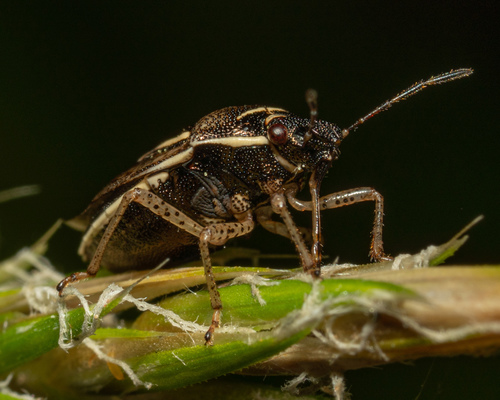
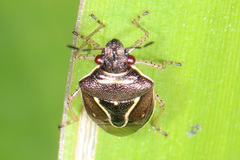
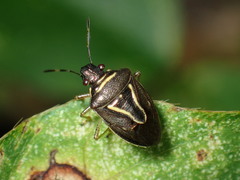
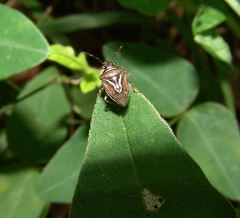

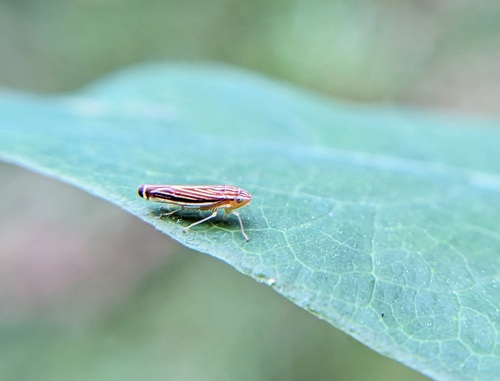
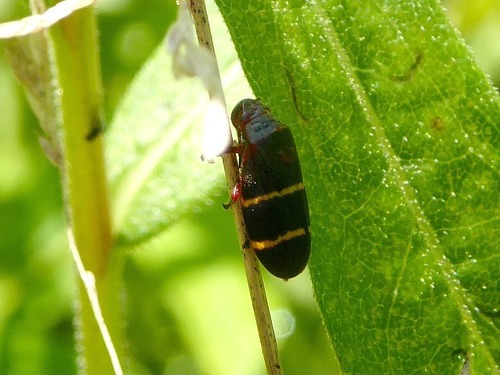
Mormidea lugens
Daily sighting probability ~10% · With luck
at Great Smoky Mountains National Park

In 3 days ~10% in a week ~30%

11 Verified sightings at Great Smoky Mountains National Park From 2019 to 2026
28 In all 3 parks
August Best month
☀️ Diurnal When it's spotted

About the Mormidea lugens

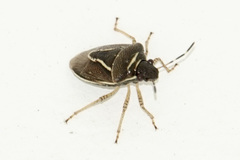
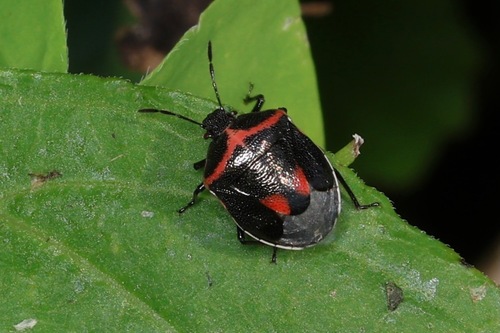
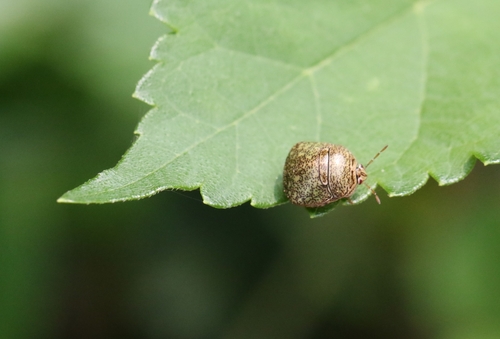
Mormidea lugens is a species of stink bug in the family Pentatomidae found in the Caribbean, Central America, and Eastern North America. In Illinois, adults have been observed emerging from overwintering sites in late April, and continue to be observed until early November, and appear to be bivoltine in this area. Eggs are approximately 0.7 millimetres (0.028 in) in diameter, pale yellow, and laid in small clusters of 6 to 11 eggs (mean = 9.6). Adults are bronze in color, with a white-yellow border around the scutellum, and are 5.0–7.2 millimetres (0.20–0.28 in) in length. In laboratory conditions, at approximately 24 °C (75 °F), development from eggs to adults has been documented to take between 39 and 50 days, and appears to be affected by the species of host plant. Mormidea lugens has been documented to feed on timothy, sedges (including Carex shortiana, C. amphibola, C. normalis), as well as deer-tongue grass (Panicum clandestinum), and Bosc's panic-grass (P. boscii). It has been collected from pale sedge (C. blanda) and wide-leaved spiderwort (Tradescantia subaspera) but has not observed feeding on these species, and deer-tongue grass appears to be an insufficient food source for development. Wikipedia →

Global Distribution

Parks Where Found

# Park Country Daily sighting probability
1 Shenandoah National Park 🇺🇸 United States
~10%
2 Great Smoky Mountains National Park 🇺🇸 United States
~10%
3 Acadia National Park 🇺🇸 United States
<5%

Cities Where Found

# City Country Daily sighting probability
1 Boston 🇺🇸 United States
<5%
2 Baltimore 🇺🇸 United States
<5%
3 Washington 🇺🇸 United States
<5%
4 Houston 🇺🇸 United States
<5%
5 Austin 🇺🇸 United States
<5%
6 New York City 🇺🇸 United States
<5%

Before you go

What are the chances of seeing a Mormidea lugens in Great Smoky Mountains National Park?

With luck

About 10% of wildlife watchers report a Mormidea lugens sighting in Great Smoky Mountains National Park on a given day, based on 11 verified sightings from GBIF citizen-science data from 2019 to 2026. It is the 379th most-seen of the 822 insects we can rate there. Over three days the chance rises to about 10%, and over a week to about 30%, if each day is a fresh chance.

When is the best time to see a Mormidea lugens in Great Smoky Mountains National Park?

May and July–August

In those months about 10% of wildlife watchers report a Mormidea lugens in Great Smoky Mountains National Park on a given day, against under 5% in June and September–April, the lowest months.

What time of day is best to see a Mormidea lugens?

Between 3 and 6 pm

Across all the parks we cover, that three-hour window holds the most Mormidea lugens sightings with a recorded time, and nearly all of them come between 6 am and 6 pm: it is a daytime animal.

Is Great Smoky Mountains National Park the best place to see a Mormidea lugens?

Among the best

Of the 3 parks where we can rate Mormidea lugens sightings, Great Smoky Mountains National Park ranks 2nd at about 10%, level with the leaders once rounded. The best odds are in Shenandoah National Park (United States, about 10%).

Which relatives of the Mormidea lugens live in Great Smoky Mountains National Park?

Same family: Pentatomidae

The closest relatives of the Mormidea lugens that you can see in Great Smoky Mountains National Park (family Pentatomidae, Stink Bugs) are Brown Marmorated Stink Bug (about 20%), Green Stink Bug (about 10%) and Florida Predatory Stink Bug (about 10%), with each one's daily chance of a sighting.

Where does the Mormidea lugens sighting chance come from?

GBIF citizen-science records

It is estimated from how often the Mormidea lugens is recorded against all the insects logged in Great Smoky Mountains National Park (11 verified sightings from 2019 to 2026), calibrated against known sighting rates. Figures are rounded to the nearest 10% because citizen-science data supports honest approximations, not decimals, and months with records from fewer than five people show "—". How it works.

← Back to Great Smoky Mountains National Park