Red Milkweed Beetle

Red Milkweed Beetle

Tetraopes tetrophthalmus

Daily sighting probability ~10% · With luck
at Great Smoky Mountains National Park

In 3 days ~20% in a week ~40%

20 Verified sightings at Great Smoky Mountains National Park From 2019 to 2026
101 In all 2 parks
July Best month
☀️ Diurnal When it's spotted

About the Red Milkweed Beetle

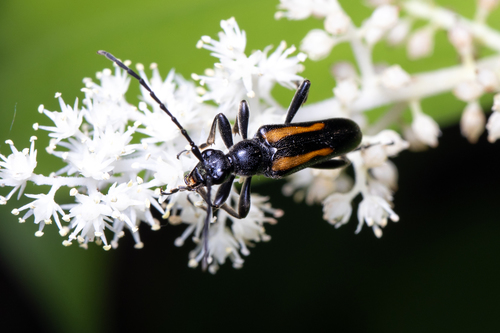
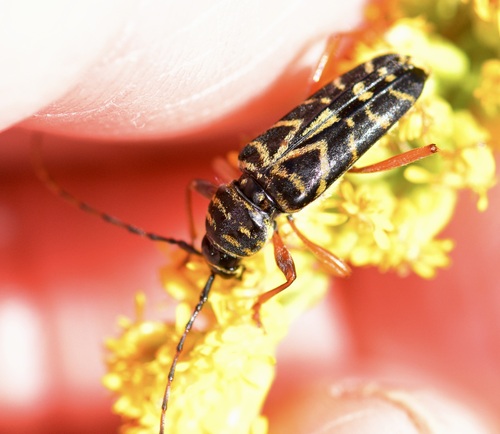
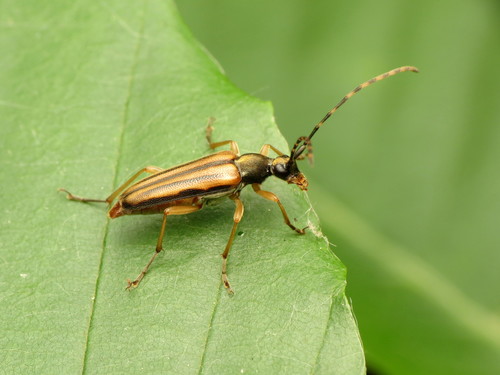
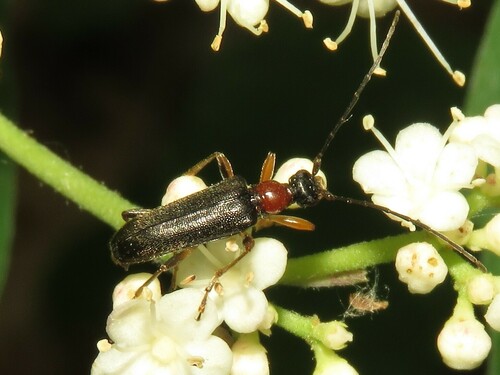
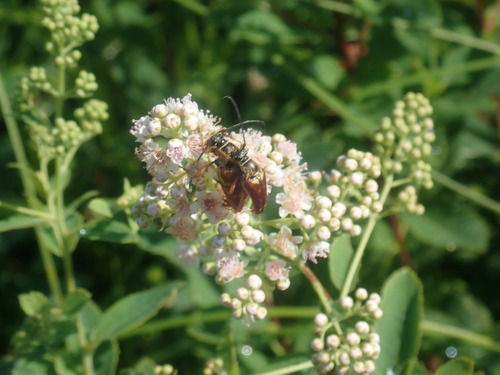
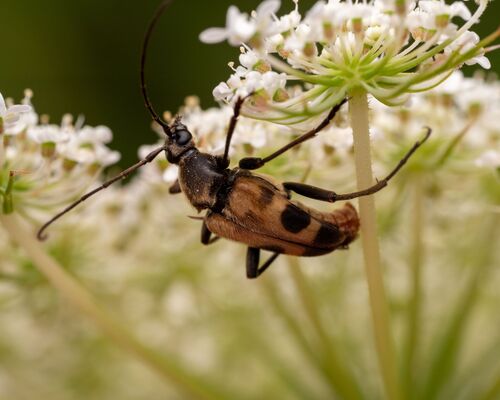
Tetraopes tetrophthalmus, the red milkweed beetle, is a beetle in the family Cerambycidae. The binomial genus and species names are both derived from the Ancient Greek for "four eyes." As in many longhorn beetles, the antennae are situated very near the eye–in the red milkweed beetle, this adaptation has been carried to an extreme: the antennal base actually bisects the eye.

The milkweed beetle, an herbivore, is given this name because it is host-specific to common milkweed (Asclepias syriaca). It has been reported on horsetail milkweed (Asclepias verticillata) in a disturbed site in Illinois.

Adults feed on the foliage and flowers of the plant, and the larvae feed on the roots. Therefore, much like the monarch butterfly, it is thought that the beetles derive some protection from predators by incorporating toxins from the plant into their bodies, thereby becoming distasteful. The red and black coloring are aposematic, advertising the beetles' inedibility.

These beetles feed by opening veins in the milkweed plant, decreasing the beetles' exposure to latex-like sap. When startled, the beetles make a shrill... Wikipedia →

Global Distribution

Parks Where Found

# Park Country Daily sighting probability
1 Shenandoah National Park 🇺🇸 United States
~20%
2 Great Smoky Mountains National Park 🇺🇸 United States
~10%

Cities Where Found

# City Country Daily sighting probability
1 Minneapolis [Saint Paul] 🇺🇸 United States
~20%
2 Detroit 🇺🇸 United States
~20%
3 Chicago 🇺🇸 United States
~20%
4 Boston 🇺🇸 United States
~20%
5 Toronto 🇨🇦 Canada
~10%
6 Montreal 🇨🇦 Canada
~10%
7 Philadelphia 🇺🇸 United States
~10%
8 Baltimore 🇺🇸 United States
~10%
9 New York City 🇺🇸 United States
~10%
10 Washington 🇺🇸 United States
~10%

Before you go

What are the chances of seeing a Red Milkweed Beetle in Great Smoky Mountains National Park?

With luck

About 10% of wildlife watchers report a Red Milkweed Beetle sighting in Great Smoky Mountains National Park on a given day, based on 20 verified sightings from GBIF citizen-science data from 2019 to 2026. It is the 276th most-seen of the 822 insects we can rate there. Over three days the chance rises to about 20%, and over a week to about 40%, if each day is a fresh chance.

When is the best time to see a Red Milkweed Beetle in Great Smoky Mountains National Park?

June and July

In those months about 10% of wildlife watchers report a Red Milkweed Beetle in Great Smoky Mountains National Park on a given day, against under 5% in August to May, the lowest months.

What time of day is best to see a Red Milkweed Beetle?

Between 10 am and 1 pm

Across all the parks we cover, that three-hour window holds the most Red Milkweed Beetle sightings with a recorded time, and about 8 in 10 of them come between 6 am and 6 pm: it is a daytime animal.

Is Great Smoky Mountains National Park the best place to see a Red Milkweed Beetle?

2nd of 2

Of the 2 parks where we can rate Red Milkweed Beetle sightings, Great Smoky Mountains National Park ranks 2nd at about 10%. The best odds are in Shenandoah National Park (United States, about 20%).

Where does the Red Milkweed Beetle sighting chance come from?

GBIF citizen-science records

It is estimated from how often the Red Milkweed Beetle is recorded against all the insects logged in Great Smoky Mountains National Park (20 verified sightings from 2019 to 2026), calibrated against known sighting rates. Figures are rounded to the nearest 10% because citizen-science data supports honest approximations, not decimals, and months with records from fewer than five people show "—". How it works.

← Back to Great Smoky Mountains National Park