Six-Spotted Tiger Beetle

Six-Spotted Tiger Beetle

Cicindela sexguttata

Daily sighting probability ~30% · Possible
at Great Smoky Mountains National Park

In 3 days ~60% in a week ~90%

236 Verified sightings at Great Smoky Mountains National Park From 2019 to 2026
380 In all 4 parks
May Best month
☀️ Diurnal When it's spotted

About the Six-Spotted Tiger Beetle

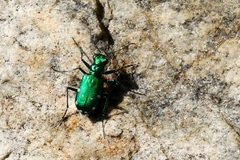
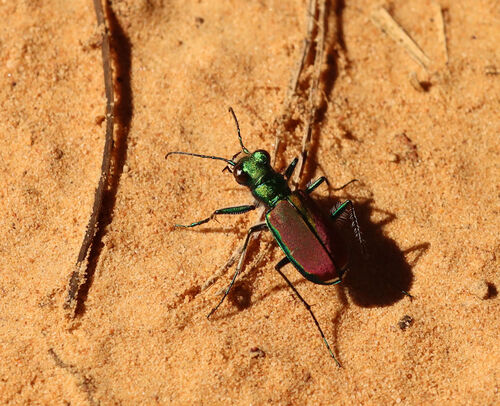
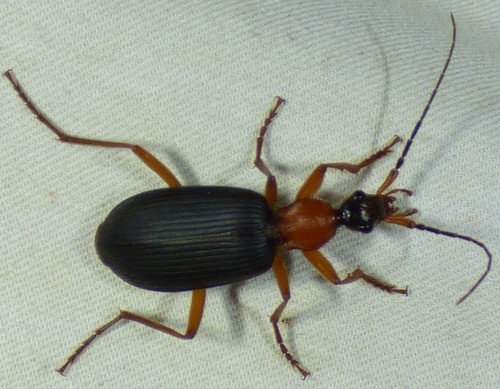
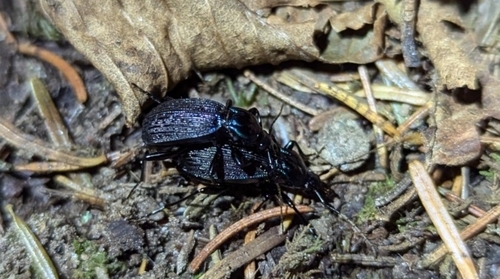
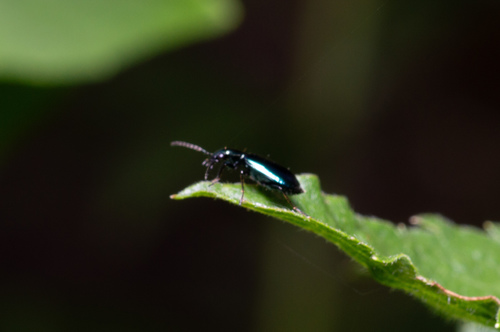
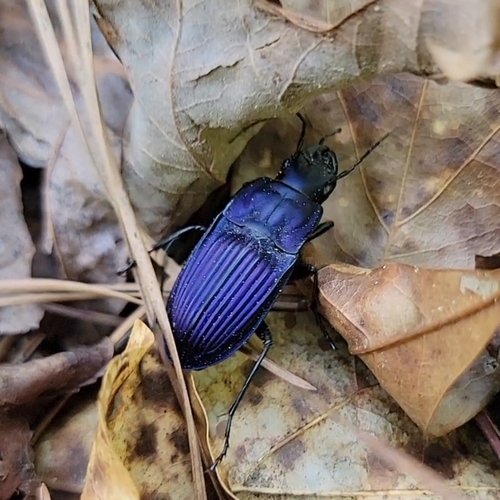
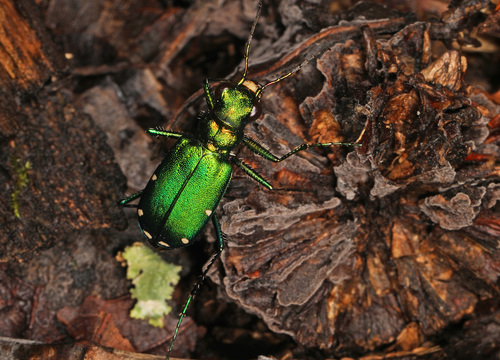
The six-spotted tiger beetle, also known as the six-spotted green tiger beetle (Cicindela sexguttata), is a common North American species of tiger beetle in the Cicindelinae subfamily. It is common in many areas of the United States, and is well known. It is recognized for its bright green color and its flight pattern. The beetle is largely harmless to humans and may live as long as three years.

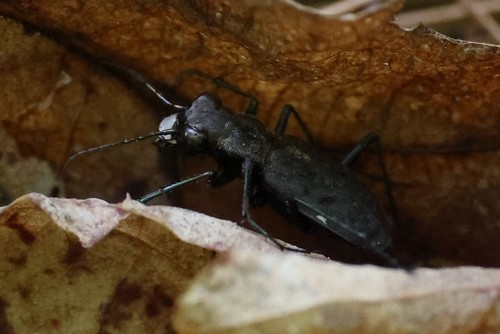
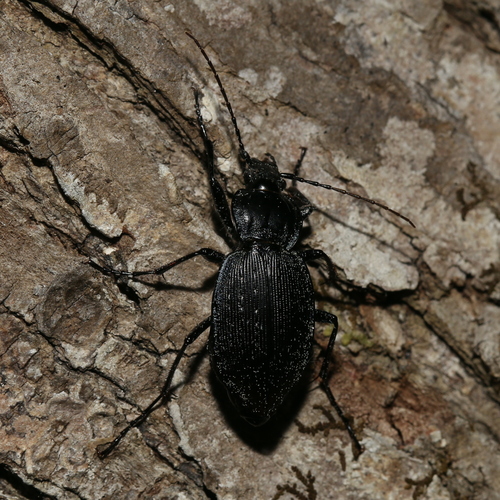
They are commonly found in deciduous forests in between Minnesota, southeastern Canada and south to eastern Texas, excluding the Florida Panhandle, and are easily recognizable by their large, white, overlapping mandibles. The adult is 12–14 mm (1/2-5/8") in length, and has fairly long legs. The mandibles give these attractive insects a ferocious appearance. While tiger beetles are voracious predators of small arthropods, they do not bite humans unless handled. Both the common name and the species name refer to the six small white spots on the beetle's metallic-green to metallic-blue-green elytra. This is not always the case, however, as some individuals may have more spots, fewer spots, or none at all, presumably due to genetic variation. This species is associated with wooded... Wikipedia →

Global Distribution

Parks Where Found

# Park Country Daily sighting probability
1 Great Smoky Mountains National Park 🇺🇸 United States
~30%
2 Congaree National Park 🇺🇸 United States
~20%
3 Shenandoah National Park 🇺🇸 United States
~20%
4 Acadia National Park 🇺🇸 United States
~10%

Cities Where Found

# City Country Daily sighting probability
1 Washington 🇺🇸 United States
~10%
2 Baltimore 🇺🇸 United States
~10%
3 Toronto 🇨🇦 Canada
~10%
4 Boston 🇺🇸 United States
~10%
5 Minneapolis [Saint Paul] 🇺🇸 United States
~10%
6 Dallas 🇺🇸 United States
~10%
7 Houston 🇺🇸 United States
~10%
8 Montreal 🇨🇦 Canada
~10%
9 Philadelphia 🇺🇸 United States
~10%
10 Chicago 🇺🇸 United States
~10%

Before you go

What are the chances of seeing a Six-Spotted Tiger Beetle in Great Smoky Mountains National Park?

Possible

About 30% of wildlife watchers report a Six-Spotted Tiger Beetle sighting in Great Smoky Mountains National Park on a given day, based on 236 verified sightings from GBIF citizen-science data from 2019 to 2026. It is the 13th most-seen of the 822 insects we can rate there. Over three days the chance rises to about 60%, and over a week to about 90%, if each day is a fresh chance.

When is the best time to see a Six-Spotted Tiger Beetle in Great Smoky Mountains National Park?

April and May

In those months about 40% of wildlife watchers report a Six-Spotted Tiger Beetle in Great Smoky Mountains National Park on a given day, against under 5% in September to February, the lowest months.

What time of day is best to see a Six-Spotted Tiger Beetle?

Between noon and 3 pm

Across all the parks we cover, that three-hour window holds the most Six-Spotted Tiger Beetle sightings with a recorded time, and nearly all of them come between 6 am and 6 pm: it is a daytime animal.

Is Great Smoky Mountains National Park the best place to see a Six-Spotted Tiger Beetle?

Yes

Of the 4 parks where we can rate Six-Spotted Tiger Beetle sightings, Great Smoky Mountains National Park has the highest daily chance: about 30%. Next come Congaree National Park (United States, about 20%) and Shenandoah National Park (United States, about 20%).

Where does the Six-Spotted Tiger Beetle sighting chance come from?

GBIF citizen-science records

It is estimated from how often the Six-Spotted Tiger Beetle is recorded against all the insects logged in Great Smoky Mountains National Park (236 verified sightings from 2019 to 2026), calibrated against known sighting rates. Figures are rounded to the nearest 10% because citizen-science data supports honest approximations, not decimals, and months with records from fewer than five people show "—". How it works.

← Back to Great Smoky Mountains National Park