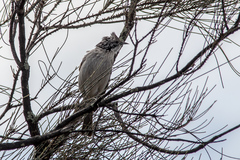

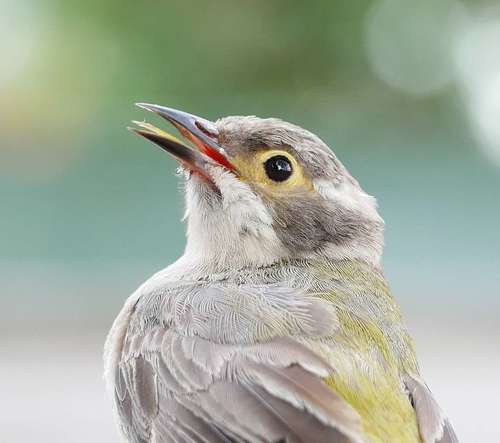
Striped Honeyeater

Striped Honeyeater

Plectorhyncha lanceolata

Silhouette: Rachael Joakim · PhyloPic

LCLeast ConcernNTVUENCR Endemic
Daily sighting probability ~40% · Likely
at Hattah-Kulkyne National Park

In 3 days ~70% in a week >90%

533 Verified sightings at Hattah-Kulkyne National Park From 2019 to 2026
533 In 1 park
July Best month
☀️ Diurnal When it's spotted

About the Striped Honeyeater

The striped honeyeater (Plectorhyncha lanceolata) is a passerine bird of the honeyeater family, Meliphagidae, found in Australia. It is a medium-sized honeyeater, about 23 cm (9.1 in) in length. Both sexes are a light greyish brown with dark brown centres to the feathers, which give the appearance of stripes. The stripes are particularly distinct on the head and back of the neck. While it is found mainly in inland eastern Australia where it inhabits the drier open forest, it is also found in coastal swamp forest from southeast Queensland to the central coast of New South Wales.

Although a honeyeater, the striped honeyeater relies on insects as its major food source, and its bill has been adapted to an insect diet. When not breeding it has been recorded feeding and travelling in small groups, but it nests singly, laying around three eggs in a deep cup-shaped nest suspended from the end of drooping branches. It is widely distributed and common within its range, thus the population is listed as being of least concern for conservation by the IUCN.

The striped honeyeater was first described by English ornithologist and bird artist John Gould in A Synopsis of the Birds of Australia... Wikipedia →

Sounds

Song0:11

Australia · 2025

© Khristos Nizamis · XC1072704 · CC BY-NC-ND 4.0

Duet0:18

Australia · 2013

© Marc Anderson · XC171816 · CC BY-NC-ND 4.0

Song0:16

Australia · 2023

© Peter Boesman · XC860094 · CC BY-NC-ND 4.0

Global Distribution

Parks Where Found

# Park Country Daily sighting probability
1 Hattah-Kulkyne National Park 🇦🇺 Australia
~40%

More parks will be added in future updates.

Cities Where Found

# City Country Daily sighting probability
1 Brisbane 🇦🇺 Australia
~10%

Zoos & Centres Where Found

# Zoo / Centre Country
1 Taronga Zoo 🇦🇺 Australia In captivity
2 Adelaide Zoo 🇦🇺 Australia In captivity

Before you go

What are the chances of seeing a Striped Honeyeater in Hattah-Kulkyne National Park?

Likely

About 40% of wildlife watchers report a Striped Honeyeater sighting in Hattah-Kulkyne National Park on a given day, based on 533 verified sightings from GBIF citizen-science data from 2019 to 2026. It is the 31st most-seen of the 170 birds we can rate there. Over three days the chance rises to about 70%, and over a week to over 90%, if each day is a fresh chance.

When is the best time to see a Striped Honeyeater in Hattah-Kulkyne National Park?

July

In that month about 50% of wildlife watchers report a Striped Honeyeater in Hattah-Kulkyne National Park on a given day, against about 30% in March, May–June, August and November, the lowest months.

What time of day is best to see a Striped Honeyeater?

Between 7 and 10 am

Across all the parks we cover, that three-hour window holds the most Striped Honeyeater sightings with a recorded time, and nearly all of them come between 6 am and 6 pm: it is a daytime animal.

Where else can you see a Striped Honeyeater?

Only Hattah-Kulkyne National Park, in our data

Hattah-Kulkyne National Park is the only park on Wallace's Line with enough records to rate Striped Honeyeater sightings: about 40% of wildlife watchers there report one on a given day.

Which relatives of the Striped Honeyeater live in Hattah-Kulkyne National Park?

Same family: Meliphagidae

The closest relatives of the Striped Honeyeater that you can see in Hattah-Kulkyne National Park (family Meliphagidae, Honeyeaters) are Yellow-plumed Honeyeater (about 70%), Noisy Miner (about 60%) and Spiny-cheeked Honeyeater (about 60%), with each one's daily chance of a sighting.

Where does the Striped Honeyeater sighting chance come from?

GBIF citizen-science records

It is estimated from how often the Striped Honeyeater is recorded against all the birds logged in Hattah-Kulkyne National Park (533 verified sightings from 2019 to 2026), calibrated against known sighting rates. Figures are rounded to the nearest 10% because citizen-science data supports honest approximations, not decimals, and months with records from fewer than five people show "—". How it works.

← Back to Hattah-Kulkyne National Park