Brown-headed Honeyeater

Brown-headed Honeyeater

Melithreptus brevirostris

Silhouette: Rachael Joakim · PhyloPic

LCLeast ConcernNTVUENCR Endemic
Daily sighting probability ~20% · Possible
at Hattah-Kulkyne National Park

In 3 days ~50% in a week ~80%

280 Verified sightings at Hattah-Kulkyne National Park From 2019 to 2026
1,251 In all 10 parks
June Best month
☀️ Diurnal When it's spotted

About the Brown-headed Honeyeater

The brown-headed honeyeater (Melithreptus brevirostris) is a species of passerine bird in the family Meliphagidae. It is endemic to Australia. Its natural habitats are temperate forests and Mediterranean-type shrubby vegetation.

The brown-headed honeyeater was first described by Vigors & Horsfield in 1827. Its species name is derived from the Latin terms brevis 'short', and rostrum 'beak'. Five subspecies have been described. The race magnirostris from Kangaroo Island has a noticeably larger bill.

It is a member of the genus Melithreptus, with several species of similar size and all black-headed, apart from this species, in the honeyeater family Meliphagidae. Molecular markers show the brown-headed honeyeater is most closely related to the black-chinned honeyeater, with the strong-billed honeyeater an earlier offshoot between 6.7 and 3.4 million years ago.

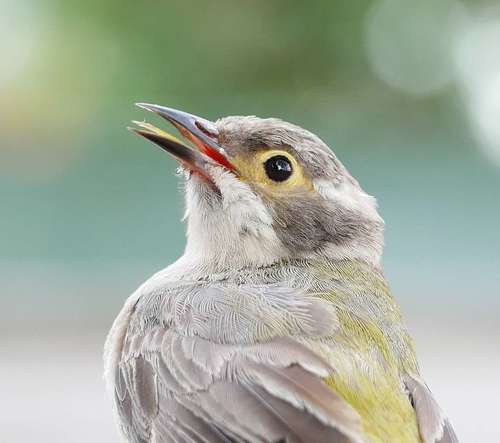
A small honeyeater ranging from 13 to 15 cm (5.2–6 in) in length, it is olive-brown above and buff below, with a brown head, nape and throat, a cream or orange patch of bare skin over the eye, and a dull white crescent-shaped patch on the nape. The legs and feet are orange. It makes a scratchy chwik... Wikipedia →
Sounds

Call0:24

Australia · 2023

© Peter Boesman · XC859959 · CC BY-NC-ND 4.0

Song0:53

Australia · 2016

© Andrew Spencer · XC328849 · CC BY-NC-ND 4.0

Call0:38

Australia · 2022

© Toby Esplin · XC729287 · CC BY-NC-ND 4.0

Global Distribution

Parks Where Found

# Park Country Daily sighting probability
1 Hattah-Kulkyne National Park 🇦🇺 Australia
~20%
2 Flinders Chase 🇦🇺 Australia
~20%
3 Great Otway National Park 🇦🇺 Australia
~20%
4 Grampians National Park 🇦🇺 Australia
~20%
5 Kosciuszko National Park 🇦🇺 Australia
~10%
6 Flinders Ranges National Park 🇦🇺 Australia
~10%
7 Blue Mountains National Park 🇦🇺 Australia
<5%
8 Royal National Park 🇦🇺 Australia
<5%
9 Booderee National Park 🇦🇺 Australia
<5%
10 Wilsons Promontory National Park 🇦🇺 Australia
<5%

Cities Where Found

# City Country Daily sighting probability
1 Melbourne 🇦🇺 Australia
<5%
2 Sydney 🇦🇺 Australia
<5%

Before you go

What are the chances of seeing a Brown-headed Honeyeater in Hattah-Kulkyne National Park?

Possible

About 20% of wildlife watchers report a Brown-headed Honeyeater sighting in Hattah-Kulkyne National Park on a given day, based on 280 verified sightings from GBIF citizen-science data from 2019 to 2026. It is the 57th most-seen of the 170 birds we can rate there. Over three days the chance rises to about 50%, and over a week to about 80%, if each day is a fresh chance.

When is the best time to see a Brown-headed Honeyeater in Hattah-Kulkyne National Park?

January, June and August

In those months about 30% of wildlife watchers report a Brown-headed Honeyeater in Hattah-Kulkyne National Park on a given day, against about 10% in March and September, the lowest months.

What time of day is best to see a Brown-headed Honeyeater?

Between 11 am and 2 pm

Across all the parks we cover, that three-hour window holds the most Brown-headed Honeyeater sightings with a recorded time, and nearly all of them come between 6 am and 6 pm: it is a daytime animal.

Is Hattah-Kulkyne National Park the best place to see a Brown-headed Honeyeater?

Yes

Of the 10 parks where we can rate Brown-headed Honeyeater sightings, Hattah-Kulkyne National Park has the highest daily chance: about 20%. Next come Flinders Chase (Australia, about 20%) and Great Otway National Park (Australia, about 20%).

Which relatives of the Brown-headed Honeyeater live in Hattah-Kulkyne National Park?

Same family: Meliphagidae

The closest relatives of the Brown-headed Honeyeater that you can see in Hattah-Kulkyne National Park (family Meliphagidae, Honeyeaters) are Yellow-plumed Honeyeater (about 70%), Noisy Miner (about 60%) and Spiny-cheeked Honeyeater (about 60%), with each one's daily chance of a sighting.

Where does the Brown-headed Honeyeater sighting chance come from?

GBIF citizen-science records

It is estimated from how often the Brown-headed Honeyeater is recorded against all the birds logged in Hattah-Kulkyne National Park (280 verified sightings from 2019 to 2026), calibrated against known sighting rates. Figures are rounded to the nearest 10% because citizen-science data supports honest approximations, not decimals, and months with records from fewer than five people show "—". How it works.

← Back to Hattah-Kulkyne National Park

