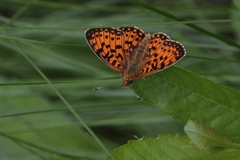
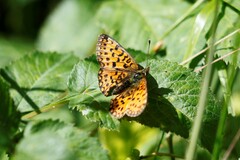
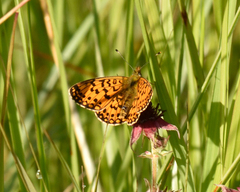
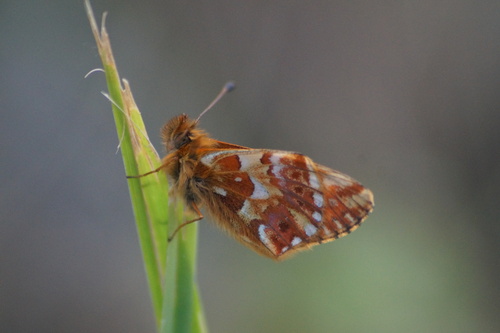
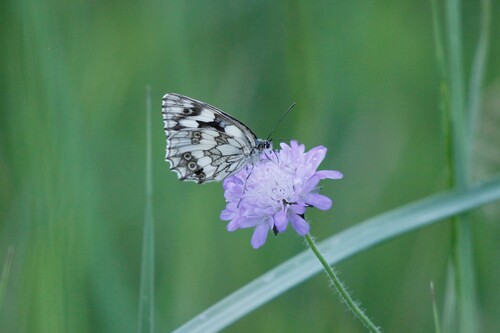
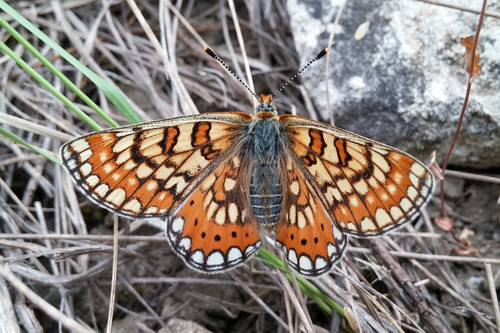
Eurasian Silver-Bordered Fritillary

Eurasian Silver-Bordered Fritillary

Boloria selene

Daily sighting probability ~10% · With luck
at Hohe Tauern National Park

In 3 days ~30% in a week ~60%

7 Verified sightings at Hohe Tauern National Park From 2019 to 2026
276 In all 9 parks
July Best month
☀️ Diurnal When it's spotted

About the Eurasian Silver-Bordered Fritillary

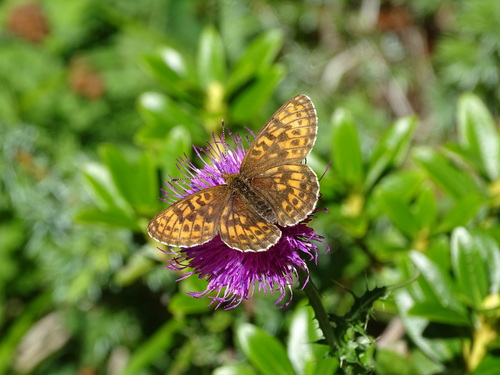
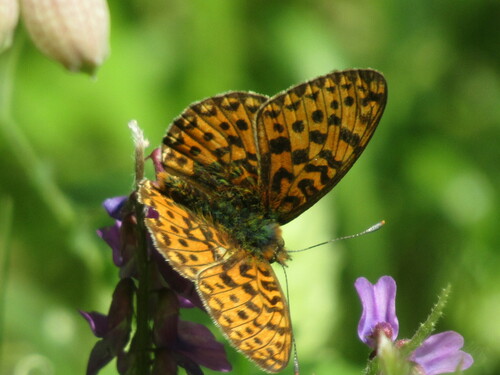
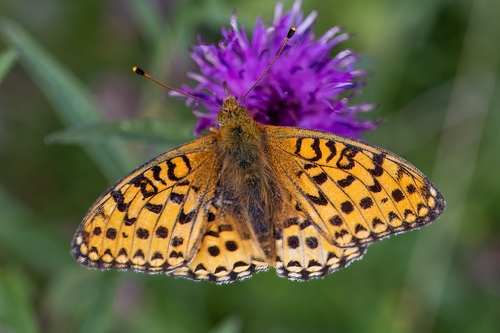
Boloria selene, known in Europe as the small pearl-bordered fritillary, is a species of butterfly of the family Nymphalidae. It is found across Europe, Asia and North America, and feeds exclusively on violets in its larval stages. This species prefers wet grassland habitats, where its larval food source, violets, are found. It overwinters in its larval stage, and eggs hatch in the late summer to early autumn. Members of this species are prey for multiple types of birds and other insects.

Due to modern agriculture, most of the grassland habitats that sustain Boloria selene are fragmented or lost all together in favor of farmland. Because of this, the small pearl-bordered fritillary has seen a serious drop in population across Europe, in some places as much as 80%. Factors including limited habitat range, low dispersal rate, and strong food specialization also contribute to population loss. Despite modern conservation efforts, the number of small pearl-bordered fritillaries is still declining. The North American populations appear to be affected in the same way, at least in the continental United States.

The small pearl-bordered fritillary is similar to the pearl-bordered... Wikipedia →
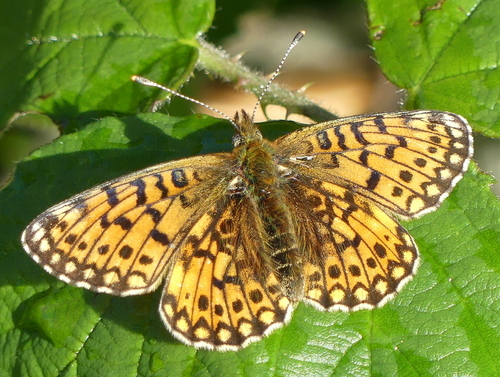
Global Distribution

Parks Where Found

# Park Country Daily sighting probability
1 Cairngorms National Park 🇬🇧 United Kingdom
~20%
2 Picos de Europa National Park 🇪🇸 Spain
~20%
3 Aigüestortes National Park 🇪🇸 Spain
~20%
4 Hohe Tauern National Park 🇦🇹 Austria
~10%
5 Pyrénées National Park 🇫🇷 France
~10%
6 Snowdonia National Park 🇬🇧 United Kingdom
~10%
7 Bavarian Forest National Park 🇩🇪 Germany
~10%
8 Cévennes National Park 🇫🇷 France
~10%
9 Wadden Sea National Park 🇩🇪 Germany
<5%

Cities Where Found

# City Country Daily sighting probability
1 Moscow 🇷🇺 Russia
<5%

Before you go

What are the chances of seeing a Eurasian Silver-Bordered Fritillary in Hohe Tauern National Park?

With luck

About 10% of wildlife watchers report a Eurasian Silver-Bordered Fritillary sighting in Hohe Tauern National Park on a given day, based on 7 verified sightings from GBIF citizen-science data from 2019 to 2026. It is the 115th most-seen of the 165 insects we can rate there. Over three days the chance rises to about 30%, and over a week to about 60%, if each day is a fresh chance.

When is the best time to see a Eurasian Silver-Bordered Fritillary in Hohe Tauern National Park?

July

In that month about 20% of wildlife watchers report a Eurasian Silver-Bordered Fritillary in Hohe Tauern National Park on a given day, against under 5% in February–June and September–October, the lowest months. December has too few records to rate.

What time of day is best to see a Eurasian Silver-Bordered Fritillary?

Between 11 am and 2 pm

Across all the parks we cover, that three-hour window holds the most Eurasian Silver-Bordered Fritillary sightings with a recorded time, and about 9 in 10 of them come between 6 am and 6 pm: it is a daytime animal.

Is Hohe Tauern National Park the best place to see a Eurasian Silver-Bordered Fritillary?

4th of 9

Of the 9 parks where we can rate Eurasian Silver-Bordered Fritillary sightings, Hohe Tauern National Park ranks 4th at about 10%. The best odds are in Cairngorms National Park (United Kingdom, about 20%), Picos de Europa National Park (Spain, about 20%) and Aigüestortes National Park (Spain, about 20%).

Which relatives of the Eurasian Silver-Bordered Fritillary live in Hohe Tauern National Park?

Same genus: Boloria

The closest relatives of the Eurasian Silver-Bordered Fritillary that you can see in Hohe Tauern National Park (genus Boloria, Lesser Fritillaries) are Mountain Fritillary (about 20%), Shepherd's Fritillary (about 20%) and Thor's Fritillary (about 10%), with each one's daily chance of a sighting.

Where does the Eurasian Silver-Bordered Fritillary sighting chance come from?

GBIF citizen-science records

It is estimated from how often the Eurasian Silver-Bordered Fritillary is recorded against all the insects logged in Hohe Tauern National Park (7 verified sightings from 2019 to 2026), calibrated against known sighting rates. Figures are rounded to the nearest 10% because citizen-science data supports honest approximations, not decimals, and months with records from fewer than five people show "—". How it works.

← Back to Hohe Tauern National Park