Silky-tailed Nightjar

Silky-tailed Nightjar

Antrostomus sericocaudatus

Silhouette: Sheatherius · PhyloPic

LCLeast ConcernNTVUENCR
Daily sighting probability <5% · Rare
at Iguazú National Park

In 3 days <5% in a week ~10%

53 Verified sightings at Iguazú National Park From 2019 to 2026
141 In all 4 parks
July Best month
🌅 Crepuscular When it's spotted

About the Silky-tailed Nightjar

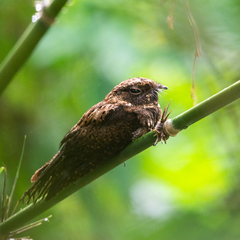
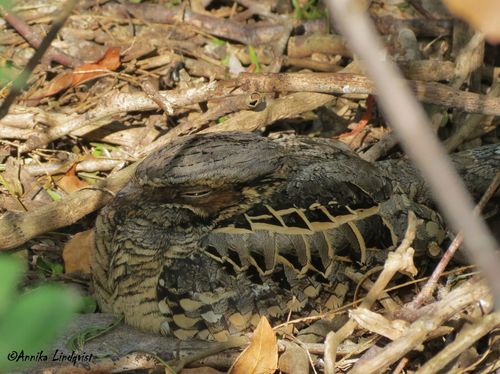
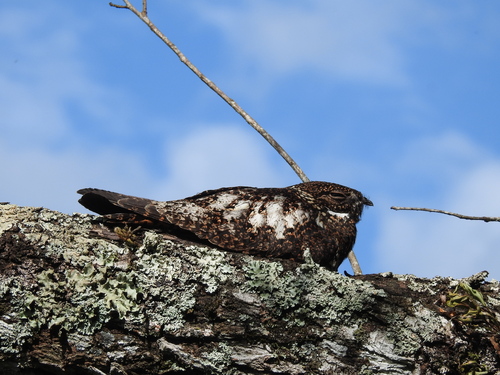
The silky-tailed nightjar (Antrostomus sericocaudatus) is a species of nightjar birds in the family Caprimulgidae. It is found in Brazil, Argentina, Bolivia, Paraguay, and Peru. Its natural habitat is subtropical or tropical moist lowland forests.

The silky-tailed nightjar has two subspecies, the nominate Antrostomus sericocaudatus sericocaudatus and A. s. mengeli. At one time the tawny-collared nightjar (A. salvini) and Yucatan nightjar (A. badius) were also treated as subspecies of it.

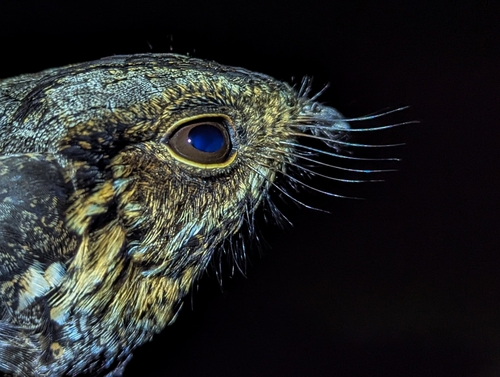
The adult male silky-tailed nightjar has light grey-brown, vermiculated plumage with a strong blackish streak on the top of the head and the nape. It has blackish facial bristles and blackish spots with rufous on the side. Its hind-neck has narrow rufous-tawny half-collar plumage. The mantle, back, rump, and upper tail of a silky-tailed nightjar converts to blackish-brown with irregular patterns of buff and cinnamon. The breast is blackish-brown with short narrow bars of cinnamon and the belly is blackish-brown with blotches and irregular narrow bars of buff.

The nominate subspecies of silky-tailed nightjar is found in the... Wikipedia →

Sounds

Song0:37

Brazil · 2026

© Miguel Angelo Biz · XC1174423 · CC BY-NC-SA 4.0

Call0:24

Argentina · 2008

© Alejandro Bodrati · XC397328 · CC BY-NC-SA 4.0

Song1:27

Brazil · 2025

© Joost van Bruggen · XC1050598 · CC BY-NC-ND 4.0

Global Distribution

Parks Where Found

# Park Country Daily sighting probability
1 Amacayacu National Natural Park 🇨🇴 Colombia
~10%
2 Iguazú National Park 🇦🇷 Argentina
<5%
3 Manu National Park 🇵🇪 Peru
<5%
4 Iguaçu National Park 🇧🇷 Brazil
<5%

Before you go

What are the chances of seeing a Silky-tailed Nightjar in Iguazú National Park?

Rare

Under 5% of wildlife watchers report a Silky-tailed Nightjar sighting in Iguazú National Park on a given day, based on 53 verified sightings from GBIF citizen-science data from 2019 to 2026. It is the 266th most-seen of the 343 birds we can rate there. Over three days the chance rises to under 5%, and over a week to about 10%, if each day is a fresh chance.

When is the best time to see a Silky-tailed Nightjar in Iguazú National Park?

Any time of year

In every month with enough records, under 5% of wildlife watchers report a Silky-tailed Nightjar in Iguazú National Park on a given day, so our monthly data shows no clear season.

What time of day is best to see a Silky-tailed Nightjar?

Between 3 and 6 pm

Across all the parks we cover, that three-hour window holds the most Silky-tailed Nightjar sightings with a recorded time, and about half of them come between 6 am and 6 pm: it is most active around dawn and dusk.

Is Iguazú National Park the best place to see a Silky-tailed Nightjar?

2nd of 4

Of the 4 parks where we can rate Silky-tailed Nightjar sightings, Iguazú National Park ranks 2nd at under 5%. The best odds are in Amacayacu National Natural Park (Colombia, about 10%).

Where does the Silky-tailed Nightjar sighting chance come from?

GBIF citizen-science records

It is estimated from how often the Silky-tailed Nightjar is recorded against all the birds logged in Iguazú National Park (53 verified sightings from 2019 to 2026), calibrated against known sighting rates. Figures are rounded to the nearest 10% because citizen-science data supports honest approximations, not decimals, and months with records from fewer than five people show "—". How it works.

← Back to Iguazú National Park