Rufous-thighed Kite

Rufous-thighed Kite

Harpagus diodon

Silhouette: Sheatherius · PhyloPic

LCLeast ConcernNTVUENCR
Daily sighting probability <5% · Rare
at Itatiaia National Park

In 3 days ~10% in a week ~20%

42 Verified sightings at Itatiaia National Park From 2019 to 2026
331 In all 6 parks
September Best month
☀️ Diurnal When it's spotted

About the Rufous-thighed Kite

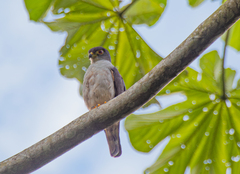
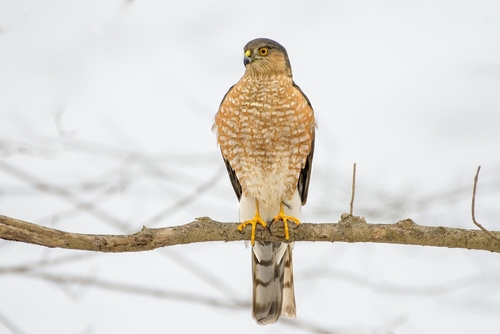
The rufous-thighed kite (Harpagus diodon) is a species of bird of prey in subfamily Accipitrinae, the "true" hawks, of family Accipitridae. It is found regularly in Argentina, Bolivia, Brazil, Guyana, Paraguay, and Suriname and as a vagrant in Colombia, French Guiana, and Venezuela.

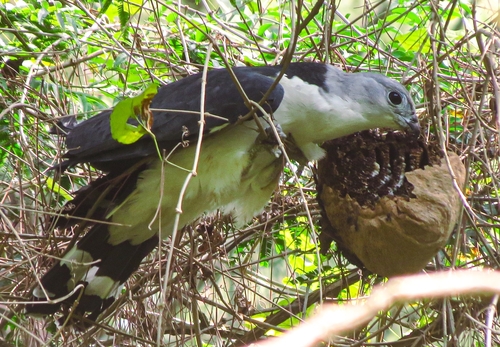
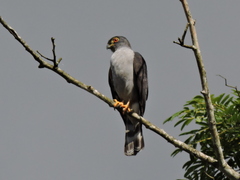
Despite its English name, the rufous-thighed kite is not closely related to most other kites but to the "true" hawks. It shares its genus with the double-toothed kite (H. bidentatus) and is monotypic. The rufous-thighed kite is 29 to 35 cm (11 to 14 in) long with a wingspan of 60 to 70 cm (24 to 28 in). The sexes are almost alike though the female is slightly larger than the male. Chestnut thighs give the species its English name. Adults have a slate gray head and upperparts. Their tail is slate gray with three paler gray bars and white tips to the feathers. Their throat is whitish with a dark streak down its center. Their breast is gray that becomes white at the undertail coverts. Their eye is red or orange, their cere lemon yellow, and their legs yellow to orange. Immature birds have dark brown upperparts with streaks on the side of the head; they are whitish... Wikipedia →

Sounds

Song0:09

Brazil · 2015

© Alexandre Bianco · XC216857 · CC BY-NC-SA 4.0

Call0:31

Argentina · 1989

© Miguel Castelino · XC60529 · CC BY-NC-ND 2.5

Alarm call0:15

Argentina · 2012

© Bernabe Lopez-Lanus · XC154375 · CC BY-NC-SA 3.0

Global Distribution

Parks Where Found

# Park Country Daily sighting probability
1 Serra dos Órgãos National Park 🇧🇷 Brazil
~10%
2 Itatiaia National Park 🇧🇷 Brazil
<5%
3 Tijuca National Park 🇧🇷 Brazil
<5%
4 Iguaçu National Park 🇧🇷 Brazil
<5%
5 Iguazú National Park 🇦🇷 Argentina
<5%
6 Parque Estadual Encontro das Águas 🇧🇷 Brazil
<5%

Cities Where Found

# City Country Daily sighting probability
1 Rio de Janeiro 🇧🇷 Brazil
<5%
2 Santos 🇧🇷 Brazil
<5%

Before you go

What are the chances of seeing a Rufous-thighed Kite in Itatiaia National Park?

Rare

Under 5% of wildlife watchers report a Rufous-thighed Kite sighting in Itatiaia National Park on a given day, based on 42 verified sightings from GBIF citizen-science data from 2019 to 2026. It is the 229th most-seen of the 352 birds we can rate there. Over three days the chance rises to about 10%, and over a week to about 20%, if each day is a fresh chance.

When is the best time to see a Rufous-thighed Kite in Itatiaia National Park?

September and December

In those months about 10% of wildlife watchers report a Rufous-thighed Kite in Itatiaia National Park on a given day, against under 5% in January–August and October–November, the lowest months.

What time of day is best to see a Rufous-thighed Kite?

Between 8 and 11 am

Across all the parks we cover, that three-hour window holds the most Rufous-thighed Kite sightings with a recorded time, and about 9 in 10 of them come between 6 am and 6 pm: it is a daytime animal.

Is Itatiaia National Park the best place to see a Rufous-thighed Kite?

2nd of 6

Of the 6 parks where we can rate Rufous-thighed Kite sightings, Itatiaia National Park ranks 2nd at under 5%. The best odds are in Serra dos Órgãos National Park (Brazil, about 10%).

Which relatives of the Rufous-thighed Kite live in Itatiaia National Park?

Same family: Accipitridae

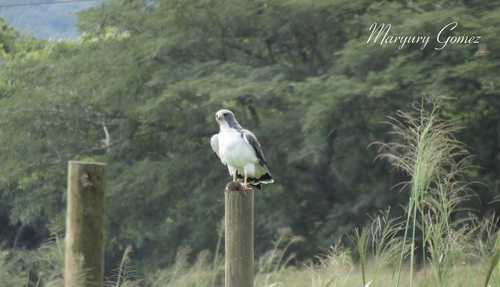
The closest relatives of the Rufous-thighed Kite that you can see in Itatiaia National Park (family Accipitridae, Hawks, Eagles, and Kites) are Roadside Hawk (about 20%), Black Hawk-Eagle (about 10%) and White-tailed Hawk (about 10%), with each one's daily chance of a sighting.

Where does the Rufous-thighed Kite sighting chance come from?

GBIF citizen-science records

It is estimated from how often the Rufous-thighed Kite is recorded against all the birds logged in Itatiaia National Park (42 verified sightings from 2019 to 2026), calibrated against known sighting rates. Figures are rounded to the nearest 10% because citizen-science data supports honest approximations, not decimals, and months with records from fewer than five people show "—". How it works.

← Back to Itatiaia National Park