
Sagebrush Sparrow

Sagebrush Sparrow

Artemisiospiza nevadensis

Silhouette: L. Shyamal · PhyloPic

LCLeast ConcernNTVUENCR
Daily sighting probability <5% · Rare
at Joshua Tree National Park

In 3 days <5% in a week ~10%

56 Verified sightings at Joshua Tree National Park From 2019 to 2026
222 In all 6 parks
December Best month
☀️ Diurnal When it's spotted

About the Sagebrush Sparrow

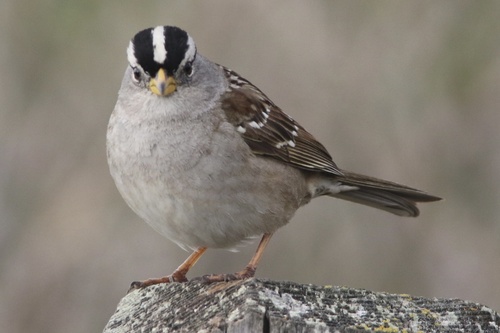
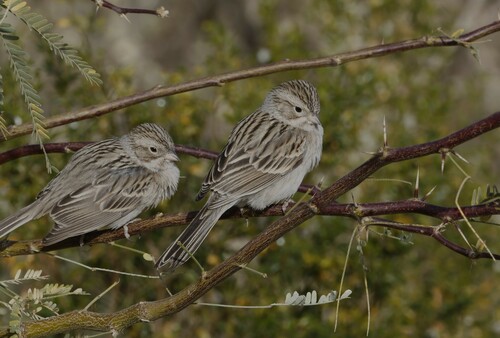
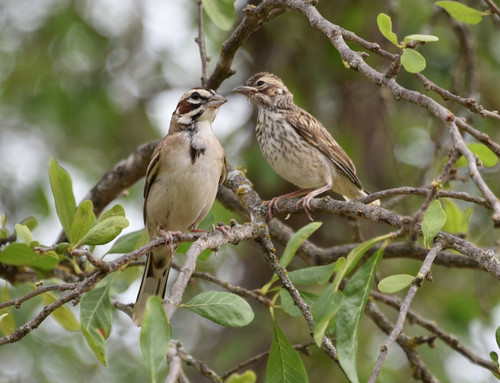
The sagebrush sparrow (Artemisiospiza nevadensis) is a species of bird in the family Passerellidae, the New World sparrows. It is found in Mexico and the United States. The sagebrush sparrow has a complicated taxonomic history. It was formally described in 1874 as a subspecies of what was then Bell's sparrow; it was assigned the trinomial Poospiza belli nevadensis and the name "Artemisia sparrow". Bell's sparrow was later reassigned to genus Amphispiza that had also been erected in 1874 and was also given the new English name "sage sparrow". In 2007 the new genus Artemisiospiza was suggested for the sage sparrow and in 2011 it was formally erected. Taxonomic systems began adopting the new assignment in 2012. In 2013 taxonomic systems split Artemisiospiza nevadensis from Artemisiospiza belli, gave it the English name sagebrush sparrow, and restored the English name "Bell's sparrow" to A. belli.

The sagebrush sparrow is monotypic. The sagebrush sparrow is about 12 to 15 cm (4.7 to 5.9 in) long and weighs about 15 to 22 g (0.53 to 0.78 oz). Males are larger than females but the sexes have the same plumage. Adults in fresh plumage have a... Wikipedia →

Sounds

Call0:08

United States · 2021

© Pritam Baruah · XC638841 · CC BY-NC-SA 4.0

Song1:15

United States · 1992

© Peter Ward and Ken Hall · XC596716 · CC BY-NC-SA 4.0

Song0:58

United States · 2019

© Ed Pandolfino · XC482268 · CC BY-NC-SA 4.0

Global Distribution

Parks Where Found

# Park Country Daily sighting probability
1 Death Valley National Park 🇺🇸 United States
~10%
2 Guadalupe Mountains National Park 🇺🇸 United States
<5%
3 Joshua Tree National Park 🇺🇸 United States
<5%
4 Grand Canyon National Park 🇺🇸 United States
<5%
5 Big Bend National Park 🇺🇸 United States
<5%
6 Yellowstone National Park 🇺🇸 United States
<5%

Cities Where Found

# City Country Daily sighting probability
1 Phoenix 🇺🇸 United States
<5%
2 Mesa 🇺🇸 United States
<5%
3 Denver 🇺🇸 United States
<5%

Before you go

What are the chances of seeing a Sagebrush Sparrow in Joshua Tree National Park?

Rare

Under 5% of wildlife watchers report a Sagebrush Sparrow sighting in Joshua Tree National Park on a given day, based on 56 verified sightings from GBIF citizen-science data from 2019 to 2026. It is the 103rd most-seen of the 141 birds we can rate there. Over three days the chance rises to under 5%, and over a week to about 10%, if each day is a fresh chance.

When is the best time to see a Sagebrush Sparrow in Joshua Tree National Park?

December

In that month about 10% of wildlife watchers report a Sagebrush Sparrow in Joshua Tree National Park on a given day, against under 5% in January to November, the lowest months.

What time of day is best to see a Sagebrush Sparrow?

Between 9 am and noon

Across all the parks we cover, that three-hour window holds the most Sagebrush Sparrow sightings with a recorded time, and about 9 in 10 of them come between 6 am and 6 pm: it is a daytime animal.

Is Joshua Tree National Park the best place to see a Sagebrush Sparrow?

3rd of 6

Of the 6 parks where we can rate Sagebrush Sparrow sightings, Joshua Tree National Park ranks 3rd at under 5%. The best odds are in Death Valley National Park (United States, about 10%) and Guadalupe Mountains National Park (United States, under 5%).

Where does the Sagebrush Sparrow sighting chance come from?

GBIF citizen-science records

It is estimated from how often the Sagebrush Sparrow is recorded against all the birds logged in Joshua Tree National Park (56 verified sightings from 2019 to 2026), calibrated against known sighting rates. Figures are rounded to the nearest 10% because citizen-science data supports honest approximations, not decimals, and months with records from fewer than five people show "—". How it works.

← Back to Joshua Tree National Park